Department of Immunology, Genetics and Pathology, Uppsala University, Uppsala, Sweden.
Department of Anatomy, Physiology and Biochemistry, Swedish University of Agricultural Sciences, Uppsala, Sweden.
BMC Neurosci. 2023 Jun 1;24(1):32. doi: 10.1186/s12868-023-00800-9.
The glycinergic system plays an important inhibitory role in the mouse central nervous system, where glycine controls the excitability of spinal itch- and pain-mediating neurons. Impairments of the glycine receptors can cause motor and sensory deficits. Glycine exerts inhibition through interaction with ligand-gated ion channels composed of alpha and beta subunits. We have investigated the mRNA expression of the glycine receptor alpha 3 (Glra3) subunit in the nervous system as well as in several peripheral organs of female and male mice.
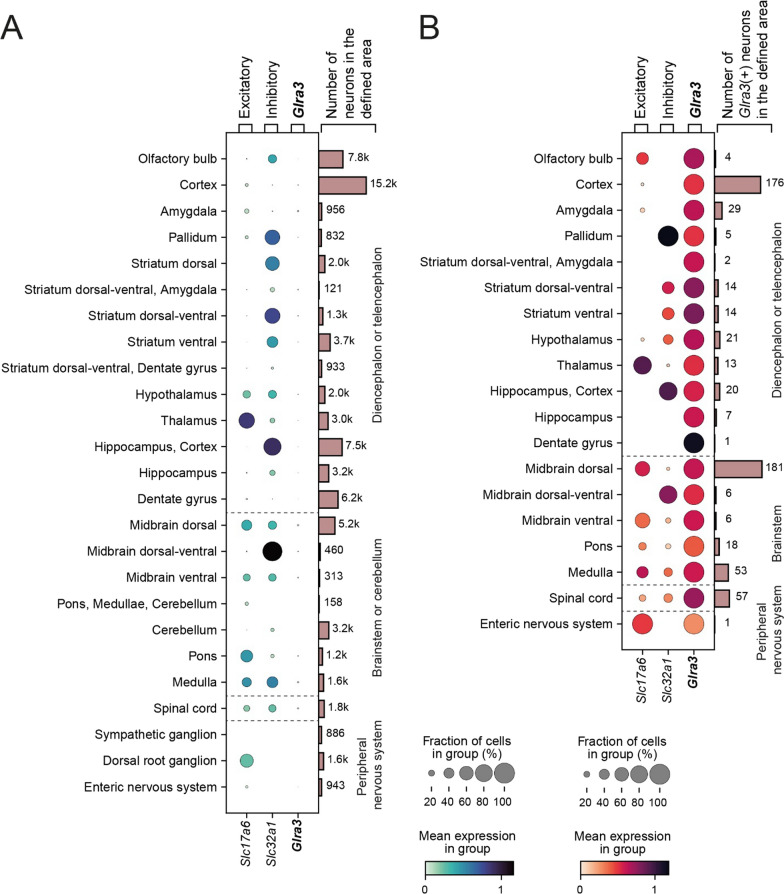
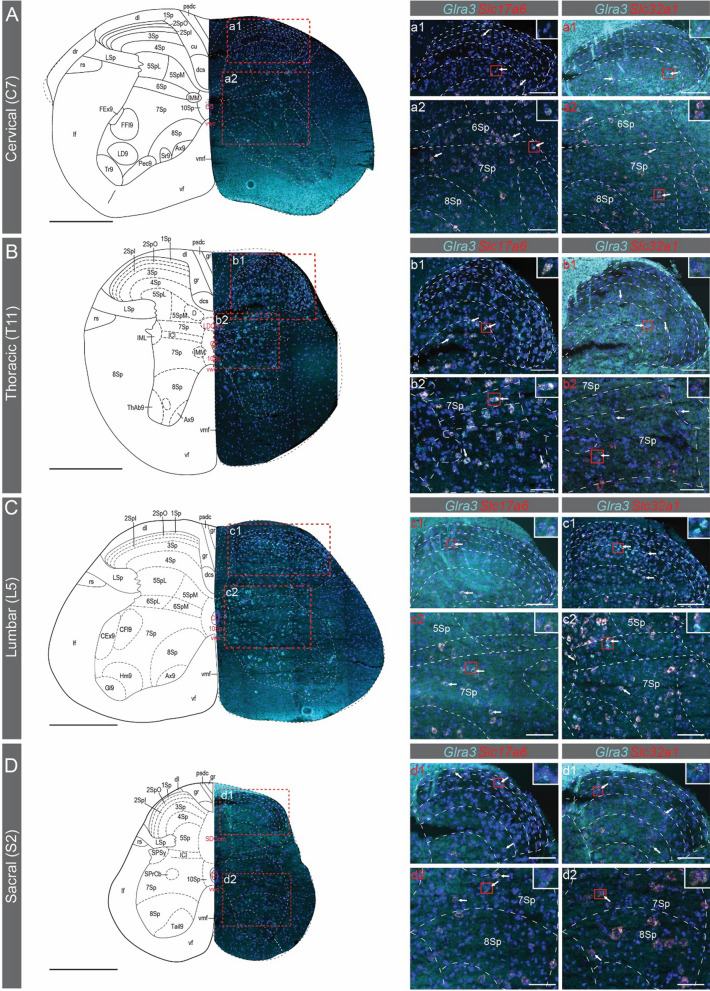
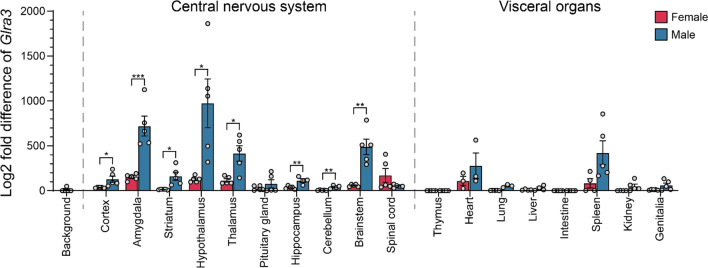
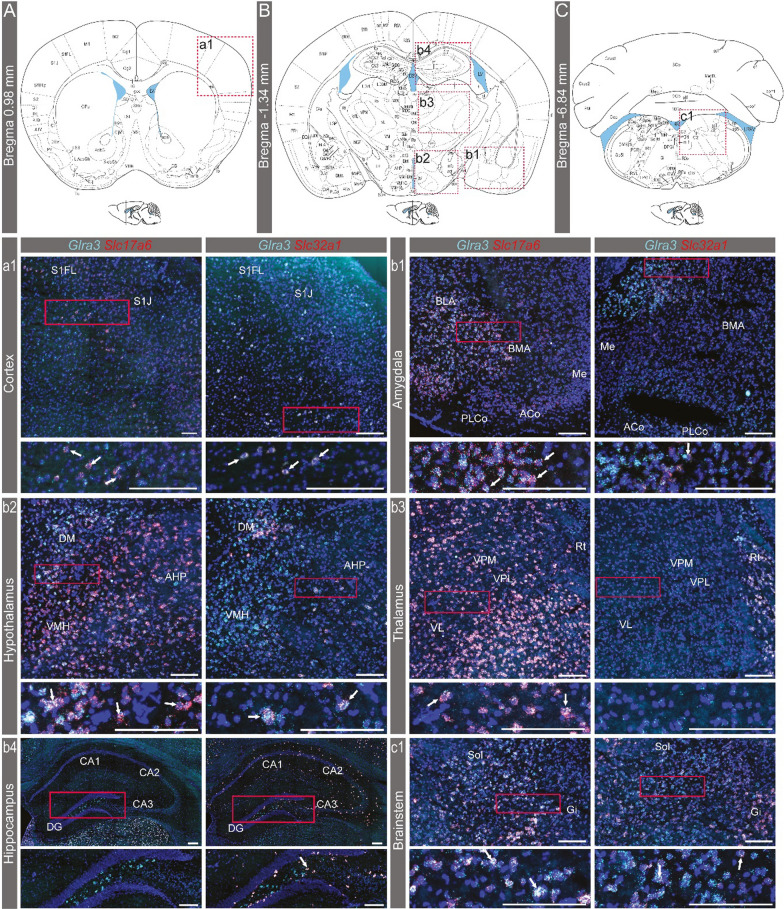
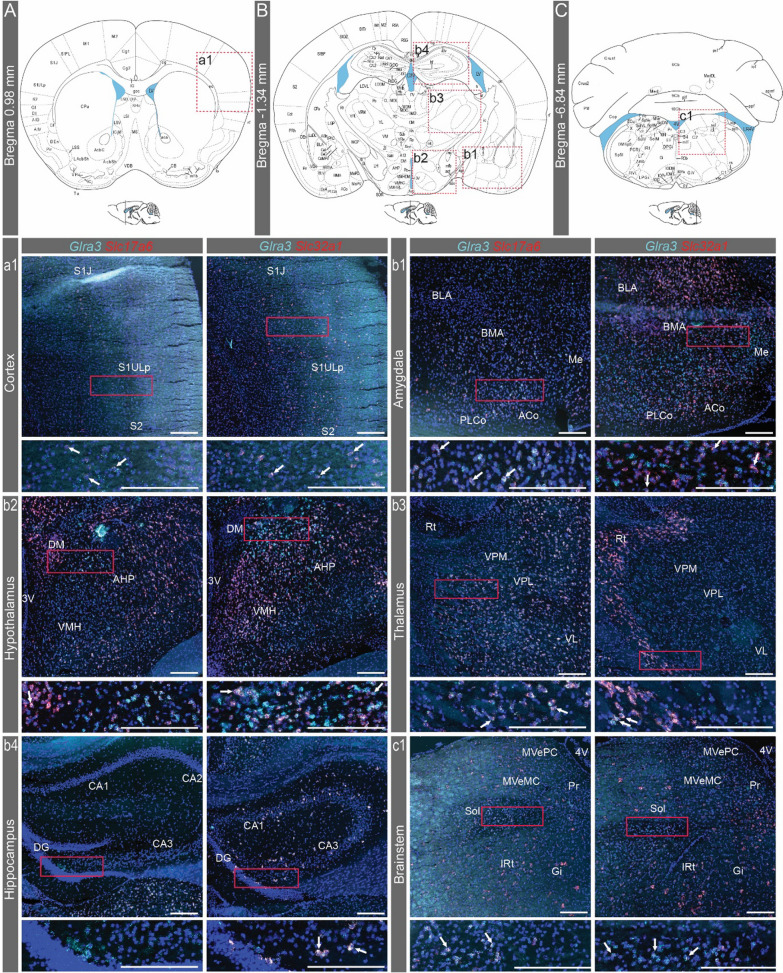
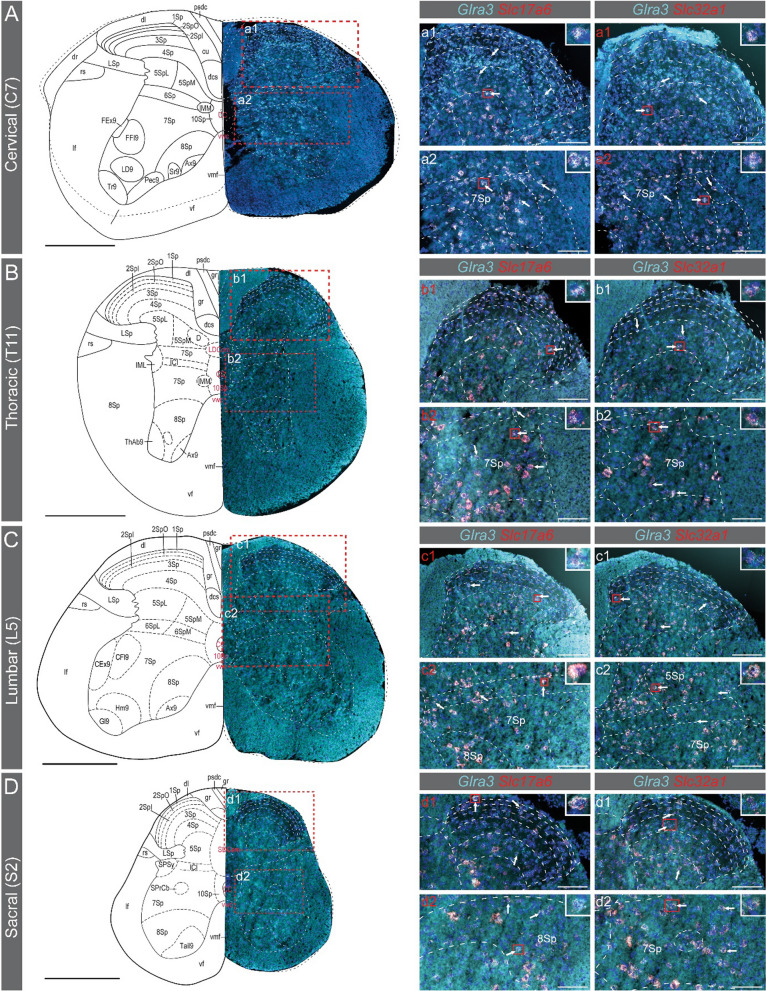
Single-cell RNA sequencing (scRNA-seq) data analysis on the Zeisel et al. (2018) dataset indicated widespread but low expression of Glra3 in vesicular glutamate transporter 2 (Vglut2, Slc17a6) positive and vesicular inhibitory amino acid transporter (Viaat, Slc32a1)positive neurons of the mouse central nervous system. Highest occurrence of Glra3 expression was identified in the cortex, amygdala, and striatal regions, as well as in the hypothalamus, brainstem and spinal cord. Bulk quantitative real-time-PCR (qRT-PCR) analysis demonstrated Glra3 expression in cortex, amygdala, striatum, hypothalamus, thalamus, pituitary gland, hippocampus, cerebellum, brainstem, and spinal cord. Additionally, male mice expressed higher levels of Glra3 in all investigated brain areas compared with female mice. Lastly, RNAscope spatially validated Glra3 expression in the areas indicated by the single-cell and bulk analyses. Moreover, RNAscope analysis confirmed co-localization of Glra3 with Slc17a6 or Slc32a1 in the central nervous system areas suggested from the single-cell data.
Glra3 expression is low but widespread in the mouse central nervous system. Clear sex-dependent differences have been identified, indicating higher levels of Glra3 in several telencephalic and diencephalic areas, as well as in cerebellum and brainstem, in male mice compared with female mice.
甘氨酸能控制脊髓中引起瘙痒和疼痛的神经元的兴奋性,在小鼠中枢神经系统中发挥重要的抑制作用。甘氨酸受体功能障碍可导致运动和感觉功能缺陷。甘氨酸通过与由α和β亚基组成的配体门控离子通道相互作用发挥抑制作用。我们研究了雌性和雄性小鼠中枢神经系统以及多个外周器官中甘氨酸受体α 3(Glra3)亚基的 mRNA 表达。
对 Zeisel 等人(2018 年)数据集的单细胞 RNA 测序(scRNA-seq)数据分析表明,Glra3 在小鼠中枢神经系统中囊泡谷氨酸转运体 2(Vglut2,Slc17a6)阳性和囊泡抑制性氨基酸转运体(Viaat,Slc32a1)阳性神经元中广泛表达,但表达水平较低。Glra3 表达最高的部位是皮质、杏仁核和纹状体区域,以及下丘脑、脑干和脊髓。批量实时定量 PCR(qRT-PCR)分析表明,Glra3 在皮质、杏仁核、纹状体、下丘脑、丘脑、垂体、海马、小脑、脑干和脊髓中表达。此外,与雌性小鼠相比,雄性小鼠在所有研究的大脑区域中表达 Glra3 的水平更高。最后,RNAscope 空间验证了单细胞和批量分析所指示区域的 Glra3 表达。此外,RNAscope 分析证实 Glra3 与 Slc17a6 或 Slc32a1 在中枢神经系统区域中的共定位与单细胞数据一致。
Glra3 在小鼠中枢神经系统中的表达水平较低,但分布广泛。研究发现,与雌性小鼠相比,雄性小鼠在几个端脑和间脑区域以及小脑和脑干中 Glra3 的表达水平更高,存在明显的性别依赖性差异。