Michigan Poison & Drug Information Center, Wayne State University School of Medicine, Detroit, MI, USA.
School of Medicine, University of Colorado, Aurora, CO, USA.
BMC Med Inform Decis Mak. 2023 Jun 1;23(1):102. doi: 10.1186/s12911-023-02188-2.
This study aimed to compare clinical and laboratory characteristics of supra-therapeutic (RSTI) and acute acetaminophen exposures using a predictive decision tree (DT) algorithm.
We conducted a retrospective cohort study using the National Poison Data System (NPDS). All patients with RSTI acetaminophen exposure (n = 4,522) between January 2012 and December 2017 were included. Additionally, 4,522 randomly selected acute acetaminophen ingestion cases were included. After that, the DT machine learning algorithm was applied to differentiate acute acetaminophen exposure from supratherapeutic exposures.
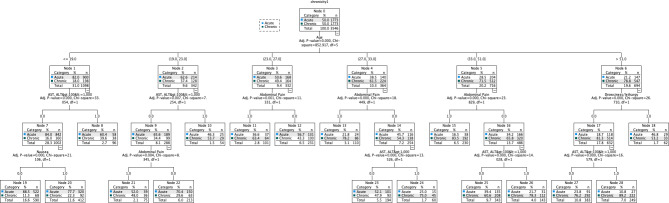
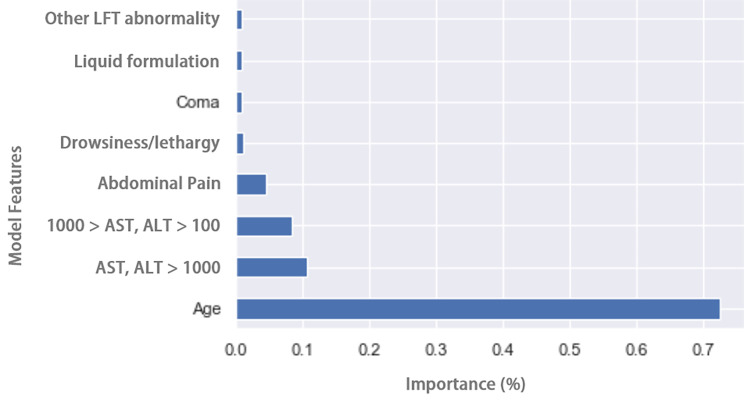
The DT model had accuracy, precision, recall, and F1-scores of 0.75, respectively. Age was the most relevant variable in predicting the type of acetaminophen exposure, whether RSTI or acute. Serum aminotransferase concentrations, abdominal pain, drowsiness/lethargy, and nausea/vomiting were the other most important factors distinguishing between RST and acute acetaminophen exposure.
DT models can potentially aid in distinguishing between acute and RSTI of acetaminophen. Further validation is needed to assess the clinical utility of this model.
本研究旨在使用预测决策树 (DT) 算法比较超治疗剂量(RSTI)和急性对乙酰氨基酚暴露的临床和实验室特征。
我们使用国家毒物数据系统 (NPDS) 进行了一项回顾性队列研究。纳入 2012 年 1 月至 2017 年 12 月期间所有 RSTI 对乙酰氨基酚暴露(n=4522)的患者。此外,还纳入了 4522 例随机选择的急性对乙酰氨基酚摄入病例。然后,应用 DT 机器学习算法将急性对乙酰氨基酚暴露与超治疗暴露区分开来。
DT 模型的准确性、精确性、召回率和 F1 评分分别为 0.75。年龄是预测对乙酰氨基酚暴露类型(RSTI 或急性)的最相关变量。血清转氨酶浓度、腹痛、嗜睡/昏睡和恶心/呕吐是区分 RST 和急性对乙酰氨基酚暴露的其他最重要因素。
DT 模型可帮助区分急性和 RSTI 对乙酰氨基酚。需要进一步验证来评估该模型的临床实用性。