School of Professional and Applied Psychology, Philadelphia College of Osteopathic Medicine, 4190 City Avenue, Rowland Hall, Philadelphia, PA, 19131, USA.
Research and Evaluation Group, Public Health Management Corporation, 1500 Market Street, Philadelphia, PA, 19102, USA.
Addict Sci Clin Pract. 2023 Jun 1;18(1):37. doi: 10.1186/s13722-023-00393-y.
Individuals who have substance use disorders may have an elevated risk of suicidality. This study sought to examine the prevalence of, and identify factors associated with, suicidality in adults with opioid use disorder (OUD) initiating office-based buprenorphine treatment.
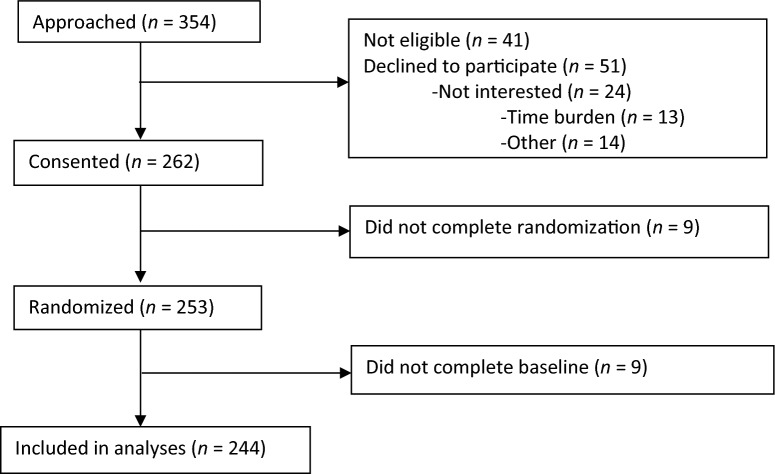
Individuals were eligible to participate if they had OUD and had initiated treatment in the past month. Participants (n = 244) completed a semi-structured interview using the Addiction Severity Index-Lite.
At baseline, 37.70% of participants reported significant thoughts of suicide over their lifetime and 27.46% reported suicidal attempts over their lifetime. Logistic regression analyses were used to identify predictors of lifetime suicidal thoughts and attempts. A history of physical abuse (OR = 4.31, p < .001), having chronic pain-related conditions (OR = 3.28, p < .001), a history of depression (OR = 3.30, p = .001) or anxiety (OR = 7.47, p = .001), and Latino/a/x ethnicity (OR = 2.66, p = .01) were associated with an increased risk of lifetime suicidal thoughts. A history of sexual abuse (OR = 2.89, p = .01), Latino/a/x ethnicity (OR = 4.01, p < .001), a history of depression (OR = 4.03, p = .001) or anxiety (OR = 15.65, p = .007) and having a chronic pain-related condition (OR = 2.43, p = .01), were associated with an increased risk of lifetime suicide attempts.
Results demonstrate the high prevalence of suicidal thoughts and attempts among patients initiating buprenorphine. Findings may help to better identify at-risk patients and to inform screening, prevention, and mental health treatment efforts.
ClinicalTrials.gov, NCT04650386 (registered 12 December 2020, https://clinicaltrials.gov/ct2/show/NCT04650386 ) and NCT04257214 (registered 5 February 2020, https://clinicaltrials.gov/ct2/show/NCT04257214 ).
患有物质使用障碍的个体可能有更高的自杀风险。本研究旨在调查接受门诊丁丙诺啡治疗的阿片类物质使用障碍(OUD)成年人的自杀意念发生率,并确定与其相关的因素。
如果参与者患有 OUD 且在过去一个月内开始接受治疗,则有资格参加。参与者(n=244)使用成瘾严重程度指数-简表(Addiction Severity Index-Lite)完成半结构式访谈。
基线时,37.70%的参与者报告在一生中曾有过严重的自杀念头,27.46%的参与者报告在一生中曾有过自杀企图。使用逻辑回归分析识别了一生中自杀意念和自杀企图的预测因素。既往躯体虐待史(OR=4.31,p<0.001)、有慢性疼痛相关疾病(OR=3.28,p<0.001)、既往抑郁史(OR=3.30,p=0.001)或焦虑症史(OR=7.47,p=0.001)以及拉丁裔/拉丁裔/拉丁裔(OR=2.66,p=0.01)与一生中自杀意念风险增加相关。既往性虐待史(OR=2.89,p=0.01)、拉丁裔/拉丁裔/拉丁裔(OR=4.01,p<0.001)、抑郁史(OR=4.03,p=0.001)或焦虑症史(OR=15.65,p=0.007)和慢性疼痛相关疾病(OR=2.43,p=0.01)与一生中自杀企图风险增加相关。
研究结果表明,接受丁丙诺啡治疗的患者自杀意念和自杀企图发生率很高。这些发现可能有助于更好地识别高危患者,并为筛查、预防和心理健康治疗提供信息。
ClinicalTrials.gov,NCT04650386(2020 年 12 月 12 日注册,https://clinicaltrials.gov/ct2/show/NCT04650386)和 NCT04257214(2020 年 2 月 5 日注册,https://clinicaltrials.gov/ct2/show/NCT04257214)。