Böckelmann Irina, Meyer Frank, Thielmann Beatrice
Bereich Arbeitsmedizin, Medizinische Fakultät, Otto-von-Guericke-Universität Magdeburg, Magdeburg, Deutschland.
Universitätsklinik für Allgemein-, Viszeral-, Gefäß- und Transplantationschirurgie, Otto-von-Guericke-Universität Magdeburg mit Universitätsklinikum Magdeburg A. ö. R., Magdeburg, Deutschland.
Chirurgie (Heidelb). 2023 Aug;94(8):703-713. doi: 10.1007/s00104-023-01892-z. Epub 2023 Jun 2.
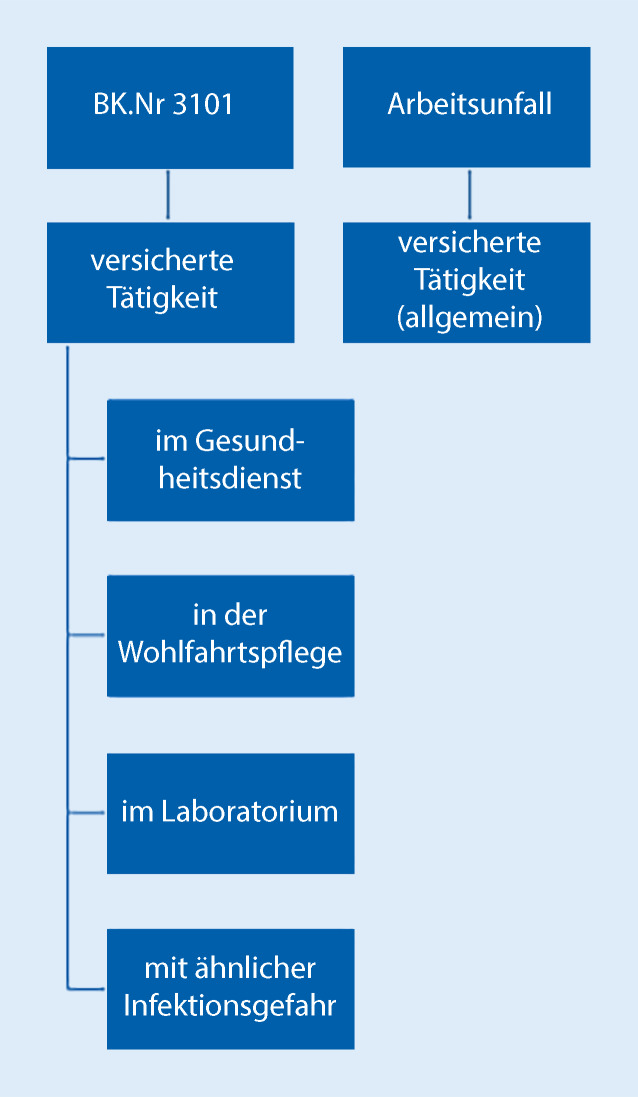
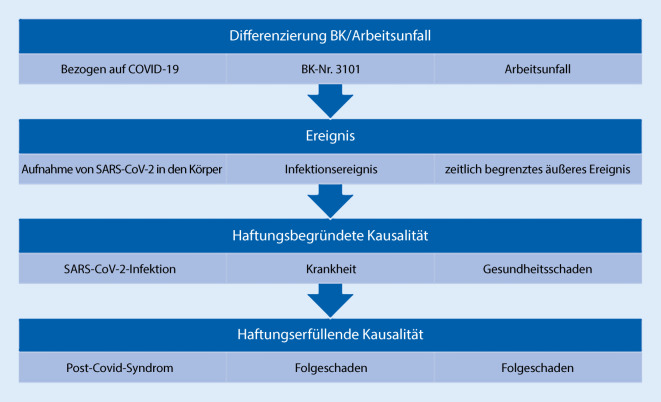
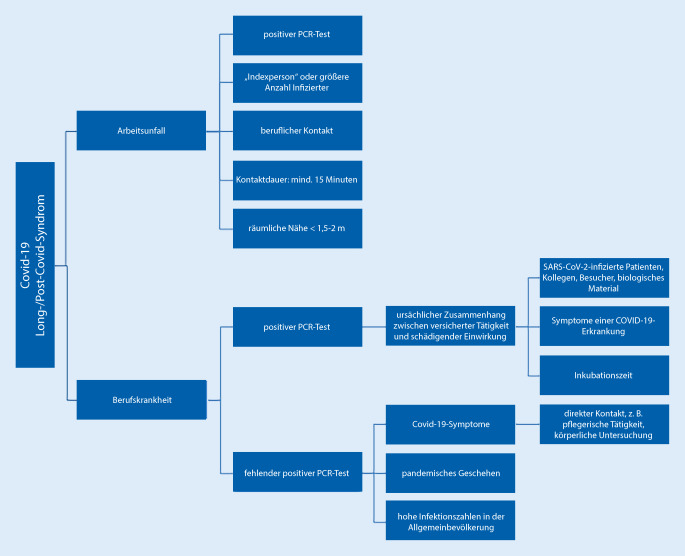
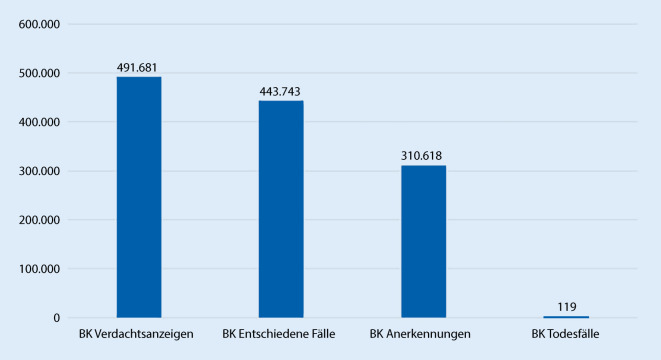
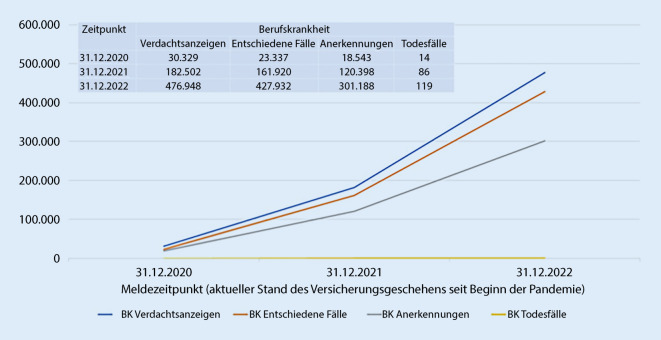
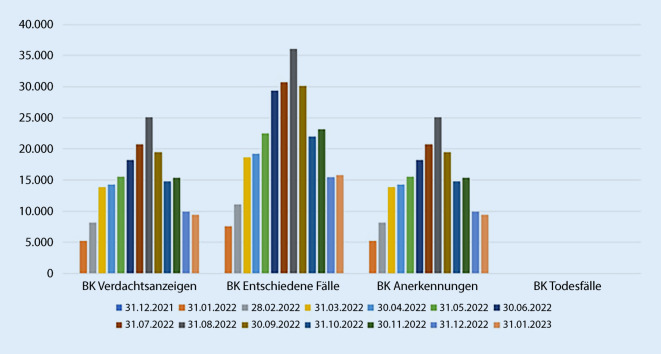
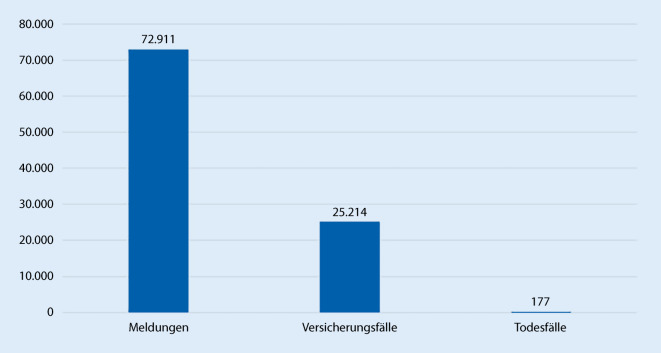
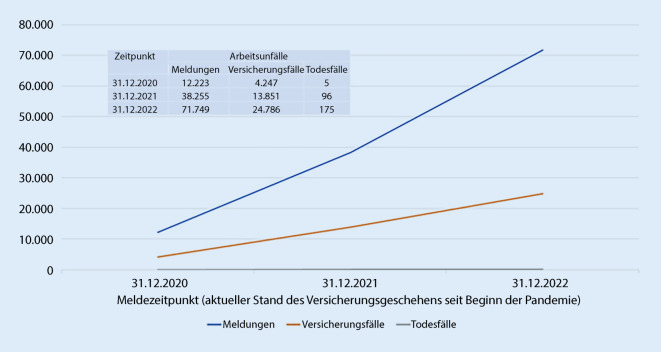
The severe acute respiratory syndrome coronavirus 2 (SARS-CoV-2) pandemic resulted in many infections with the virus and sickness due to coronavirus disease 2019 (COVID-19). Therefore, there was a dramatic increase in the number of reported and recognized occupational diseases (Berufskrankheit, BK) and occupational accidents (Arbeitsunfall, AU) at the German Social Accident Insurance Institutions (BG) and accident insurance funds (Unfallkassen).The publication aims to show the differences between BK and AU and to review the current data on occupational diseases. It deals with the definitions of BK and AU, the differences in the conditions for recognition as BK or AU. Furthermore, the claims for benefits are presented. Finally, statistical key figures of the BK according to No. 3101 and the AU are presented.Results (key points)- According to § 7 SGB VII, AU and BK are insured events of the statutory accident insurance.- In surgery, like specifically in the rest of the healthcare system, the relevance of the SARS-CoV‑2 infection with post-COVID in personnel for occupational medical prevention and as a case to be recognized by the statutory accident insurance (BK or AU) becomes clear.- Relevant for the recognition are the duration and the intensity of the contact (local proximity) and the SARS-CoV‑2 occupational health and safety rule of 20 August 2020 essentially recognizes a contact duration of at least 15 min at a spatial distance of less than 1.5-2 m (further aspects: more intensive shorter contacts, number of verifiably infected persons in the closer activity environment or the usual personal contacts, spatial situation, work route, special constellations).- No case numbers can be elicited for the detailed presentation of the surgery setting.- There are still immense problems and challenges in the assessment of COVID-19 consequences or post-COVID as occupational disease, as numerous uncertainty factors, such as insufficiently secured knowledge about the further long-term course over the years or the widely varied symptom spectrum complicates the medical assessment of the consequences of this disease.Conclusion: the SARS-CoV‑2 pandemic is a special challenge for surgery with intensive patient contact and for the entire healthcare system. This caused long-lasting changes and the adequate health care as well as insurance law processing of the (case-specific) consequences might still require considerable efforts and resources.
严重急性呼吸综合征冠状病毒2(SARS-CoV-2)大流行导致许多人感染该病毒,并引发了2019冠状病毒病(COVID-19)。因此,德国社会事故保险机构(BG)和事故保险基金(Unfallkassen)报告和确认的职业病(职业疾病,BK)和职业事故(工作事故,AU)数量急剧增加。本出版物旨在展示BK和AU之间的差异,并回顾当前关于职业病的数据。它涉及BK和AU的定义,被认定为BK或AU的条件差异。此外,还介绍了福利索赔情况。最后,给出了根据第3101号规定的BK和AU的统计关键数据。
结果(要点)
根据《社会法典》第七编第7条,AU和BK是法定事故保险的承保事件。
在外科手术中,特别是在医疗保健系统的其他领域,SARS-CoV-2感染及其后新冠状况在职业医学预防方面的相关性,以及作为法定事故保险(BK或AU)应认定的病例,变得清晰起来。
对于认定相关的是接触的持续时间和强度(局部接近程度),2020年8月20日的SARS-CoV-2职业健康与安全规则基本上认可在空间距离小于1.5-2米时至少接触15分钟(其他方面:更密集的短接触、在更密切活动环境中可证实感染人员的数量或通常的个人接触、空间情况、工作路线、特殊情况)。
无法得出用于详细呈现外科手术场景的病例数量。
在将COVID-19后果或新冠后状况评估为职业病方面,仍然存在巨大问题和挑战,因为众多不确定因素,如多年来对进一步长期病程的认识不够确定,或症状谱广泛多样,使对该疾病后果的医学评估变得复杂。
SARS-CoV-2大流行对外科手术中与患者密切接触的情况以及整个医疗保健系统来说是一项特殊挑战。这导致了长期变化,对(具体病例的)后果进行适当的医疗保健以及保险法处理可能仍需要大量努力和资源。