National Institute on Drug Abuse, Intramural Research Program, Baltimore, MD, USA.
Department of Computer and Information Science, University of Pennsylvania, Philadelphia, PA, USA.
Sci Rep. 2023 Jun 3;13(1):9027. doi: 10.1038/s41598-023-34468-2.
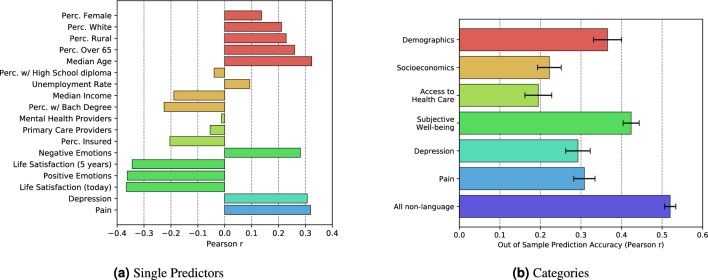
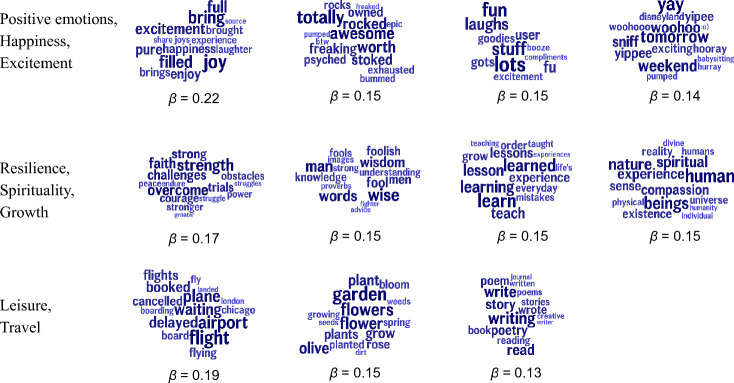
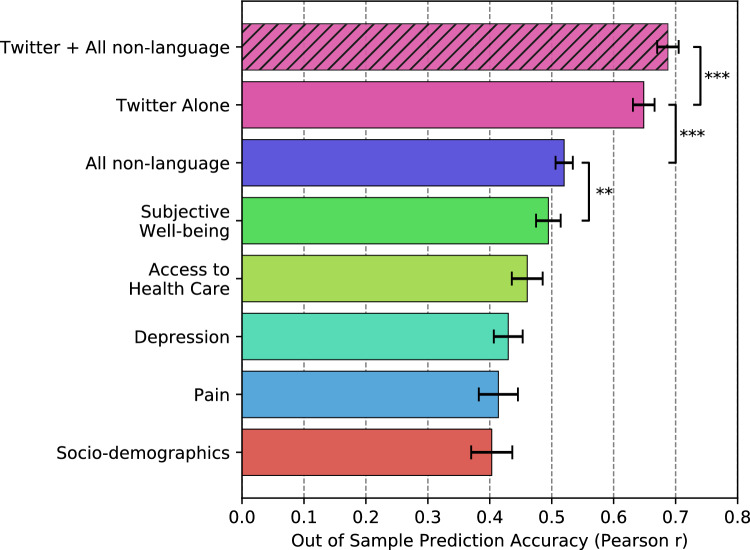
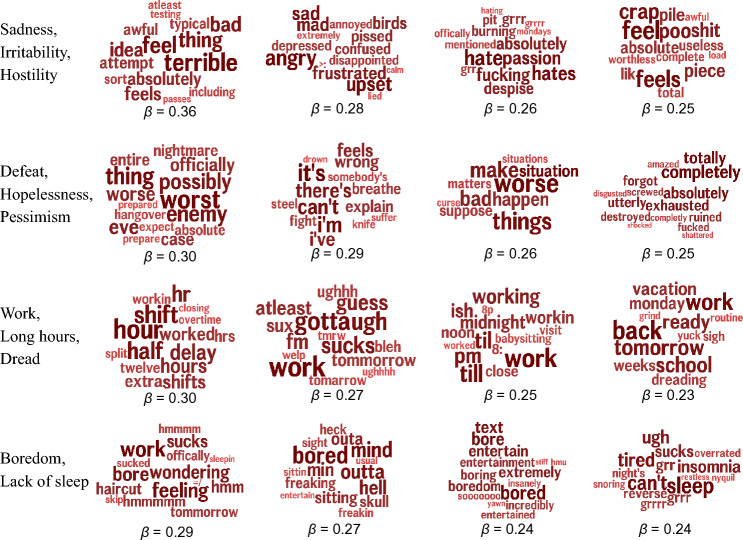
Opioid poisoning mortality is a substantial public health crisis in the United States, with opioids involved in approximately 75% of the nearly 1 million drug related deaths since 1999. Research suggests that the epidemic is driven by both over-prescribing and social and psychological determinants such as economic stability, hopelessness, and isolation. Hindering this research is a lack of measurements of these social and psychological constructs at fine-grained spatial and temporal resolutions. To address this issue, we use a multi-modal data set consisting of natural language from Twitter, psychometric self-reports of depression and well-being, and traditional area-based measures of socio-demographics and health-related risk factors. Unlike previous work using social media data, we do not rely on opioid or substance related keywords to track community poisonings. Instead, we leverage a large, open vocabulary of thousands of words in order to fully characterize communities suffering from opioid poisoning, using a sample of 1.5 billion tweets from 6 million U.S. county mapped Twitter users. Results show that Twitter language predicted opioid poisoning mortality better than factors relating to socio-demographics, access to healthcare, physical pain, and psychological well-being. Additionally, risk factors revealed by the Twitter language analysis included negative emotions, discussions of long work hours, and boredom, whereas protective factors included resilience, travel/leisure, and positive emotions, dovetailing with results from the psychometric self-report data. The results show that natural language from public social media can be used as a surveillance tool for both predicting community opioid poisonings and understanding the dynamic social and psychological nature of the epidemic.
在美国,阿片类药物中毒死亡是一个严重的公共卫生危机,自 1999 年以来,近 100 万例与毒品相关的死亡中,约有 75%涉及阿片类药物。研究表明,这种流行既源于过度处方,也源于经济稳定、绝望和孤立等社会和心理决定因素。阻碍这方面研究的是缺乏对这些社会和心理结构进行精细时空分辨率测量的手段。为了解决这个问题,我们使用了一个多模态数据集,其中包括来自 Twitter 的自然语言、抑郁和幸福感的心理测量自评以及传统的基于区域的社会人口统计学和与健康相关的风险因素测量。与以前使用社交媒体数据的工作不同,我们不依赖阿片类药物或物质相关的关键词来跟踪社区中毒情况。相反,我们利用一个包含数千个单词的大型开放词汇表,通过对来自 600 万 mapped Twitter 用户的 15 亿条推文进行抽样,来全面描述遭受阿片类药物中毒的社区。结果表明,与社会人口统计学、医疗保健获取、身体疼痛和心理幸福感等因素相比,Twitter 语言能更好地预测阿片类药物中毒死亡率。此外,Twitter 语言分析揭示的风险因素包括负面情绪、长时间工作的讨论和无聊,而保护因素包括韧性、旅行/休闲和积极情绪,与心理测量自评数据的结果一致。研究结果表明,来自公共社交媒体的自然语言可以用作预测社区阿片类药物中毒的监测工具,并深入了解该流行的动态社会和心理性质。