Section of Biostatistics, Department of Public Health, University of Copenhagen, Copenhagen, Denmark.
Lifetime Data Anal. 2024 Jan;30(1):143-180. doi: 10.1007/s10985-023-09601-y. Epub 2023 Jun 4.
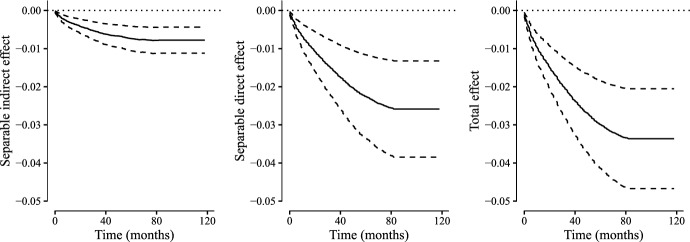
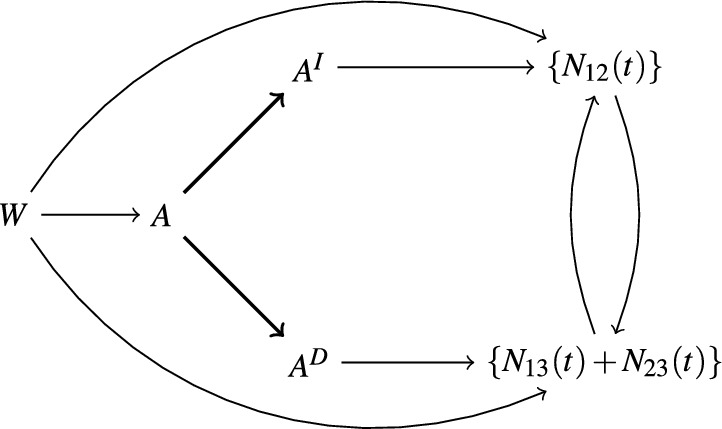
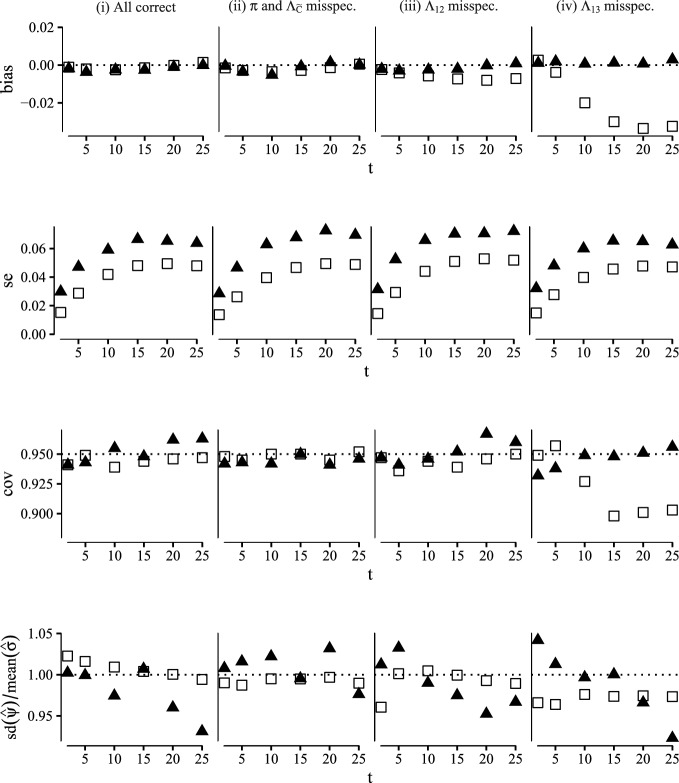
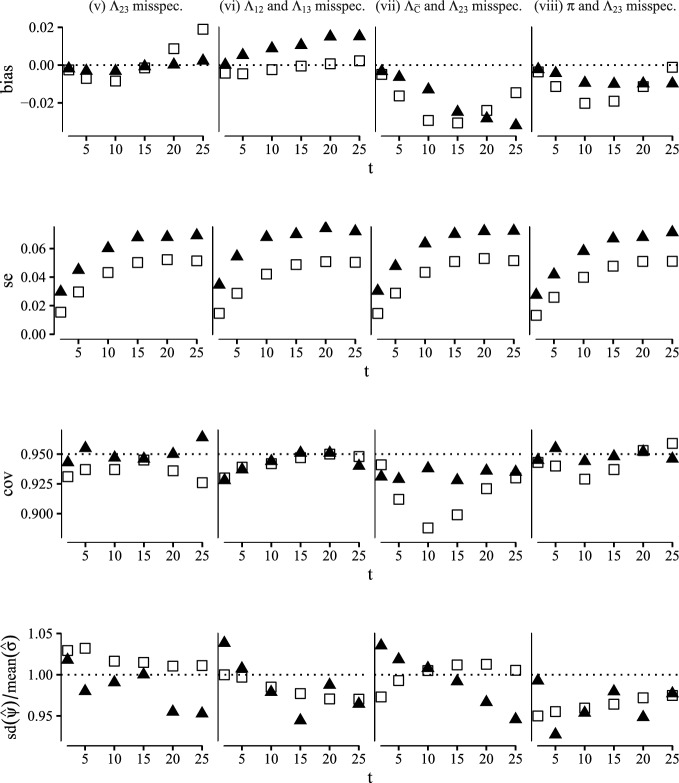
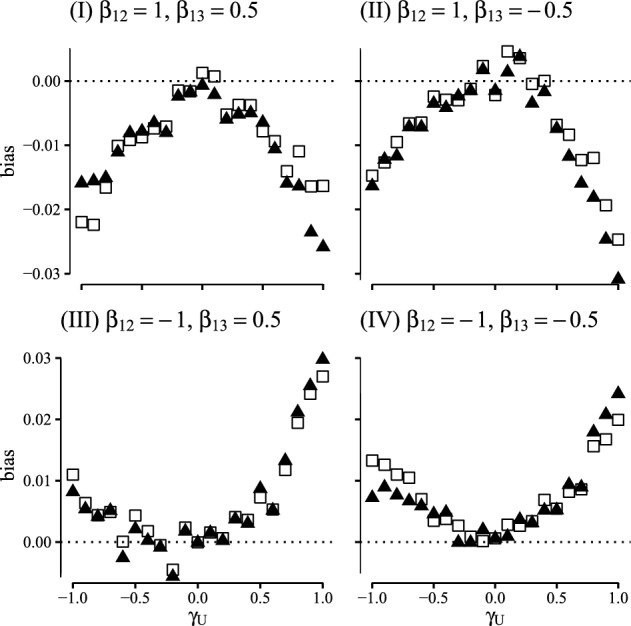
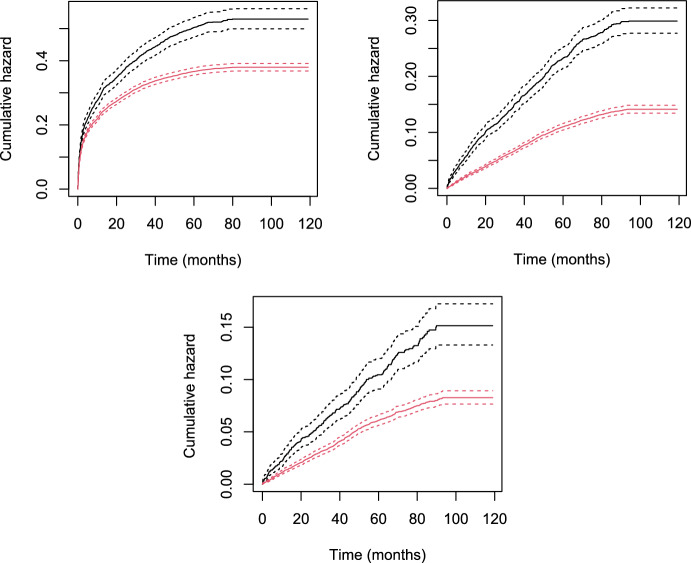
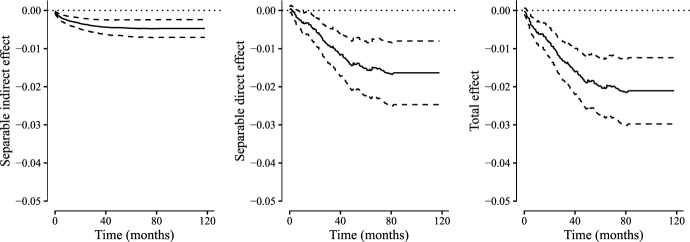
In this article we study the effect of a baseline exposure on a terminal time-to-event outcome either directly or mediated by the illness state of a continuous-time illness-death process with baseline covariates. We propose a definition of the corresponding direct and indirect effects using the concept of separable (interventionist) effects (Robins and Richardson in Causality and psychopathology: finding the determinants of disorders and their cures, Oxford University Press, 2011; Robins et al. in arXiv:2008.06019 , 2021; Stensrud et al. in J Am Stat Assoc 117:175-183, 2022). Our proposal generalizes Martinussen and Stensrud (Biometrics 79:127-139, 2023) who consider similar causal estimands for disentangling the causal treatment effects on the event of interest and competing events in the standard continuous-time competing risk model. Unlike natural direct and indirect effects (Robins and Greenland in Epidemiology 3:143-155, 1992; Pearl in Proceedings of the seventeenth conference on uncertainty in artificial intelligence, Morgan Kaufmann, 2001) which are usually defined through manipulations of the mediator independently of the exposure (so-called cross-world interventions), separable direct and indirect effects are defined through interventions on different components of the exposure that exert their effects through distinct causal mechanisms. This approach allows us to define meaningful mediation targets even though the mediating event is truncated by the terminal event. We present the conditions for identifiability, which include some arguably restrictive structural assumptions on the treatment mechanism, and discuss when such assumptions are valid. The identifying functionals are used to construct plug-in estimators for the separable direct and indirect effects. We also present multiply robust and asymptotically efficient estimators based on the efficient influence functions. We verify the theoretical properties of the estimators in a simulation study, and we demonstrate the use of the estimators using data from a Danish registry study.
在本文中,我们研究了基线暴露对终端时事件结果的影响,这种影响可以直接通过具有基线协变量的连续时间疾病死亡过程的疾病状态来介导。我们使用可分离(干预主义)效应的概念(Robins 和 Richardson 在《因果关系和精神病理学:发现障碍及其治疗方法的决定因素》,牛津大学出版社,2011 年;Robins 等人在 arXiv:2008.06019,2021 年;Stensrud 等人在 J Am Stat Assoc 117:175-183,2022 年),对直接和间接效应提出了一个定义。我们的建议推广了 Martinussen 和 Stensrud(Biometrics 79:127-139,2023 年),他们考虑了类似的因果估计量,用于在标准连续时间竞争风险模型中分离对感兴趣事件和竞争事件的因果治疗效应。与自然直接和间接效应(Robins 和 Greenland 在《流行病学》3:143-155,1992 年;Pearl 在《第十七届不确定性人工智能会议论文集》,Morgan Kaufmann,2001 年)不同,自然直接和间接效应通常通过独立于暴露的中介操纵来定义(所谓的跨世界干预),可分离的直接和间接效应是通过对暴露的不同成分进行干预来定义的,这些干预通过不同的因果机制发挥作用。这种方法允许我们定义有意义的中介目标,即使中介事件被终端事件截断。我们提出了可识别性的条件,其中包括一些对治疗机制有争议的结构假设,并讨论了这些假设何时有效。识别函数用于构建可分离直接和间接效应的插补估计量。我们还基于有效影响函数提出了多重稳健和渐近有效的估计量。我们在模拟研究中验证了估计量的理论性质,并使用丹麦登记研究的数据演示了估计量的使用。