Department of Applied Mathematics, Computer Science and Statistics, Ghent University, Ghent, Belgium.
Department of Medical Statistics, London School of Hygiene and Tropical Medicine, London, UK.
Stat Med. 2019 Oct 30;38(24):4828-4840. doi: 10.1002/sim.8336. Epub 2019 Aug 14.
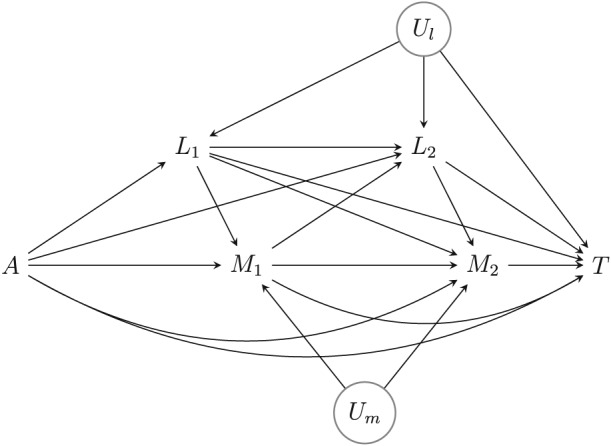
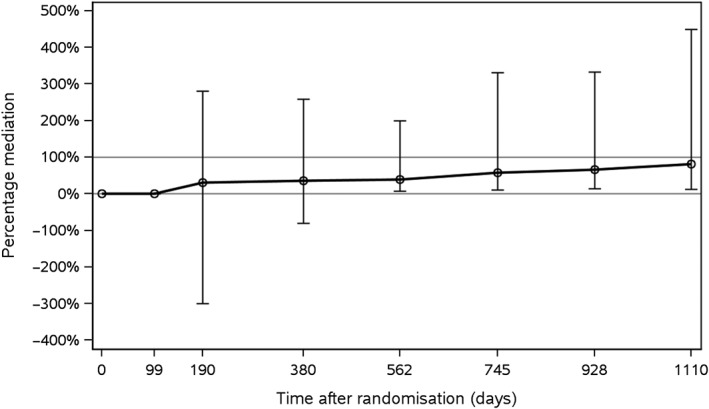
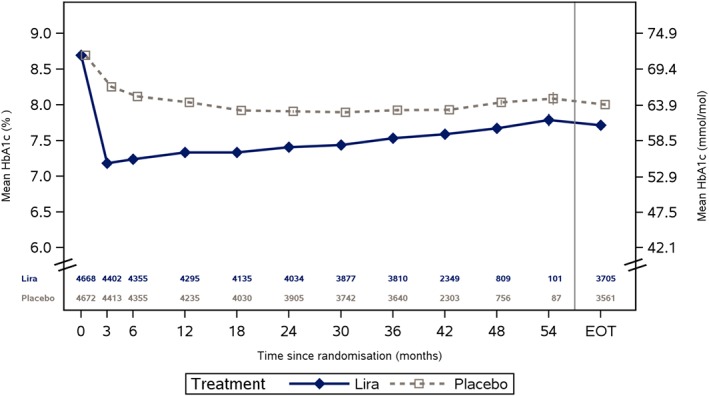
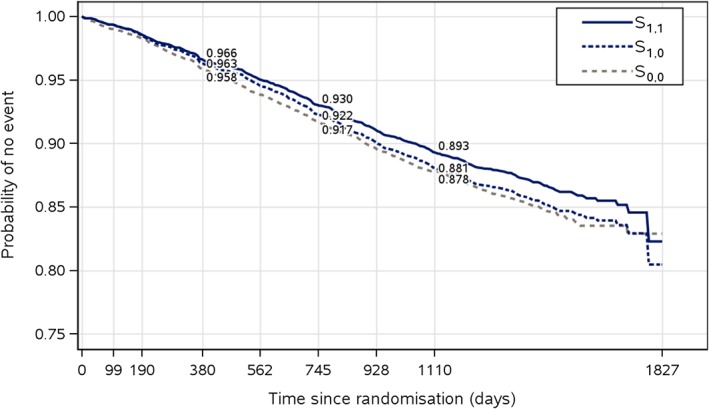
In this article, we will present statistical methods to assess to what extent the effect of a randomised treatment (versus control) on a time-to-event endpoint might be explained by the effect of treatment on a mediator of interest, a variable that is measured longitudinally at planned visits throughout the trial. In particular, we will show how to identify and infer the path-specific effect of treatment on the event time via the repeatedly measured mediator levels. The considered proposal addresses complications due to patients dying before the mediator is assessed, due to the mediator being repeatedly measured, and due to posttreatment confounding of the effect of the mediator by other mediators. We illustrate the method by an application to data from the LEADER cardiovascular outcomes trial.
在本文中,我们将介绍统计方法,以评估随机治疗(与对照相比)对事件时间终点的影响在多大程度上可以通过治疗对感兴趣的中介变量的影响来解释,该变量在试验过程中通过计划的随访进行纵向测量。特别是,我们将展示如何通过反复测量的中介水平来识别和推断治疗对事件时间的特定路径效应。所考虑的方法解决了由于患者在评估中介变量之前死亡、由于中介变量被反复测量以及由于其他中介变量对中介变量效应的治疗后混杂而导致的并发症。我们通过对 LEADER 心血管结局试验数据的应用来说明该方法。