Langah Noshad Ali, Ahad Abdul, Ghaloo Shayan Khalid, Faisal Muhammad, Hussain Raza Tasawar, Shah Fareed Akbar
Shaukat Khanum Memorial Cancer Hospital, Lahore, Pakistan.
Shaukat Khanum Memorial Cancer Hospital, Lahore, Pakistan.
Int J Surg Case Rep. 2023 Jun;107:108357. doi: 10.1016/j.ijscr.2023.108357. Epub 2023 May 26.
Secretory carcinoma (SC) is an uncommon salivary gland neoplasm of the oral cavity that microscopically may mimic acinic cell carcinoma (ACC) and mucoepidermoid carcinoma (MEC). Secretory carcinoma (SC) of the salivary gland has been recently added in fourth edition of the head and neck world health organization. Most of these tumors are located on the parotid gland with very few cases reported in the minor salivary glands of the buccal mucosa. This work has been reported in line with the SCARE criteria.
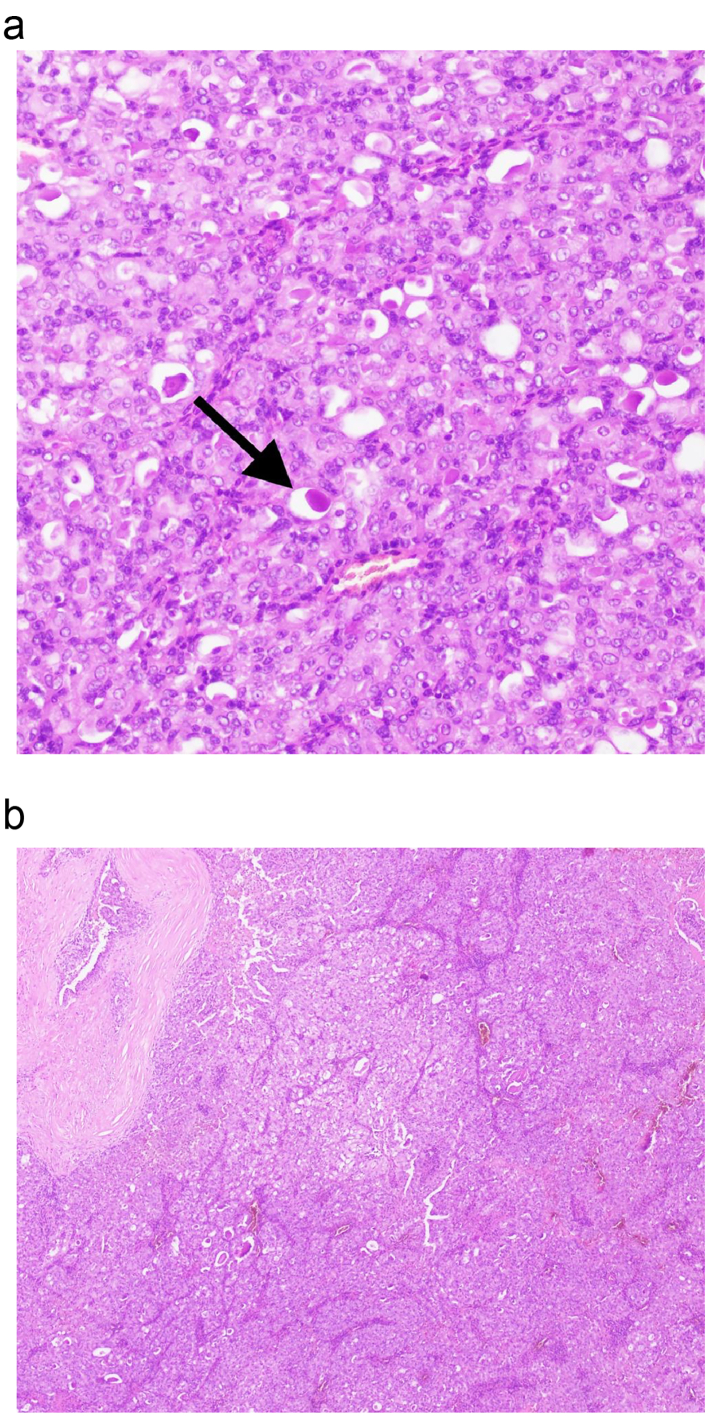
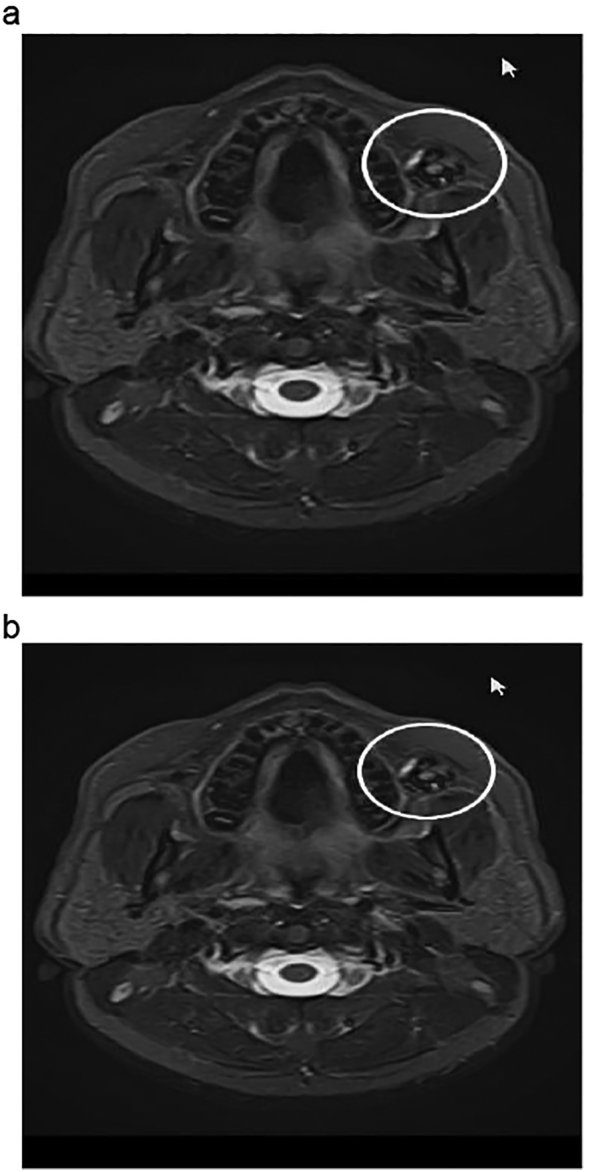
A 42 years old hypertensive male, shop keeper by occupation, with no prior addiction history, no dental extraction or trauma, presented with complaint of nodular lesion on left buccal mucosa for five years. On Clinical examination, adequate mouth opening, dentulous patient with 2.4 × 2 cm well circumscribed, nodular, non-tender, benign looking lesion was observed on left buccal mucosa near upper alveolus. Overlying mucosa appeared normal with no clinically palpable cervical lymphadenopathy. Histopathology revealed salivary gland neoplasm favoring secretory carcinoma. MRI scan showed lobulated enhancing nodular lesion arising from left buccal mucosa of size 2.3 ∗ 1.3 ∗ 1.7 cm, close to left superior alveolus without involving any cortical areas of marrow infiltration, with bilateral symmetrical level IIa reactive cervical nodes. Wide local excision and ipsilateral selective neck dissection [level 1, 2, 3] was done. Post-operative period was smooth with no complain of paresthesia observed. The final histopathology report showed secretory carcinoma. Two out of six lymph nodes from level I were positive for metastatic carcinoma with no extra nodal extension. Final stage of the tumor was pT1N2bMx. Patient underwent post-operative adjuvant radiotherapy for period of 6 weeks, received total 30 fractions and total dose of 6000 centigray.
SC behaved clinically an indolent being painless and having long duration of symptoms with normal overlying mucosa. But histopathologically there was cervical node metastasis. That changed final staging and added adjuvant treatment for this patient. The discrepancy in clinical and pathological diagnosis might be due to the indolent clinical behavior of SC arising in the minor salivary gland of buccal mucosa. In the present case, the absence of zymogen granules and presence of microcytic pattern with eosinophilic cytoplasm and eosinophilic secretory material were suggestive of SC.
This case report represents a rare case of SC of minor salivary glands of buccal mucosa, which was indolent as per clinical presentation but on final histopathological report it had cervical nodal metastasis that changed the final stage of the disease, for which adjuvant radiotherapy was needed. Although Secretory carcinomas are generally considered having a favorable prognosis and are regarded as low- grade carcinomas with limited number of recurrence and cervical nodal metastasis, but sometimes they do metastasize to cervical nodes for which accurate and timely intervention in the form of neck dissection may be performed to establish final staging and start additional treatment modality if required for better outcome of the disease.
分泌性癌(SC)是口腔中一种罕见的唾液腺肿瘤,在显微镜下可能类似于腺泡细胞癌(ACC)和黏液表皮样癌(MEC)。唾液腺分泌性癌最近被列入世界卫生组织头颈部第四版分类中。这些肿瘤大多位于腮腺,在颊黏膜小唾液腺中报道的病例极少。本病例报告符合SCARE标准。
一名42岁的男性高血压患者,职业为店主,无既往成瘾史,无拔牙或外伤史,因左侧颊黏膜出现结节性病变5年前来就诊。临床检查时,患者开口度正常,为有牙患者,在左上牙槽附近的左侧颊黏膜上观察到一个边界清晰、大小为2.4×2cm的结节状、无压痛、外观良性病变。覆盖黏膜外观正常,未触及颈部淋巴结肿大。组织病理学显示为倾向于分泌性癌的唾液腺肿瘤。MRI扫描显示一个分叶状强化结节性病变,起源于左侧颊黏膜,大小为2.3∗1.3∗1.7cm,靠近左上牙槽,未累及任何骨髓浸润的皮质区域,双侧IIa级有对称的反应性颈部淋巴结。进行了广泛局部切除和同侧选择性颈部清扫术[1、2、3区]。术后恢复顺利,未观察到感觉异常的主诉。最终组织病理学报告显示为分泌性癌。I区六个淋巴结中有两个出现转移性癌,无淋巴结外扩展。肿瘤的最终分期为pT1N2bMx。患者接受了为期6周的术后辅助放疗,共30次,总剂量为6000厘戈瑞。
分泌性癌在临床上表现为惰性,无痛,症状持续时间长,覆盖黏膜正常。但组织病理学上存在颈部淋巴结转移。这改变了最终分期并为该患者增加了辅助治疗。临床和病理诊断的差异可能是由于颊黏膜小唾液腺中分泌性癌的惰性临床行为所致。在本病例中,缺乏酶原颗粒以及存在具有嗜酸性细胞质和嗜酸性分泌物质的微细胞模式提示为分泌性癌。
本病例报告代表了一例颊黏膜小唾液腺分泌性癌的罕见病例,根据临床表现为惰性,但最终组织病理学报告显示有颈部淋巴结转移,这改变了疾病的最终分期,为此需要进行辅助放疗。虽然分泌性癌通常被认为预后良好,被视为复发和颈部淋巴结转移数量有限的低级别癌,但有时它们确实会转移至颈部淋巴结。对于这种情况,可能需要以颈部清扫术的形式进行准确及时的干预,以确定最终分期,并在需要时开始额外的治疗方式,以获得更好的疾病治疗效果。