Department of Oncology, Aga Khan University Hospital, Karachi, Pakistan.
Aga Khan University, 74800, Karachi, Pakistan.
BMC Cancer. 2023 Jun 5;23(1):510. doi: 10.1186/s12885-023-11000-3.
Uterine sarcoma is an uncommon aggressive malignancy. Optimal management and prognostic factors have yet to be well recognized due to their rarity and various histological subtypes. This study aims to investigate these patients' prognostic factors, treatment modalities, and oncological outcomes.
A single-center retrospective cohort study was conducted on all patients diagnosed with uterine sarcoma and treated from January 2010 to December 2019 in a tertiary-care hospital in Pakistan. The data were analyzed using STATA software and stratified on the histological subtype. Survival rates were estimated using the Kaplan-Meier method. Crude and adjusted hazard ratios with 95% CI were estimated using univariate and multivariate analysis.
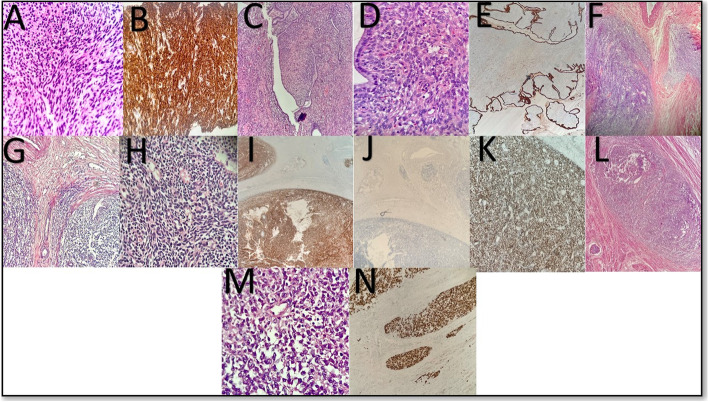
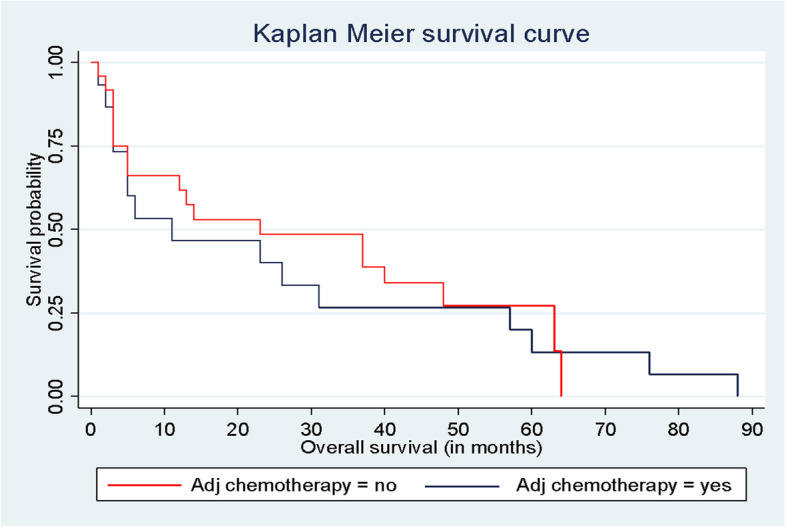
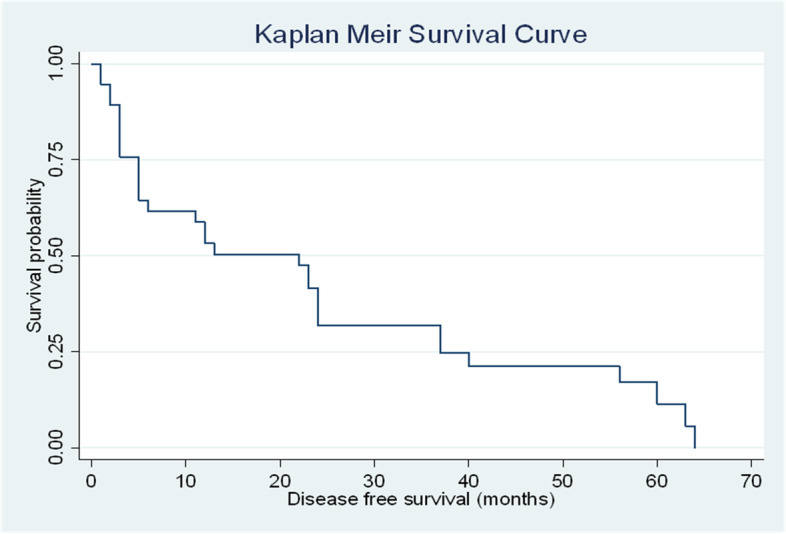
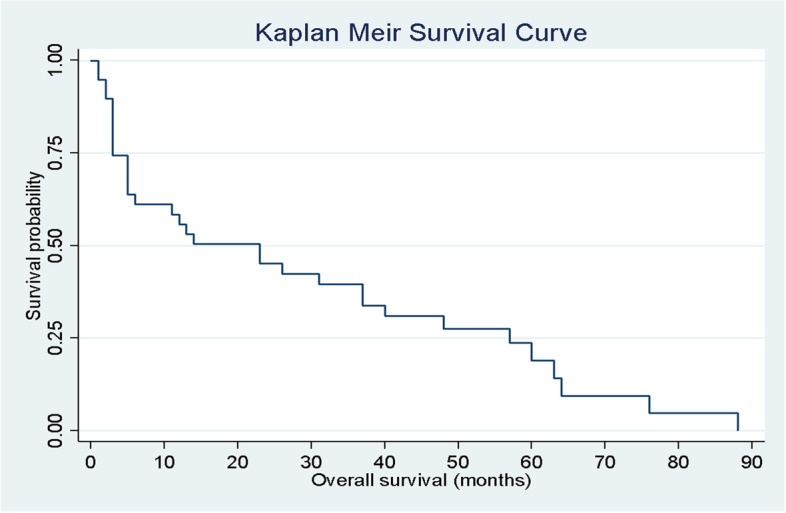
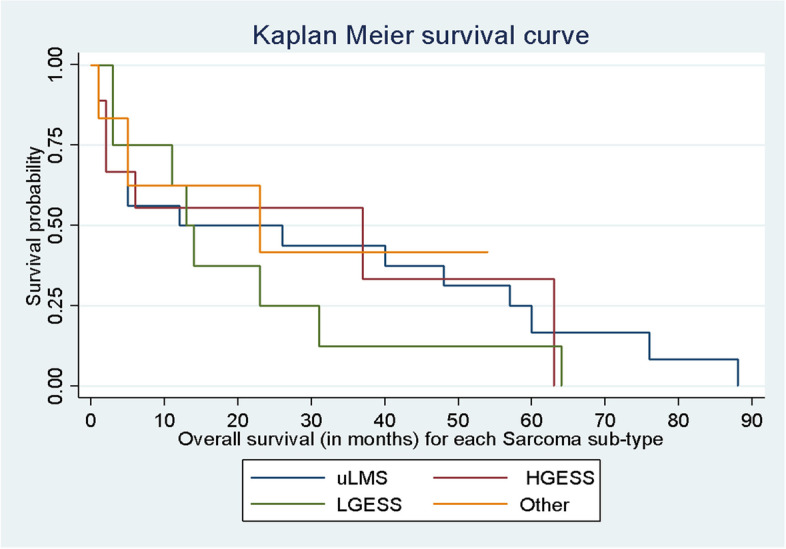
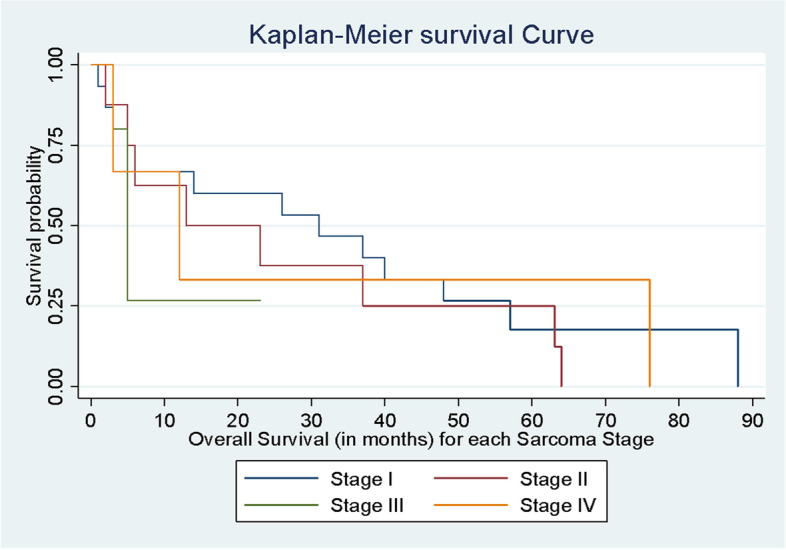
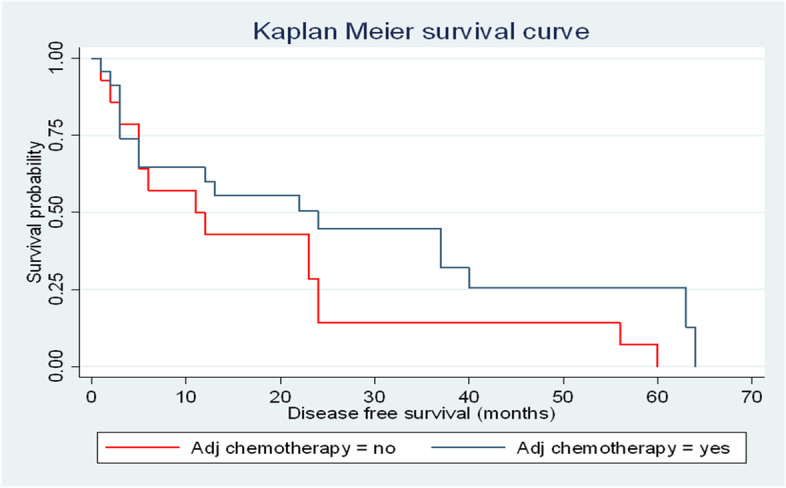
Of the 40 patients, 16(40%) had uterine leiomyosarcoma (u-LMS), 10(25%) had high-grade endometrial stromal sarcoma (HGESS), 8(20%) had low-grade endometrial stromal sarcoma (LGESS) and 6(15%) had other histological subtypes. The median age of all patients was 49 (40-55.5). Thirty-seven (92.5%) patients underwent primary surgical resection, and 24 (60%) patients received adjuvant systemic chemotherapy. The survival plots showed the overall population's DFS of 64 months and the OS of 88 months (p-value = 0.001). The median DFS in all patients was 12 months, and the median OS was 14 months (p-value = 0.001). A small but significant DFS benefit was found in patients who received adjuvant systemic chemotherapy, 13.5 versus 11 months (p-value = 0.001). Multivariate Cox-regression analysis revealed that large tumor size and advanced FIGO stage were substantial factors associated with decreased survival.
Uterine sarcomas are rare malignancies with poor prognosis. Multiple factors, including tumor size, mitotic count, stage of the disease, and myometrial invasion, impact survival outcomes. Adjuvant treatment may decrease the recurrence rate and improve DFS but do not affect OS.
子宫肉瘤是一种罕见的侵袭性恶性肿瘤。由于其罕见性和各种组织学亚型,其最佳治疗方法和预后因素尚未得到充分认识。本研究旨在探讨这些患者的预后因素、治疗方式和肿瘤学结果。
对 2010 年 1 月至 2019 年 12 月在巴基斯坦一家三级保健医院诊断为子宫肉瘤并接受治疗的所有患者进行了单中心回顾性队列研究。使用 STATA 软件对数据进行分析,并按组织学亚型进行分层。使用 Kaplan-Meier 方法估计生存率。使用单变量和多变量分析估计粗和调整后的危险比及其 95%置信区间。
在 40 名患者中,16 名(40%)患有子宫平滑肌肉瘤(u-LMS),10 名(25%)患有高级子宫内膜间质肉瘤(HGESS),8 名(20%)患有低级别子宫内膜间质肉瘤(LGESS),6 名(15%)患有其他组织学亚型。所有患者的中位年龄为 49 岁(40-55.5)。37 名(92.5%)患者接受了原发性手术切除,24 名(60%)患者接受了辅助全身化疗。生存图显示,总体人群的无病生存率为 64 个月,总生存率为 88 个月(p 值=0.001)。所有患者的中位无病生存率为 12 个月,中位总生存率为 14 个月(p 值=0.001)。接受辅助全身化疗的患者无病生存时间有微小但显著的获益,分别为 13.5 个月和 11 个月(p 值=0.001)。多变量 Cox 回归分析显示,肿瘤较大和 FIGO 分期较晚是影响生存的重要因素。
子宫肉瘤是一种罕见的恶性肿瘤,预后不良。多种因素,包括肿瘤大小、有丝分裂计数、疾病分期和肌层浸润,影响生存结果。辅助治疗可能降低复发率并提高无病生存率,但不影响总生存率。