Liktor-Busa Erika, Levine Aidan A, Palomino Seph M, Singh Simar, Wahl Jared, Vanderah Todd W, Stella Nephi, Largent-Milnes Tally M
Department of Pharmacology, University of Arizona, Tucson, AZ, United States.
Department of Pharmacology, University of Washington, Seattle, WA, United States.
Front Pain Res (Lausanne). 2023 May 23;4:1171188. doi: 10.3389/fpain.2023.1171188. eCollection 2023.
The high prevalence and severe symptoms of migraines in humans emphasizes the need to identify underlying mechanisms that can be targeted for therapeutic benefit. Clinical Endocannabinoid Deficiency (CED) posits that reduced endocannabinoid tone may contribute to migraine development and other neuropathic pain conditions. While strategies that increase levels of the endocannabinoid n-arachidonoylethanolamide have been tested, few studies have investigated targeting the levels of the more abundant endocannabinoid, 2-arachidonoylgycerol, as an effective migraine intervention.
Cortical spreading depression was induced in female Sprague Dawley rats via KCl (potassium chloride) administration, followed by measures of endocannabinoid levels, enzyme activity, and neuroinflammatory markers. Efficacy of inhibiting 2-arachidonoylglycerol hydrolysis to mitigate periorbital allodynia was then tested using reversal and prevention paradigms.
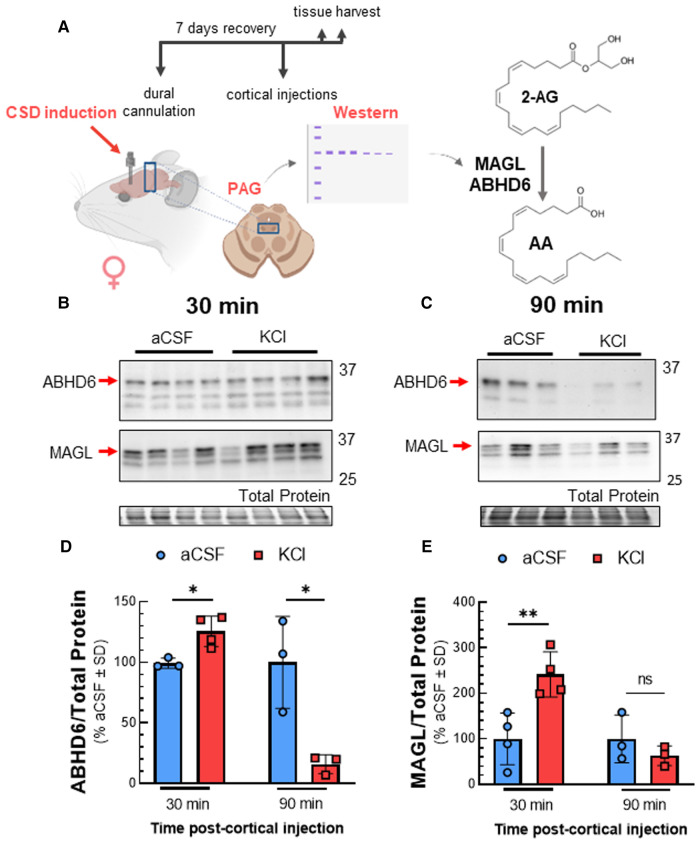
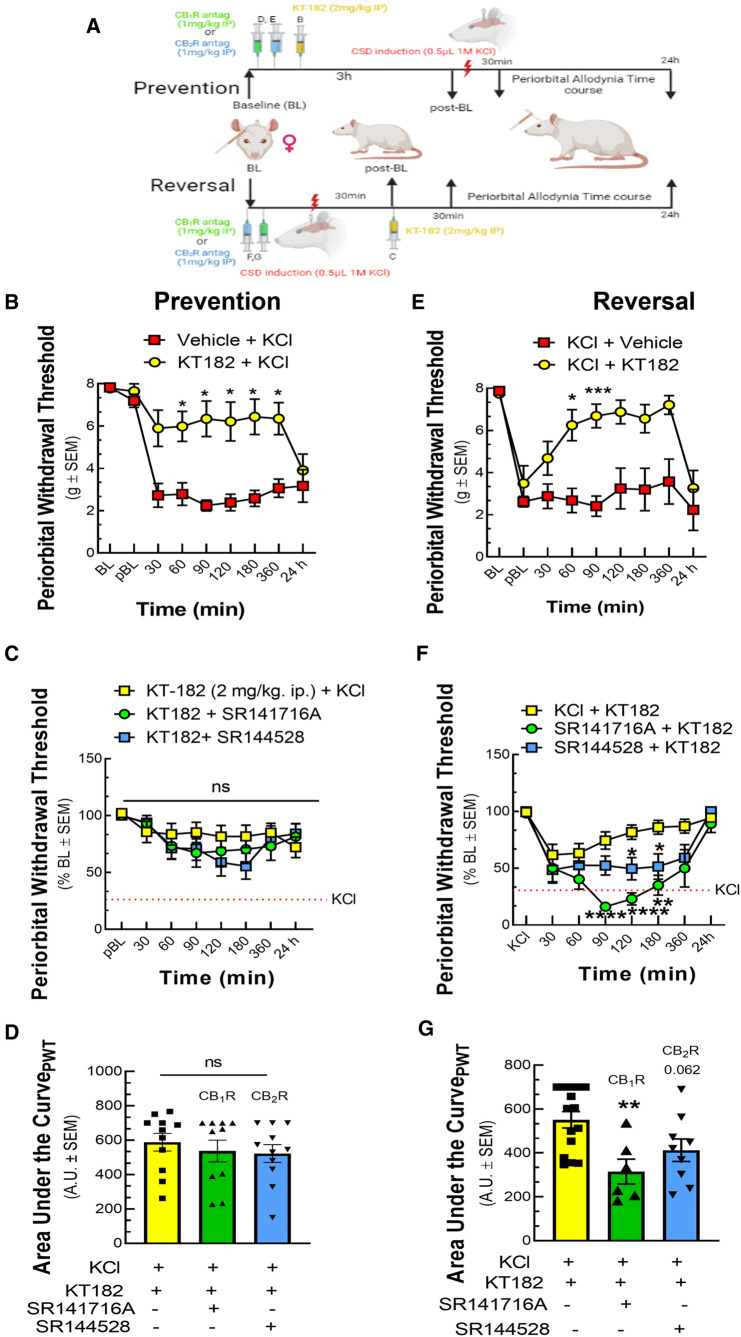
We discovered reduced 2-arachidonoylglycerol levels in the periaqueductal grey associated with increased hydrolysis following headache induction. Pharmacological inhibition of the 2-arachidonoylglycerol hydrolyzing enzymes, -hydrolase domain-containing 6 and monoacylglycerol lipase reversed and prevented induced periorbital allodynia in a cannabinoid receptor-dependent manner.
Our study unravels a mechanistic link between 2-arachidonoylglycerol hydrolysis activity in the periaqueductal grey in a preclinical, rat model of migraine. Thus, 2-arachidonoylglycerol hydrolysis inhibitors represent a potential new therapeutic avenue for the treatment of headache.
偏头痛在人类中的高发病率和严重症状凸显了识别可用于治疗的潜在机制的必要性。临床内源性大麻素缺乏症(CED)认为,内源性大麻素水平降低可能导致偏头痛的发展以及其他神经性疼痛病症。虽然已经测试了提高内源性大麻素N-花生四烯酸乙醇胺水平的策略,但很少有研究将目标对准更丰富的内源性大麻素2-花生四烯酸甘油的水平,以作为一种有效的偏头痛干预措施。
通过给予氯化钾在雌性斯普拉格-道利大鼠中诱导皮层扩散性抑制,随后测量内源性大麻素水平、酶活性和神经炎症标志物。然后使用逆转和预防范式测试抑制2-花生四烯酸甘油水解以减轻眶周异常性疼痛的效果。
我们发现,在诱导头痛后,中脑导水管周围灰质中2-花生四烯酸甘油水平降低,且水解增加。对2-花生四烯酸甘油水解酶——含α-水解酶结构域6和单酰甘油脂肪酶——的药理学抑制以大麻素受体依赖性方式逆转并预防了诱导的眶周异常性疼痛。
我们的研究揭示了在偏头痛的临床前大鼠模型中,中脑导水管周围灰质中2-花生四烯酸甘油水解活性之间的机制联系。因此,2-花生四烯酸甘油水解抑制剂代表了一种潜在的治疗头痛的新途径。