Coyoy-Salgado Angélica, Orozco-Barrios Carlos, Sánchez-Torres Stephanie, Olayo María Guadalupe, Cruz Guillermo Jesus, Morales-Corona Juan, Olayo Roberto, Diaz-Ruiz Araceli, Ríos Camilo, Alvarez-Mejia Laura, Mondragón-Lozano Rodrigo, Morales-Guadarrama Axayacatl, Alonso-García Ana Lucía, Fabela-Sánchez Omar, Salgado-Ceballos Hermelinda
Researchers for Mexico CONACyT-Instituto Mexicano del Seguro Social, Medical Research Unit in Neurological Diseases, Specialty Hospital, National Medical Center Siglo XXI, Mexico City, Mexico.
Research Center of the Proyecto CAMINA A.C., Mexico City, Mexico.
Front Neurol. 2023 May 23;14:1124245. doi: 10.3389/fneur.2023.1124245. eCollection 2023.
Spinal cord injury (SCI) can cause paralysis, for which effective therapeutic strategies have not been developed yet. The only accepted strategy for patients is rehabilitation (RB), although this does not allow complete recovery of lost functions, which makes it necessary to combine it with strategies such as plasma-synthesized polypyrrole/iodine (PPy/I), a biopolymer with different physicochemical properties than PPy synthesized by conventional methods. After SCI in rats, PPy/I promotes functional recovery. Therefore, the purpose of this study was to increase the beneficial effects of both strategies and identify which genes activate PPy/I when applied alone or in combination with a mixed scheme of RB by swimming and enriched environment (SW/EE) in rats with SCI.
Microarray analysis was performed to identify mechanisms of action underlying the effects of PPy/I and PPy/I+SW/EE on motor function recovery as evaluated by the BBB scale.
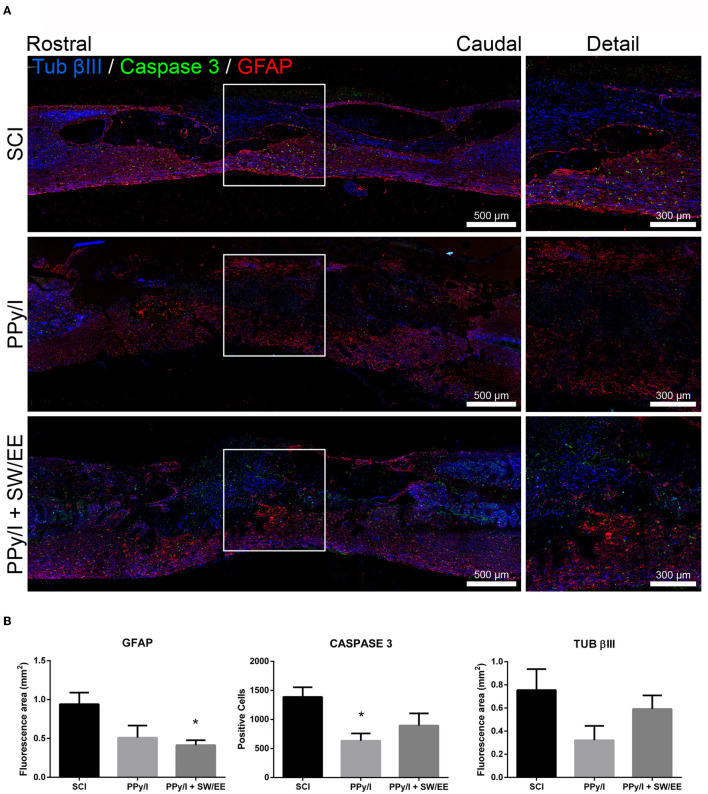
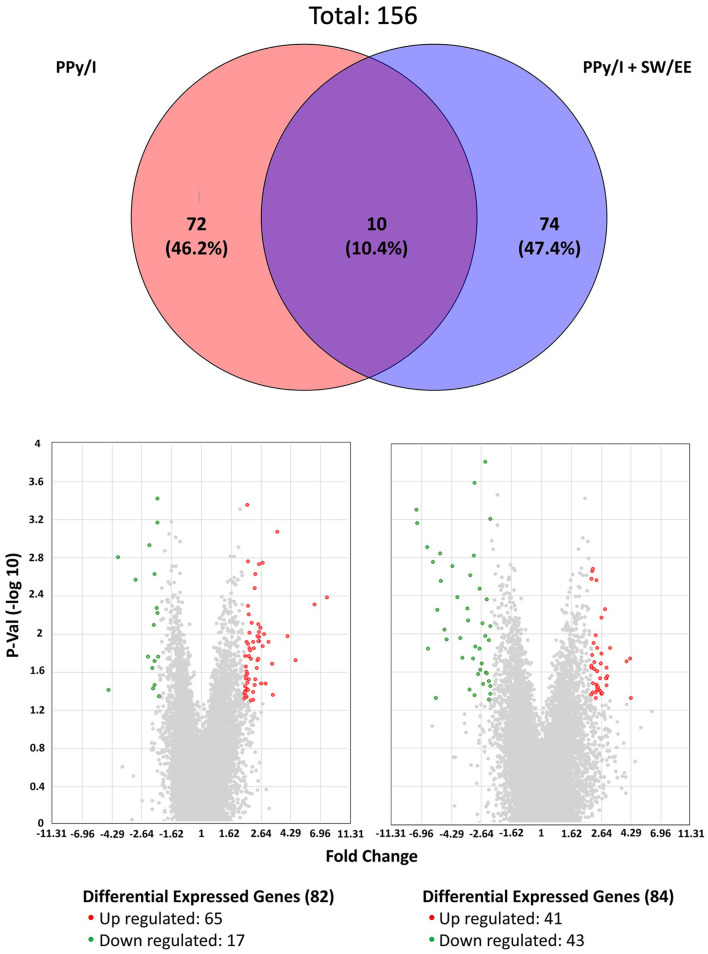
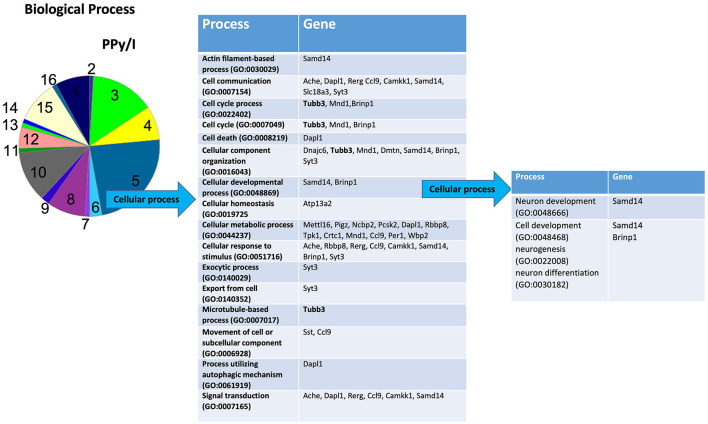
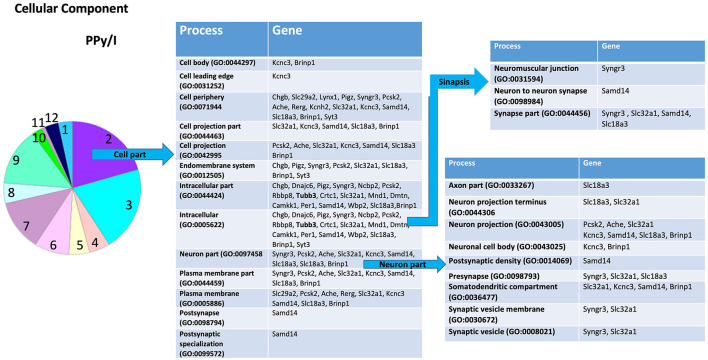
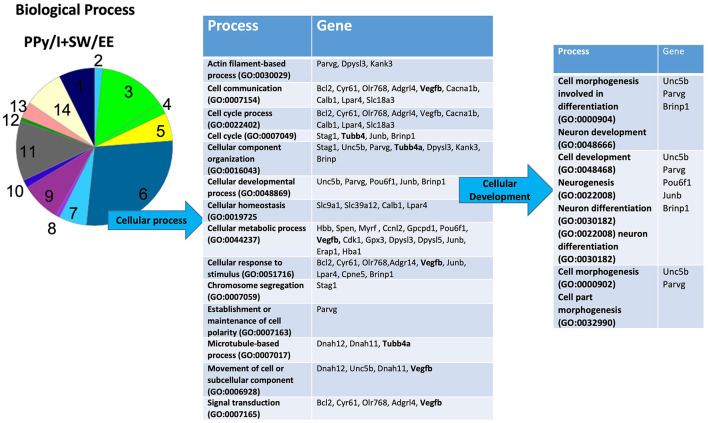
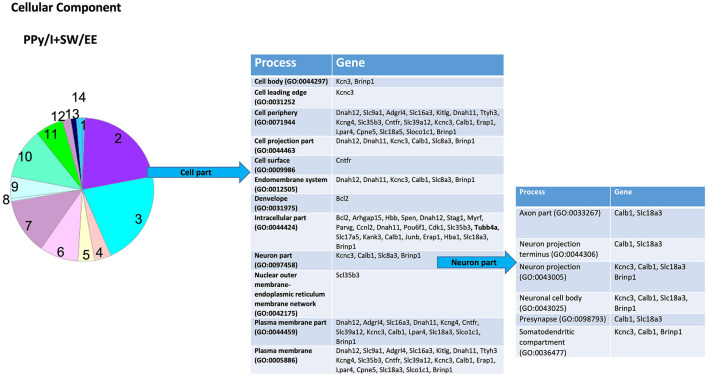
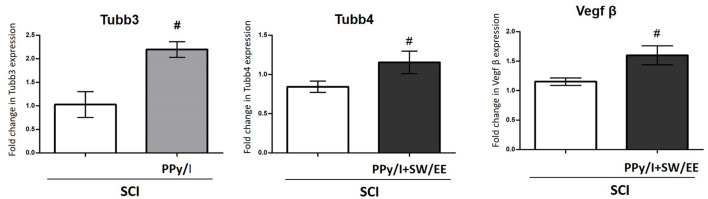
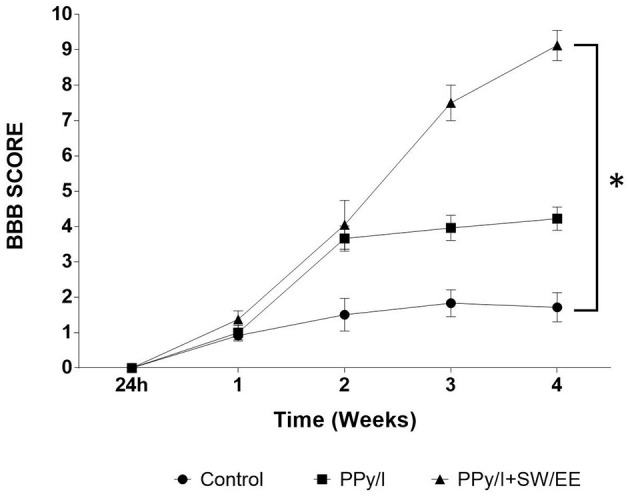
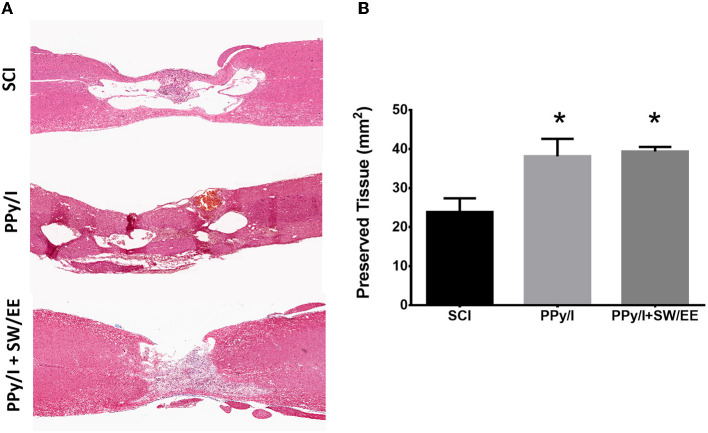
Results showed robust upregulation by PPy/I in genes related to the developmental process, biogenesis, synapse, and synaptic vesicle trafficking. In addition, PPy/I+SW/EE increased the expression of genes related to proliferation, biogenesis, cell development, morphogenesis, cell differentiation, neurogenesis, neuron development, and synapse formation processes. Immunofluorescence analysis showed the expression of β-III tubulin in all groups, a decreased expression of caspase-3 in the PPy/I group and GFAP in the PPy/I+SW/EE group ( < 0.05). Better preservation of nerve tissue was observed in PPy/I and PPy/SW/EE groups ( < 0.05). In the BBB scale, the control group scored 1.72 ± 0.41, animals with PPy/I treatment scored 4.23 ± 0.33, and those with PPy/I+SW/EE scored 9.13 ± 0.43 1 month after follow-up.
Thus, PPy/I+SW/EE could represent a therapeutic alternative for motor function recovery after SCI.
脊髓损伤(SCI)可导致瘫痪,目前尚未开发出有效的治疗策略。对于患者而言,唯一被认可的策略是康复治疗(RB),尽管这并不能使丧失的功能完全恢复,因此有必要将其与诸如等离子体合成聚吡咯/碘(PPy/I)等策略相结合,PPy/I是一种具有与传统方法合成的聚吡咯不同物理化学性质的生物聚合物。大鼠脊髓损伤后,PPy/I可促进功能恢复。因此,本研究的目的是增强这两种策略的有益效果,并确定在大鼠脊髓损伤后单独应用PPy/I或与游泳和丰富环境(SW/EE)的混合康复方案联合应用时,哪些基因会被激活。
进行微阵列分析,以确定PPy/I和PPy/I+SW/EE对运动功能恢复的作用机制,运动功能恢复通过BBB评分进行评估。
结果显示,PPy/I使与发育过程、生物合成、突触和突触小泡运输相关的基因显著上调。此外,PPy/I+SW/EE增加了与增殖、生物合成、细胞发育、形态发生、细胞分化、神经发生、神经元发育和突触形成过程相关的基因表达。免疫荧光分析显示所有组均有β-III微管蛋白表达,PPy/I组中caspase-3表达降低,PPy/I+SW/EE组中GFAP表达降低(P<0.05)。在PPy/I组和PPy/SW/EE组中观察到神经组织保存更好(P<0.05)。在BBB评分中,随访1个月后,对照组得分为1.72±0.41,接受PPy/I治疗的动物得分为4.23±0.33,接受PPy/I+SW/EE治疗的动物得分为9.13±0.43。
因此,PPy/I+SW/EE可能是脊髓损伤后运动功能恢复的一种治疗选择。