Unit of Infectious Diseases, Department of Biomedical and Clinical Sciences, Università degli Studi di Milano, Milan, Italy.
Unit of Medical Statistics, Biometry and Epidemiology, Department of Biomedical and Clinical Sciences, and DSRC, Università degli Studi di Milano, Milan, Italy.
PLoS One. 2023 Jun 8;18(6):e0279218. doi: 10.1371/journal.pone.0279218. eCollection 2023.
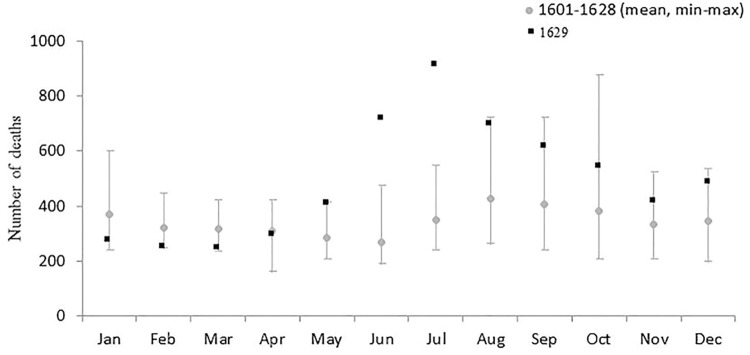
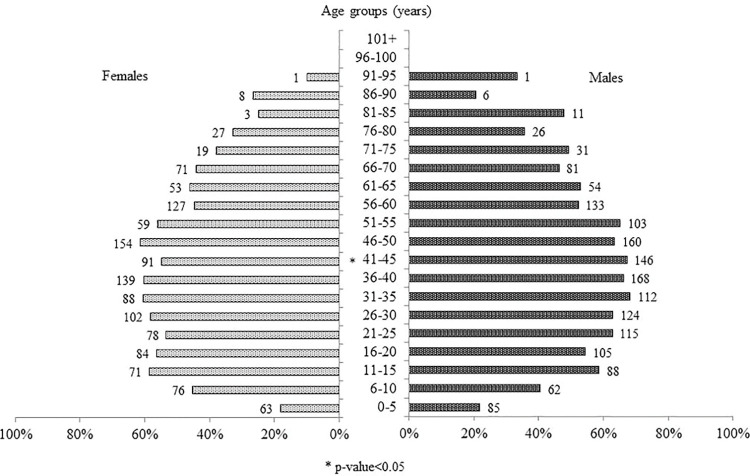
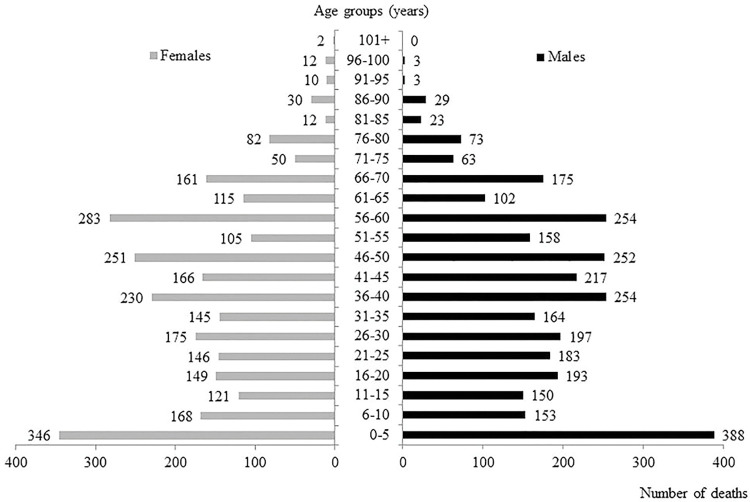
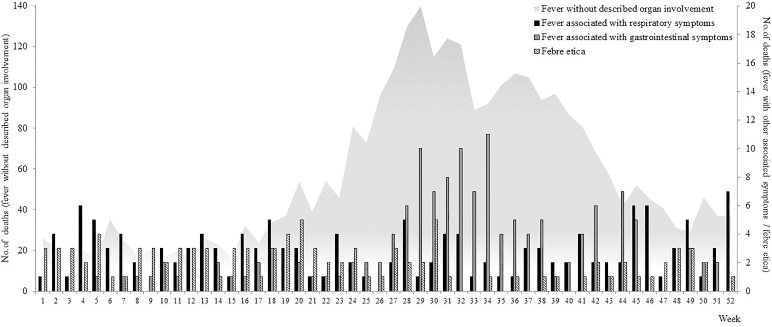
An epidemic not attributable to plague caused thousands of deaths in Milan in the summer of 1629, a time of war and famine that immediately preceded the even more fatal Great Plague of 1630 that killed an estimated ten of thousands of people. The 5,993 deaths of 1629 recorded in the Liber Mortuorum of Milan (a city with an estimated population of 130,000 inhabitants at the time) were 45.7% more than the average number recorded between 1601 and 1628. Registered deaths peaked in July, and 3,363 of the deaths (56,1%) were attributed to a febrile illness which, in most cases (2,964, 88%), was not associated with a rash or organ involvement. These deaths involved 1,627 males and 1,334 females and occurred at a median age of 40 years (range 0-95). In this paper, we discuss the possible cause of the epidemic, which may have been an outbreak of typhoid fever.
1629 年夏天,一场无法归因于鼠疫的流行病导致米兰数千人死亡,当时正值战争和饥荒时期,紧随其后的是 1630 年更为致命的大瘟疫,据估计有数万人死亡。米兰《死亡登记簿》(当时该市人口估计为 13 万人)记录的 1629 年 5993 例死亡人数比 1601 年至 1628 年期间的平均死亡人数高出 45.7%。登记死亡人数在 7 月达到峰值,其中 3363 例死亡(56.1%)归因于发热性疾病,在大多数情况下(2964 例,88%),这种疾病与皮疹或器官受累无关。这些死亡涉及 1627 名男性和 1334 名女性,中位年龄为 40 岁(范围 0-95 岁)。本文讨论了此次疫情的可能病因,可能是伤寒爆发。