School of Medicine, Wolaita Sodo University, Wolaita Sodo, Ethiopia.
School of Public Health, Wolaita Sodo University, Wolaita Sodo, Ethiopia.
PLoS One. 2023 Jun 9;18(6):e0287042. doi: 10.1371/journal.pone.0287042. eCollection 2023.
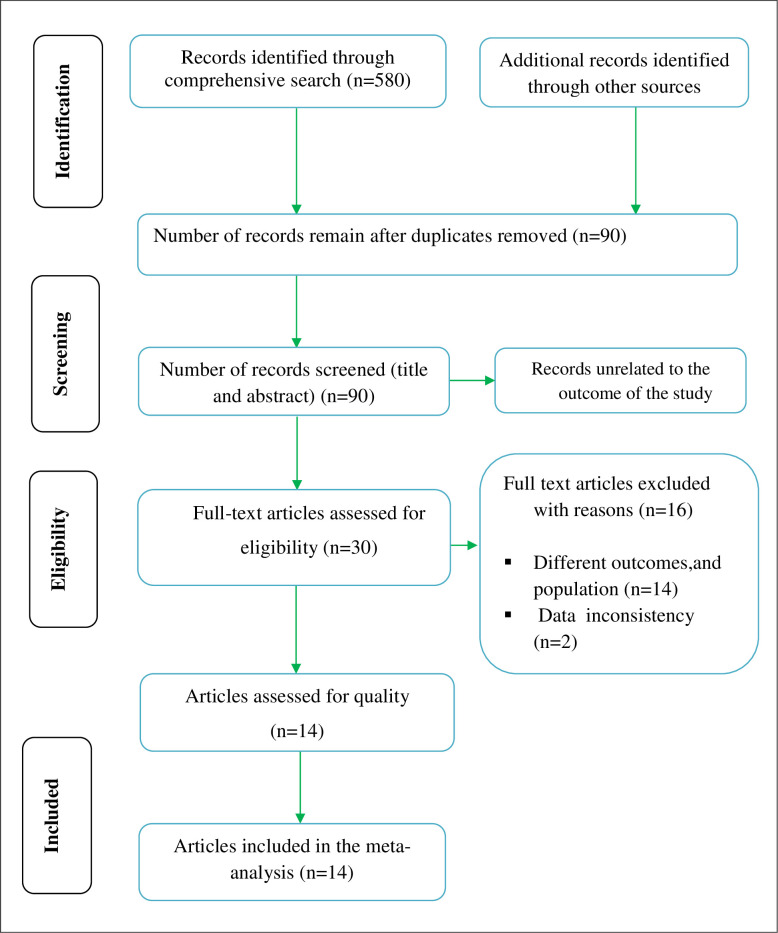
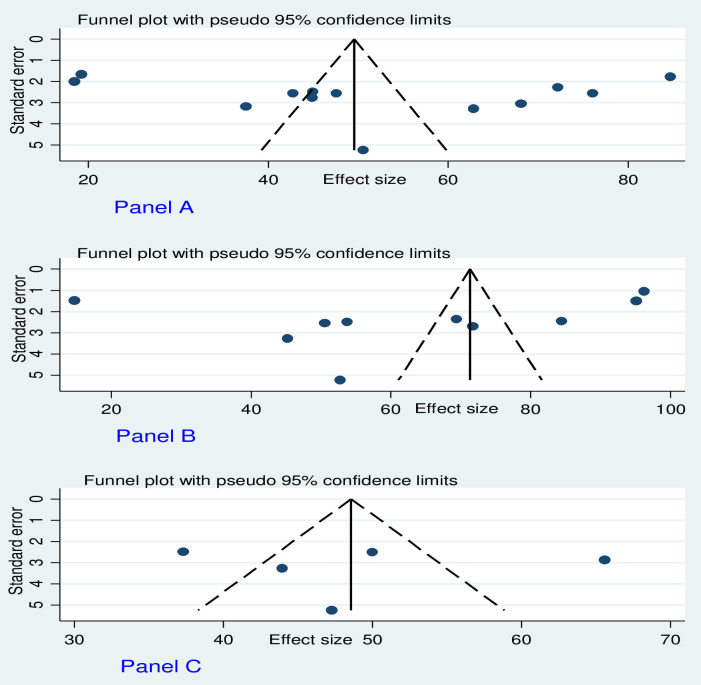
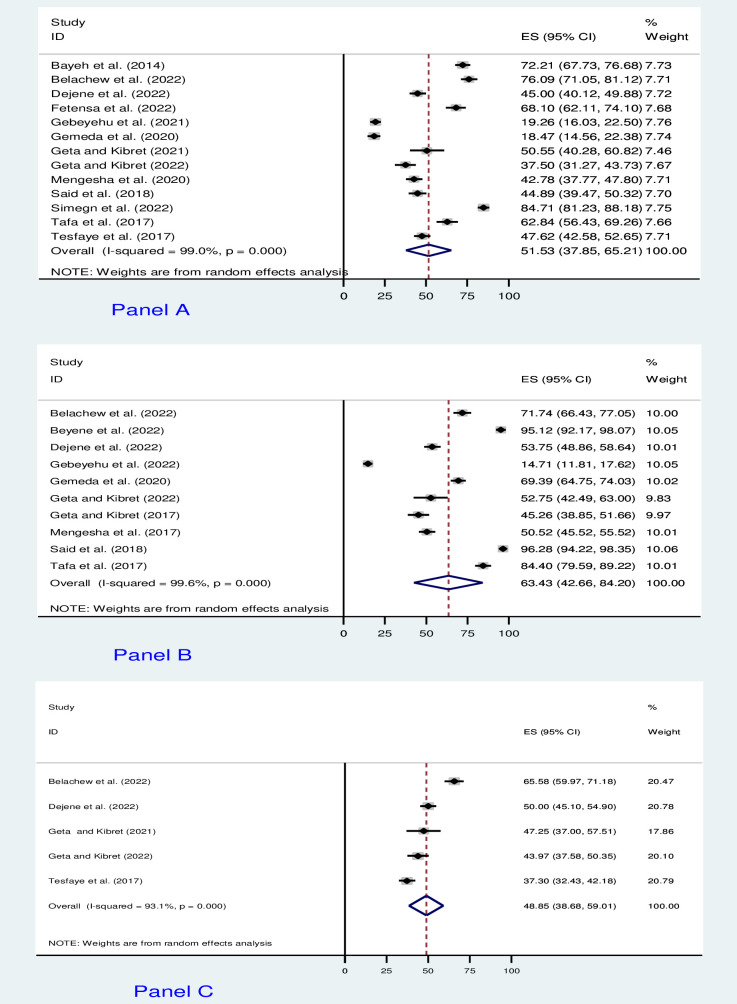
Antimicrobial resistance (AMR) is a silent pandemic that has claimed millions of lives, and resulted in long-term disabilities, limited treatment options, and high economic costs associated with the healthcare burden. Given the rising prevalence of AMR, which is expected to pose a challenge to current empirical antibiotic treatment strategies, we sought to summarize the available data on knowledge, attitudes, and practices regarding AMR in Ethiopia. Articles were searched in international electronic databases. Microsoft Excel spreadsheet and STATA software version 16 were used for data extraction and analysis, respectively. The Preferred Reporting Items for Systematic Reviews and Meta-Analysis 2020 checklist was followed. The methodological quality of the studies included was assessed by the Joana Briggs Institute critical appraisal checklists. The random-effect meta-analysis model was used to estimate Der Simonian-Laird's pooled effect. Statistical heterogeneity of the meta-analysis was checked through Higgins and Thompson's I2 statistics and Cochran's Q test. Publication bias was investigated by funnel plots, and the regression-based test of Egger for small study effects with a P value < 0.05 was considered to indicate potential reporting bias. In addition, sensitivity and subgroup meta-analyses were performed. Fourteen studies with a total of 4476 participants met the inclusion criteria. Overall, the pooled prevalence of good AMR knowledge was 51.53% [(95% confidence interval (CI): 37.85, 65.21), I2 = 99.0%, P <0.001]. The pooled prevalence of favorable attitudes and good practices were 63.43% [(95% CI: 42.66, 84.20), I2 = 99.6, P <0.001], and 48.85% [(95% CI: 38.68, 59.01), I2 = 93.1, P <0.001] respectively. In conclusion, there is a significant knowledge and practice gap on AMR among the general public, patients, and livestock producers. As a result, we call for greater educational interventions to raise awareness and build a strong national AMR narrative.
抗微生物药物耐药性(AMR)是一场无声的大流行,已经夺走了数百万人的生命,并导致长期残疾、治疗选择有限以及与医疗负担相关的高经济成本。鉴于 AMR 的流行率不断上升,预计这将对当前基于经验的抗生素治疗策略构成挑战,我们试图总结有关埃塞俄比亚 AMR 的知识、态度和实践的现有数据。文章在国际电子数据库中进行了搜索。使用 Microsoft Excel 电子表格和 STATA 软件版本 16 分别进行数据提取和分析。遵循系统评价和荟萃分析 2020 检查表的首选报告项目。使用乔安娜布里格斯研究所批判性评价清单评估纳入研究的方法学质量。使用 Der Simonian-Laird 的汇总效应随机效应荟萃分析模型进行估计。通过 Higgins 和 Thompson 的 I2 统计量和 Cochran 的 Q 检验检查荟萃分析的统计异质性。通过漏斗图检查发表偏倚,并考虑 Egger 基于回归的小研究效应检验(P 值 < 0.05)来指示潜在的报告偏倚。此外,还进行了敏感性和亚组荟萃分析。符合纳入标准的 14 项研究共 4476 名参与者。总体而言,良好的 AMR 知识的汇总流行率为 51.53%[95%置信区间(CI):37.85,65.21],I2=99.0%,P<0.001]。有利态度和良好实践的汇总流行率分别为 63.43%[95%CI:42.66,84.20],I2=99.6,P<0.001]和 48.85%[95%CI:38.68,59.01],I2=93.1,P<0.001]。总之,普通民众、患者和牲畜生产者对抗微生物药物耐药性存在显著的知识和实践差距。因此,我们呼吁开展更多的教育干预措施,以提高认识并建立强大的国家 AMR 叙述。