Department of Molecular Oncology, Graduate School of Medicine, Tokyo Medical and Dental University, 1-5-45 Yushima, Bunkyo-Ku, Tokyo, 113-8519, Japan.
Department of Hepato-Biliary-Pancreatic Surgery, Graduate School of Medicine, Tokyo Medical and Dental University, Tokyo, Japan.
Sci Rep. 2023 Jun 9;13(1):9449. doi: 10.1038/s41598-023-36660-w.
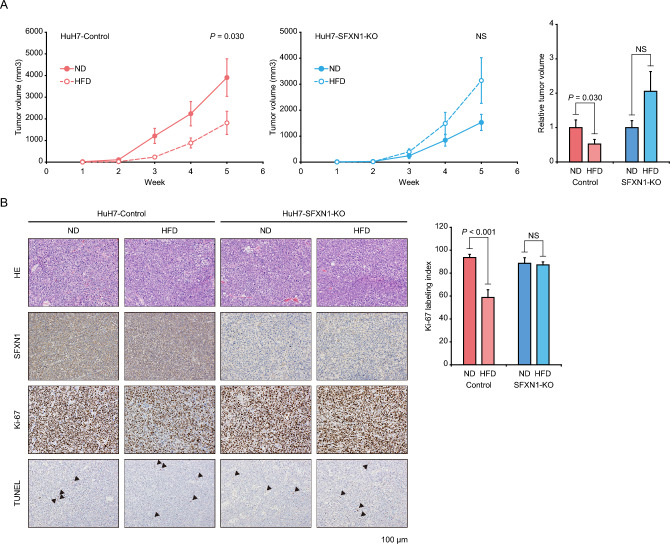
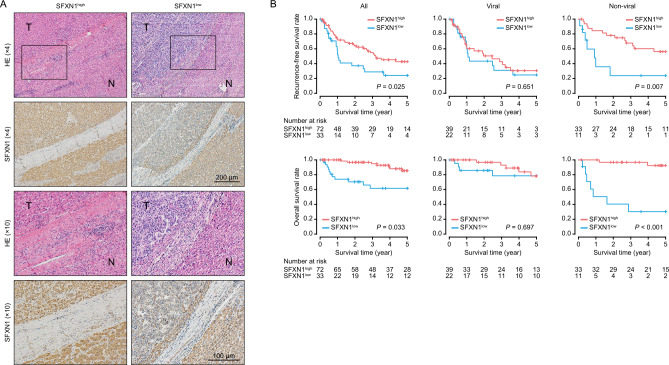
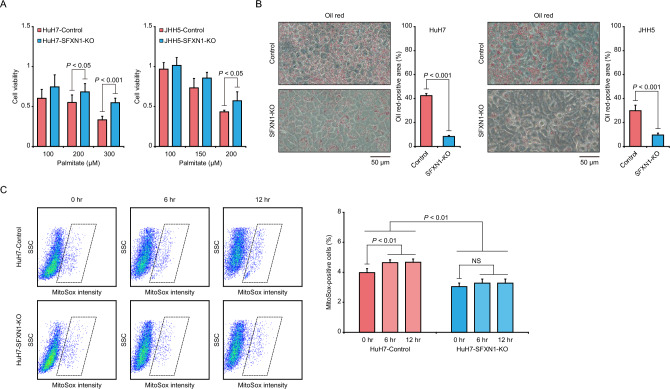
Hepatocellular carcinoma (HCC) imposes a huge global burden, arising from various etiological factors such as hepatitis virus infection and metabolic syndrome. While prophylactic vaccination and antiviral treatment have decreased the incidence of viral HCC, the growing prevalence of metabolic syndrome has led to an increase in non-viral HCC. To identify genes downregulated and specifically associated with unfavorable outcome in non-viral HCC cases, screening analysis was conducted using publically available transcriptome data. Among top 500 genes meeting the criteria, which were involved in lipid metabolism and mitochondrial function, a serine transporter located on inner mitochondrial membrane SFXN1 was highlighted. SFXN1 protein expression was significantly reduced in 33 of 105 HCC tissue samples, and correlated to recurrence-free and overall survival only in non-viral HCC. Human HCC cells with SFXN1 knockout (KO) displayed higher cell viability, lower fat intake and diminished reactive oxygen species (ROS) production in response to palmitate administration. In a subcutaneous transplantation mouse model, high-fat diet feeding attenuated tumorigenic potential in the control cells, but not in the SFXN1-KO cells. In summary, loss of SFXN1 expression suppresses lipid accumulation and ROS generation, preventing toxic effects from fat overload in non-viral HCC, and predicts clinical outcome of non-viral HCC patients.
肝细胞癌 (HCC) 带来了巨大的全球负担,其病因包括肝炎病毒感染和代谢综合征等多种因素。虽然预防性疫苗接种和抗病毒治疗降低了病毒性 HCC 的发病率,但代谢综合征患病率的上升导致了非病毒性 HCC 的增加。为了鉴定与非病毒性 HCC 不良预后相关的下调基因,我们使用公开的转录组数据进行了筛选分析。在符合标准的前 500 个基因中,有参与脂质代谢和线粒体功能的基因,其中位于线粒体内膜的丝氨酸转运蛋白 SFXN1 尤为突出。在 105 个 HCC 组织样本中,有 33 个样本的 SFXN1 蛋白表达明显降低,且仅在非病毒性 HCC 中与无复发生存和总体生存相关。SFXN1 敲除 (KO) 的人 HCC 细胞在棕榈酸处理后显示出更高的细胞活力、更低的脂肪摄入和减少的活性氧 (ROS) 产生。在皮下移植小鼠模型中,高脂肪饮食喂养降低了对照组细胞的致瘤潜力,但对 SFXN1-KO 细胞没有影响。总之,SFXN1 表达的缺失抑制了脂质积累和 ROS 的产生,防止了非病毒性 HCC 中脂肪过载的毒性作用,并预测了非病毒性 HCC 患者的临床预后。