Critical Illness, Brain Dysfunction, and Survivorship Center, Vanderbilt University Medical Center (VUMC), Suite 450, 4th Floor, 2525 West End Avenue, Nashville, TN, 37203, USA.
Section of Surgical Sciences, Division of Acute Care Surgery, Department of Surgery, VUMC, 1211 21st Avenue South, Medical Arts Building, Suite 404, Nashville, TN, 37212, USA.
Crit Care. 2023 Jun 9;27(1):228. doi: 10.1186/s13054-023-04479-6.
To evaluate the safety, feasibility, and efficacy of combined adrenergic blockade with propranolol and clonidine in patients with severe traumatic brain injury (TBI).
Administration of adrenergic blockade after severe TBI is common. To date, no prospective trial has rigorously evaluated this common therapy for benefit.
This phase II, single-center, double-blinded, pilot randomized placebo-controlled trial included patients aged 16-64 years with severe TBI (intracranial hemorrhage and Glasgow Coma Scale score ≤ 8) within 24 h of ICU admission. Patients received propranolol and clonidine or double placebo for 7 days. The primary outcome was ventilator-free days (VFDs) at 28 days. Secondary outcomes included catecholamine levels, hospital length of stay, mortality, and long-term functional status. A planned futility assessment was performed mid-study.
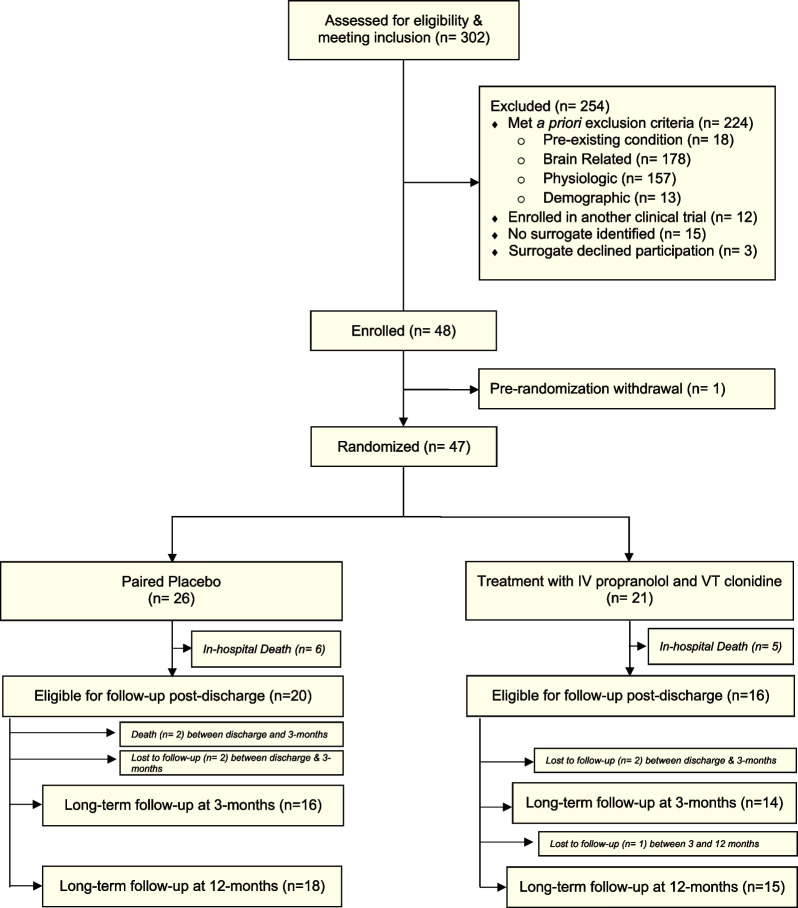
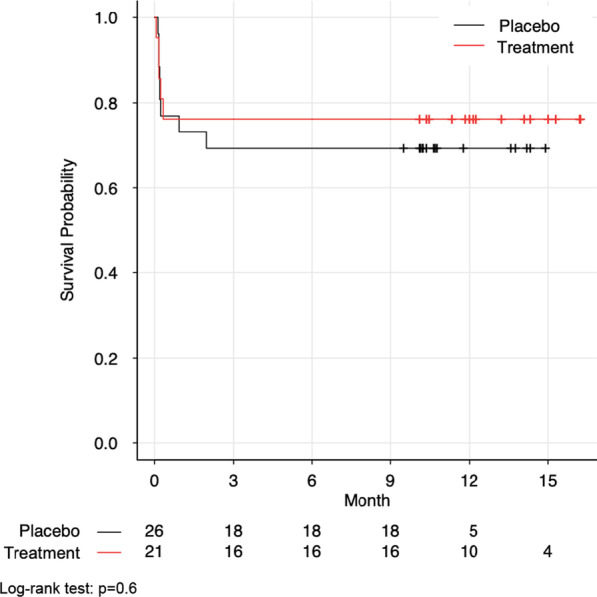
Dose compliance was 99%, blinding was intact, and no open-label agents were used. No treatment patient experienced dysrhythmia, myocardial infarction, or cardiac arrest. The study was stopped for futility after enrolling 47 patients (26 placebo, 21 treatment), per a priori stopping rules. There was no significant difference in VFDs between treatment and control groups [0.3 days, 95% CI (- 5.4, 5.8), p = 1.0]. Other than improvement of features related to sympathetic hyperactivity (mean difference in Clinical Features Scale (CFS) 1.7 points, CI (0.4, 2.9), p = 0.012), there were no between-group differences in the secondary outcomes.
Despite the safety and feasibility of adrenergic blockade with propranolol and clonidine after severe TBI, the intervention did not alter the VFD outcome. Given the widespread use of these agents in TBI care, a multi-center investigation is warranted to determine whether adrenergic blockade is of therapeutic benefit in patients with severe TBI. Trial Registration Number NCT01322048.
评估联合使用普萘洛尔和可乐定进行肾上腺素能阻断在严重创伤性脑损伤(TBI)患者中的安全性、可行性和疗效。
在严重 TBI 后使用肾上腺素能阻断是常见的。迄今为止,尚无前瞻性试验严格评估这种常见治疗方法的益处。
这是一项 II 期、单中心、双盲、试验性随机安慰剂对照试验,纳入了年龄在 16-64 岁之间、在 ICU 入院后 24 小时内发生颅内出血和格拉斯哥昏迷量表评分≤8 的严重 TBI 患者。患者接受普萘洛尔和可乐定或双安慰剂治疗 7 天。主要结局是 28 天的无呼吸机天数(VFDs)。次要结局包括儿茶酚胺水平、住院时间、死亡率和长期功能状态。在研究中期进行了计划的无效性评估。
剂量依从性为 99%,盲法完整,未使用开放标签药物。没有治疗组患者发生心律失常、心肌梗死或心脏骤停。根据预先设定的停止规则,在纳入 47 例患者(26 例安慰剂,21 例治疗)后,该研究因无效而停止。治疗组和对照组之间的 VFD 无显著差异[0.3 天,95%置信区间(-5.4,5.8),p=1.0]。除了与交感神经兴奋相关的特征改善(临床特征量表(CFS)的平均差异为 1.7 分,置信区间(0.4,2.9),p=0.012)外,两组间在其他次要结局上无差异。
尽管在严重 TBI 后使用普萘洛尔和可乐定进行肾上腺素能阻断是安全可行的,但该干预措施并未改变 VFD 结局。鉴于这些药物在 TBI 治疗中的广泛应用,有必要进行多中心研究,以确定肾上腺素能阻断是否对严重 TBI 患者具有治疗益处。试验注册号 NCT01322048。