Department of Neurology, Faculty of Medicine, University of Cologne and University Hospital Cologne, Cologne, Germany.
Cologne Excellence Cluster on Cellular Stress Responses in Aging-Associated Diseases (CECAD), University of Cologne, Cologne, Germany.
J Neuroinflammation. 2023 Jun 9;20(1):139. doi: 10.1186/s12974-023-02822-w.
Autoimmune neuropathies can result in long-term disability and incomplete recovery, despite adequate first-line therapy. Kinesin-5 inhibition was shown to accelerate neurite outgrowth in different preclinical studies. Here, we evaluated the potential neuro-regenerative effects of the small molecule kinesin-5 inhibitor monastrol in a rodent model of acute autoimmune neuropathies, experimental autoimmune neuritis.
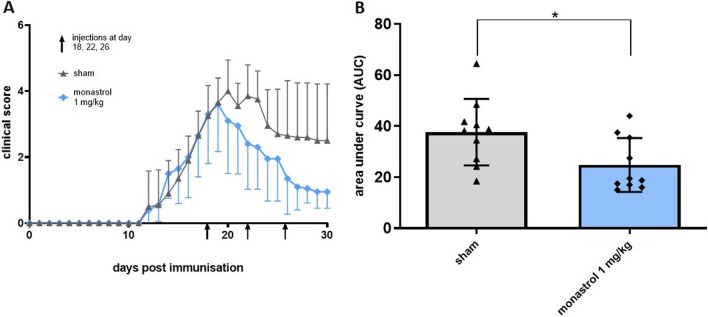
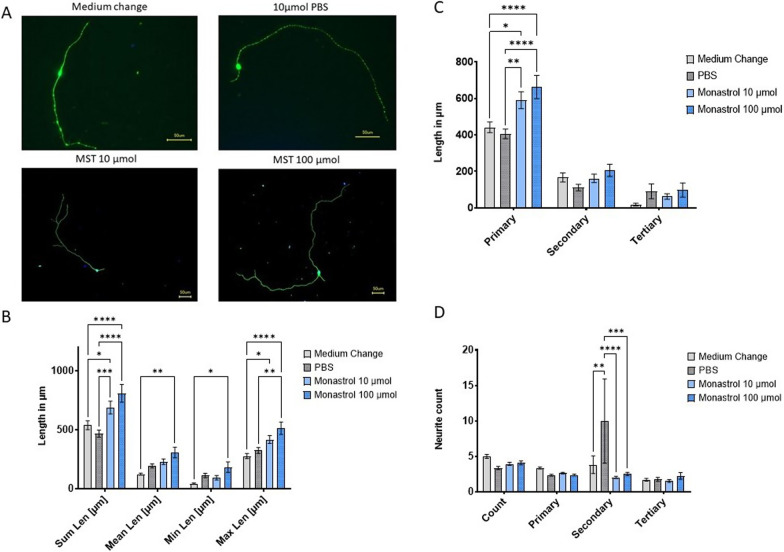
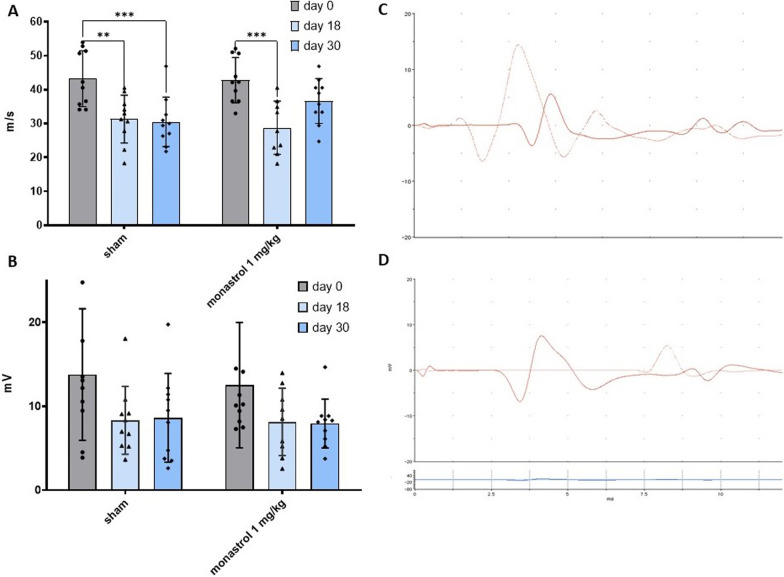
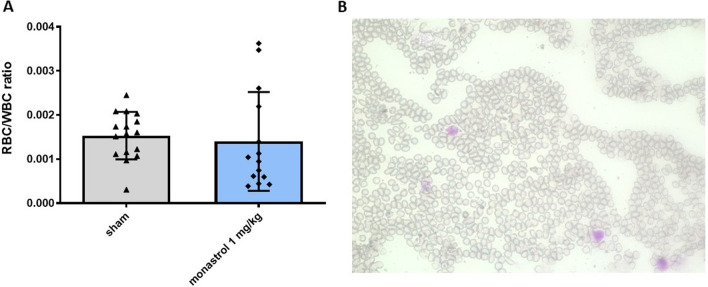
Experimental autoimmune neuritis was induced in Lewis rats with the neurogenic P2-peptide. At the beginning of the recovery phase at day 18, the animals were treated with 1 mg/kg monastrol or sham and observed until day 30 post-immunisation. Electrophysiological and histological analysis for markers of inflammation and remyelination of the sciatic nerve were performed. Neuromuscular junctions of the tibialis anterior muscles were analysed for reinnervation. We further treated human induced pluripotent stem cells-derived secondary motor neurons with monastrol in different concentrations and performed a neurite outgrowth assay.
Treatment with monastrol enhanced functional and histological recovery in experimental autoimmune neuritis. Motor nerve conduction velocity at day 30 in the treated animals was comparable to pre-neuritis values. Monastrol-treated animals showed partially reinnervated or intact neuromuscular junctions. A significant and dose-dependent accelerated neurite outgrowth was observed after kinesin-5 inhibition as a possible mode of action.
Pharmacological kinesin-5 inhibition improves the functional outcome in experimental autoimmune neuritis through accelerated motor neurite outgrowth and histological recovery. This approach could be of interest to improve the outcome of autoimmune neuropathy patients.
尽管采用了适当的一线治疗方法,自身免疫性神经病变仍可导致长期残疾和不完全康复。已有研究表明,驱动蛋白-5 抑制剂可促进不同临床前模型中的轴突生长。在此,我们评估了小分子驱动蛋白-5 抑制剂单奈立林在急性自身免疫性神经病变(实验性自身免疫性神经炎)啮齿动物模型中的潜在神经再生作用。
用神经原性 P2 肽诱导 Lewis 大鼠发生实验性自身免疫性神经炎。在第 18 天恢复阶段开始时,用 1mg/kg 的单奈立林或假处理对动物进行治疗,并观察至免疫后 30 天。对坐骨神经的炎症和髓鞘再生标志物进行电生理和组织学分析。分析胫骨前肌的运动神经肌肉接头是否有再支配。我们还进一步用不同浓度的单奈立林处理人诱导多能干细胞源性次级运动神经元,并进行轴突生长测定。
单奈立林治疗可增强实验性自身免疫性神经炎的功能和组织学恢复。治疗动物在第 30 天的运动神经传导速度可与神经炎前的值相媲美。单奈立林治疗动物的运动神经肌肉接头有部分再支配或完整。作为可能的作用机制,观察到驱动蛋白-5 抑制后出现显著的、剂量依赖性的加速轴突生长。
通过加速运动神经元轴突生长和组织学恢复,药理学上抑制驱动蛋白-5 可改善实验性自身免疫性神经炎的功能结局。这种方法可能有助于改善自身免疫性神经病患者的结局。