Gu Wei, Wei Yinghuan, Fu Xianjie, Gu Ronghui, Chen Junlei, Jian Junyou, Huang Liejun, Yuan Chunmao, Guan Wenling, Hao Xiaojiang
State Key Laboratory of Functions and Applications of Medicinal Plants, Guizhou Medical University, Guiyang 550014, China.
Natural Products Research Center of Guizhou Province, Guiyang 550014, China.
Foods. 2023 May 31;12(11):2225. doi: 10.3390/foods12112225.
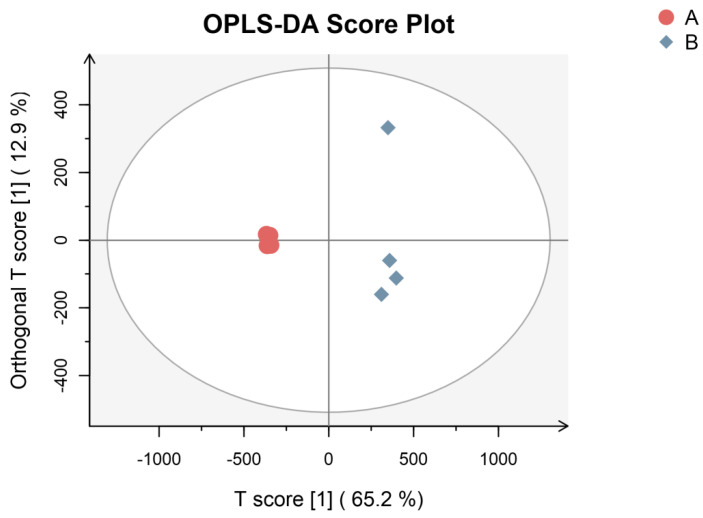
Huang, native to Tibet, China, is a newly discovered Chinese prickly ash, which, recently, has increasingly attracted the attention of researchers. In order to understand its volatile oil compositions and flavor characteristics, and to explore the flavor difference between and the common Chinese prickly ash sold in the market, we analyzed the essential oils of pericarp (MEO) using HS-SPME/GC×GC-TOFMS coupled with multivariate data and flavoromics analyses. The common commercial Chinese prickly ash in Asia, (BEO), was used as a reference. A total of 212 aroma compounds from the 2 species were identified, among which alcohols, terpenoids, esters, aldehydes, and ketones were the major compounds. The predominant components detected from MEO were citronellal, (+)-citronellal, and β-phellandrene. Six components-citronellal, (E,Z)-3,6-nonadien-1-ol, allyl methallyl ether, isopulegol, 3,7-dimethyl-6-octen-1-ol acetate, and 3,7-dimethyl-(R)-6-octen-1-ol-could be used as the potential biomarkers of MEO. The flavoromics analysis showed that MEO and BEO were significantly different in aroma note types. Furthermore, the content differences of several numb taste components in two kinds of prickly ash were quantitatively analyzed using RP-HPLC. The antimicrobial activities of MEO and BEO against four bacterial strains and nine plant pathogenic fungi were determined in vitro. The results indicated that MEO had significantly higher inhibitory activities against most microbial strains than BEO. This study has revealed the fundamental data in respect of the volatile compound properties and antimicrobial activity of , offering basic information on valuable natural sources that can be utilized in the condiment, perfume, and antimicrobial sectors.
黄皮花椒原产于中国西藏,是一种新发现的花椒品种,近年来越来越受到研究人员的关注。为了了解其挥发油成分和风味特征,探索其与市场上常见花椒之间的风味差异,我们采用顶空固相微萃取/全二维气相色谱-飞行时间质谱联用技术,并结合多变量数据和风味组学分析方法,对黄皮花椒果皮挥发油(MEO)进行了分析。以亚洲常见的商业花椒(BEO)作为对照。共鉴定出这两个品种的212种香气化合物,其中醇类、萜类、酯类、醛类和酮类是主要化合物。从MEO中检测到的主要成分是香茅醛、(+)-香茅醛和β-水芹烯。六种成分——香茅醛、(E,Z)-3,6-壬二烯-1-醇、烯丙基甲基烯丙基醚、异蒲勒醇、3,7-二甲基-6-辛烯-1-醇乙酸酯和3,7-二甲基-(R)-6-辛烯-1-醇——可作为MEO的潜在生物标志物。风味组学分析表明,MEO和BEO在香气类型上存在显著差异。此外,还采用反相高效液相色谱法定量分析了两种花椒中几种麻味成分的含量差异。体外测定了MEO和BEO对四种细菌菌株和九种植物病原真菌的抗菌活性。结果表明,MEO对大多数微生物菌株的抑制活性显著高于BEO。本研究揭示了黄皮花椒挥发性化合物特性和抗菌活性的基础数据,为调味品、香水和抗菌领域可利用的宝贵天然资源提供了基础信息。