School of Nursing, University of British Columbia, Vancouver, BC V6T 2B5, Canada.
Int J Environ Res Public Health. 2023 Jun 1;20(11):6031. doi: 10.3390/ijerph20116031.
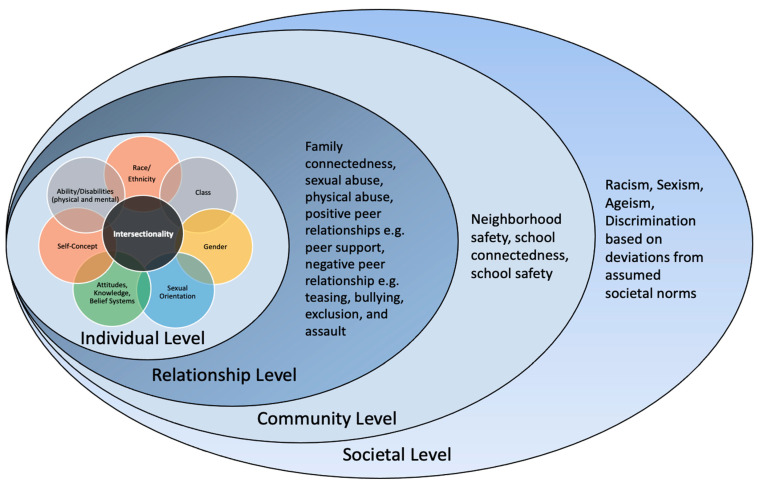
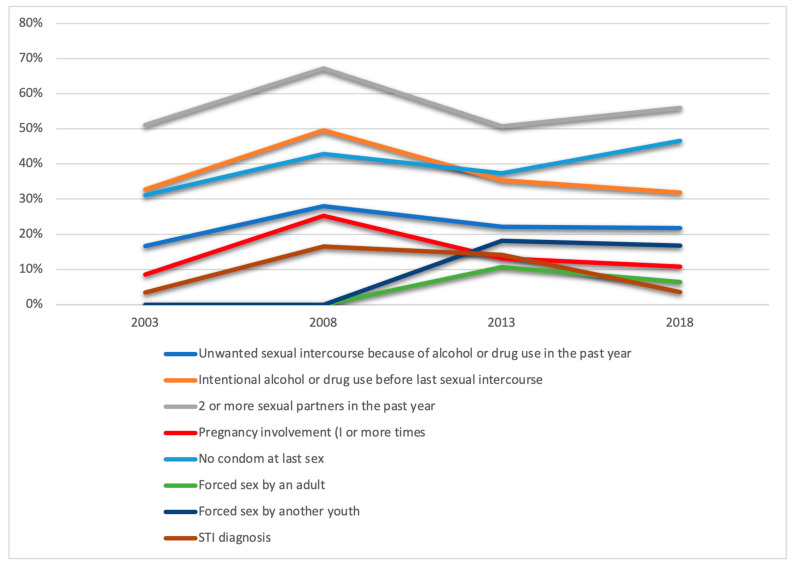
Studies have linked HIV-risky behaviours among young people to several socio-contextual factors. However, the social factors that might increase African Canadian adolescents' exposure to HIV-risky behaviours, including unprotected sex and forced or multiple-sexual partnerships, have received little or no attention in the literature. Using data from the British Columbia Adolescent Health Surveys (2003-2018) and guided by intersectionality and socio-ecological frameworks, we examined the social determinants of HIV-risky behaviours (HRB) among African Canadian adolescents in British Columbia. We observed a general decline in HRB from 2008 to 2018. However, more than half (54.5%) of the 1042 who were sexually experienced in 2018 reported having 2 or more sexual partners, and nearly half reported condom-less sex. Our results demonstrate an important need to evaluate the impacts of several social factors on health outcomes for a unique, marginalized population.
研究表明,年轻人的艾滋病毒高危行为与几个社会背景因素有关。然而,在文献中,很少或根本没有关注可能增加非裔加拿大青少年接触艾滋病毒高危行为(包括无保护性行为和被迫或多性伴侣关系)的社会因素。本研究使用不列颠哥伦比亚省青少年健康调查(2003-2018 年)的数据,并以交叉性和社会生态框架为指导,研究了不列颠哥伦比亚省非裔加拿大青少年的艾滋病毒高危行为(HRB)的社会决定因素。我们观察到 HRB 从 2008 年到 2018 年普遍下降。然而,在 2018 年有过性经历的 1042 名青少年中,超过一半(54.5%)报告有 2 个或更多性伴侣,近一半报告没有使用安全套。我们的研究结果表明,迫切需要评估一些社会因素对这一独特的边缘化群体的健康结果的影响。