Ssewanyana Derrick, Newton Charles R, van Baar Anneloes, Hassan Amin S, Stein Alan, Taylor H Gerry, Van De Vijver Fons, Scerif Gaia, Abubakar Amina
Centre for Geographic Medicine Research Coast, Kenya Medical Research Institute (KEMRI), P. O Box 230, Kilifi, 80108, Kenya.
Utrecht Centre for Child and Adolescent Studies, Utrecht University, Utrecht, The Netherlands.
Int J Behav Med. 2020 Aug;27(4):426-443. doi: 10.1007/s12529-020-09877-6.
Health risk behaviors during adolescence may cluster into patterns that might be predicted by specific factors, among which HIV may have an important role.
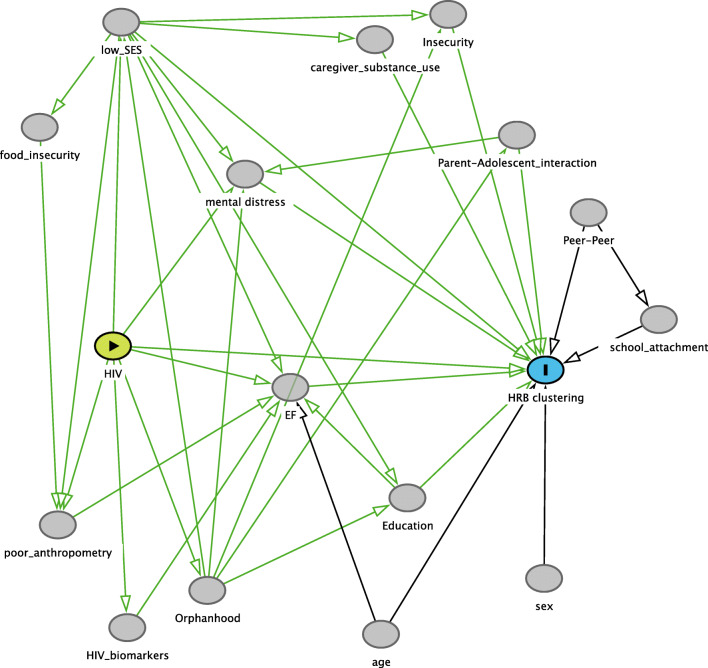
In a cross-sectional study conducted between 2017 and 2018, clustering of HRB and its associated factors was investigated in rural Kenya among 588 adolescents (36% perinatally HIV infected; 28% perinatally HIV exposed but uninfected; and 36% HIV unexposed/uninfected). Latent class analysis of 22 behaviors followed by multinomial logistic regression were conducted. Four risk behavior classes were identified.
No significant differences were found in behavioral class membership across the three HIV groups (p = 0.366). The risk of membership to the higher risk behavioral classes relative to class 1 (the substance and drug abstinent low risk takers) increased with older adolescent age (p = 0.047), increased among adolescent who experienced mental distress (p < 0.001), and those who felt unsafe in their neighborhood (p < 0.002). Better working memory (p = 0.0037) was found to be protective.
The results highlight a need to include screening and interventions for internalizing mental health problems and deficits in executive functioning, as well as steps to involve family members and communities to address psychosocial risk factors in adolescents in Kenya.
青春期的健康风险行为可能会聚类成特定模式,这些模式可能由特定因素预测,其中艾滋病毒可能起重要作用。
在2017年至2018年进行的一项横断面研究中,在肯尼亚农村地区对588名青少年(36%为围产期感染艾滋病毒;28%为围产期暴露但未感染艾滋病毒;36%未暴露/未感染艾滋病毒)的健康风险行为聚类及其相关因素进行了调查。对22种行为进行了潜在类别分析,随后进行了多项逻辑回归分析。确定了四类风险行为。
在三个艾滋病毒组中,行为类别归属没有显著差异(p = 0.366)。相对于第1类(不使用毒品和药物的低风险者),属于高风险行为类别的风险随着青少年年龄的增长而增加(p = 0.047),在经历精神困扰的青少年中增加(p < 0.001),以及在邻里中感到不安全的青少年中增加(p < 0.002)。发现更好的工作记忆(p = 0.0037)具有保护作用。
结果强调需要对心理健康问题内化和执行功能缺陷进行筛查和干预,以及采取措施让家庭成员和社区参与解决肯尼亚青少年的心理社会风险因素。