DOHaD Laboratory, Division of pediatrics, Department Woman-Mother-Child, Lausanne University Hospital, University of Lausanne, 1011 Lausanne, Switzerland.
Center from Cardiovascular and Nutrition Research (C2VN), Institut National de la Santé Et de la Recherche Médicale (INSERM), Aix Marseille Université, UMR-S 1263, UFR de Pharmacie, Campus Santé, 13385 Marseille, France.
Int J Mol Sci. 2023 Jun 5;24(11):9747. doi: 10.3390/ijms24119747.
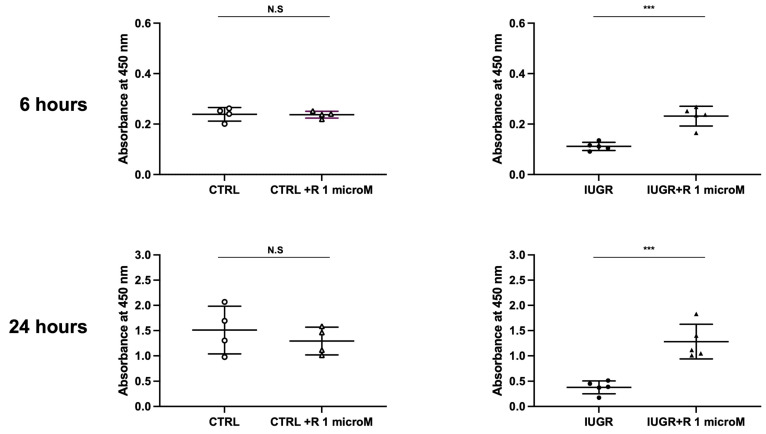
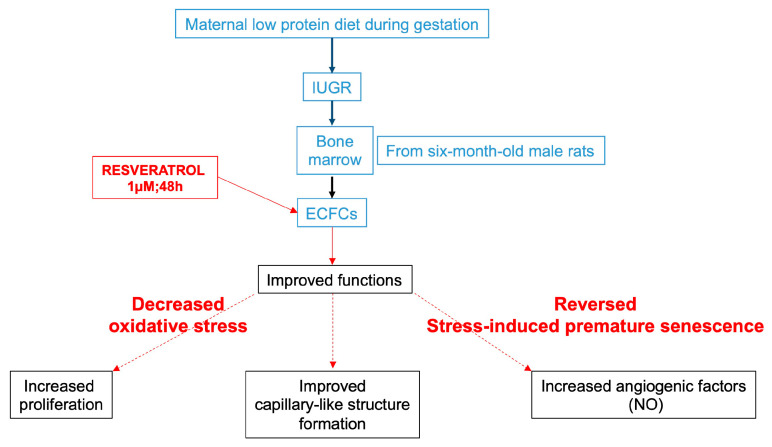
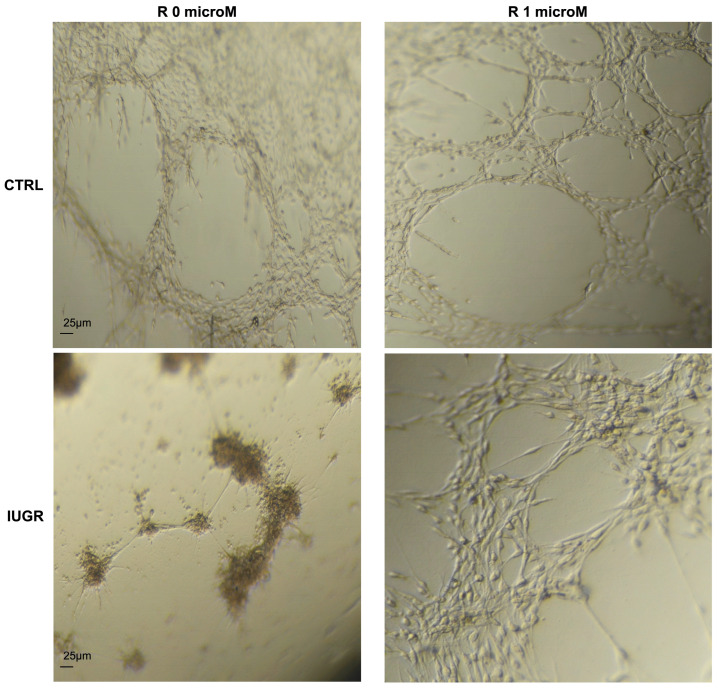
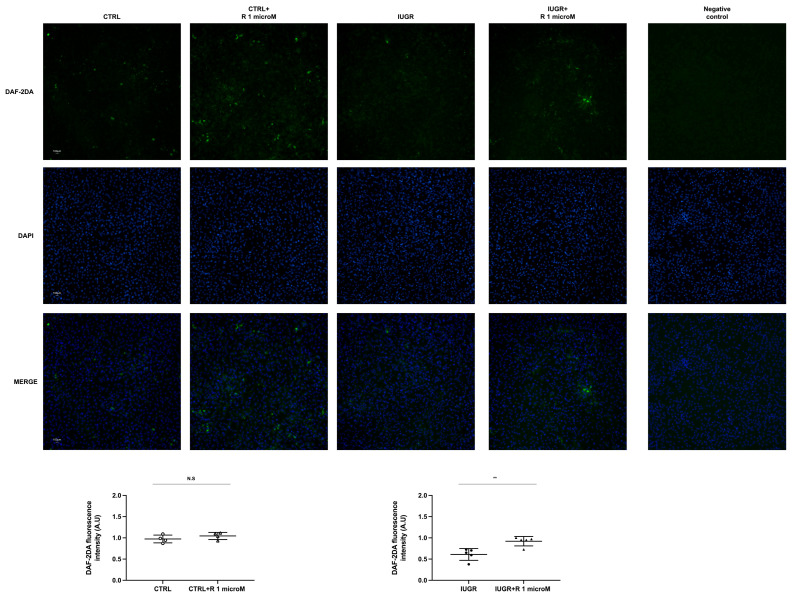
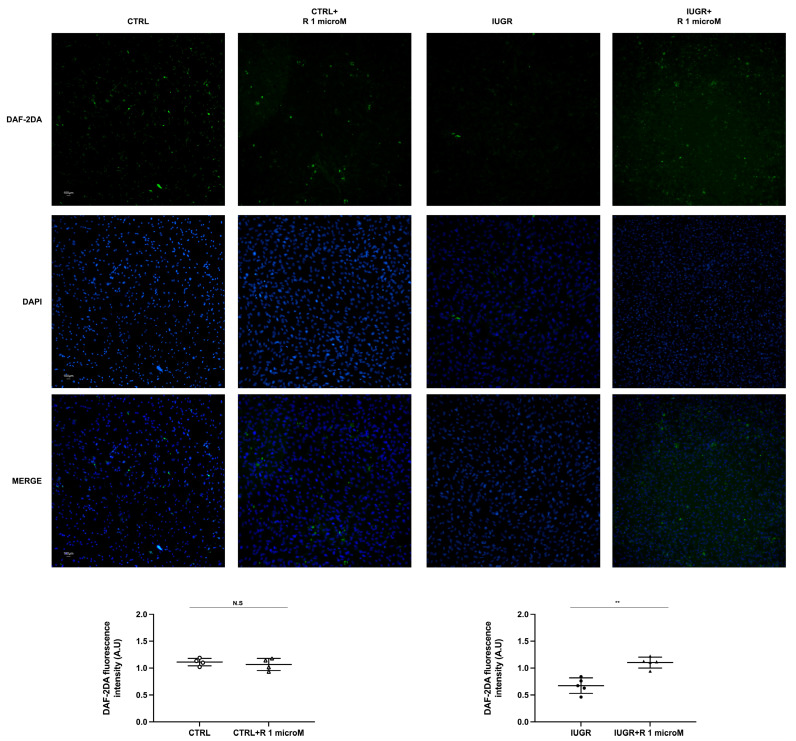
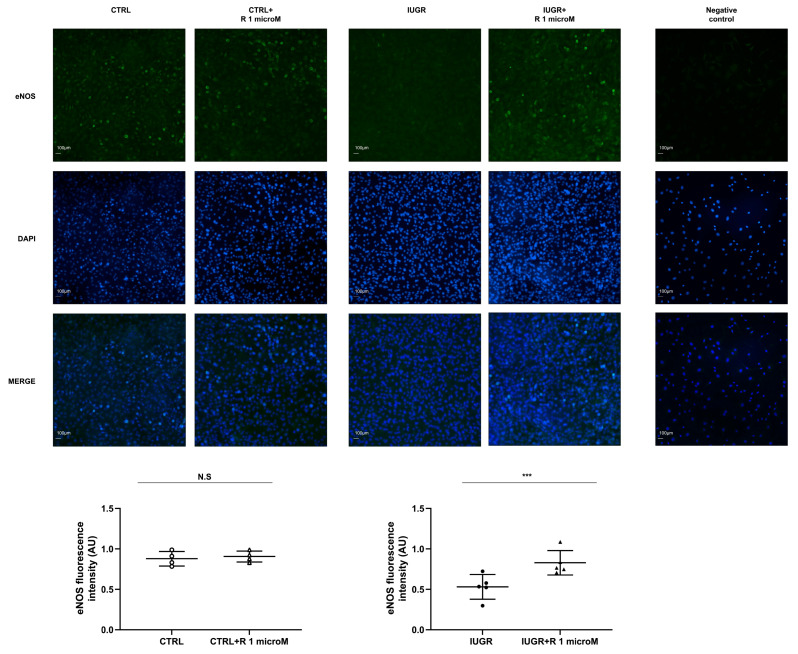
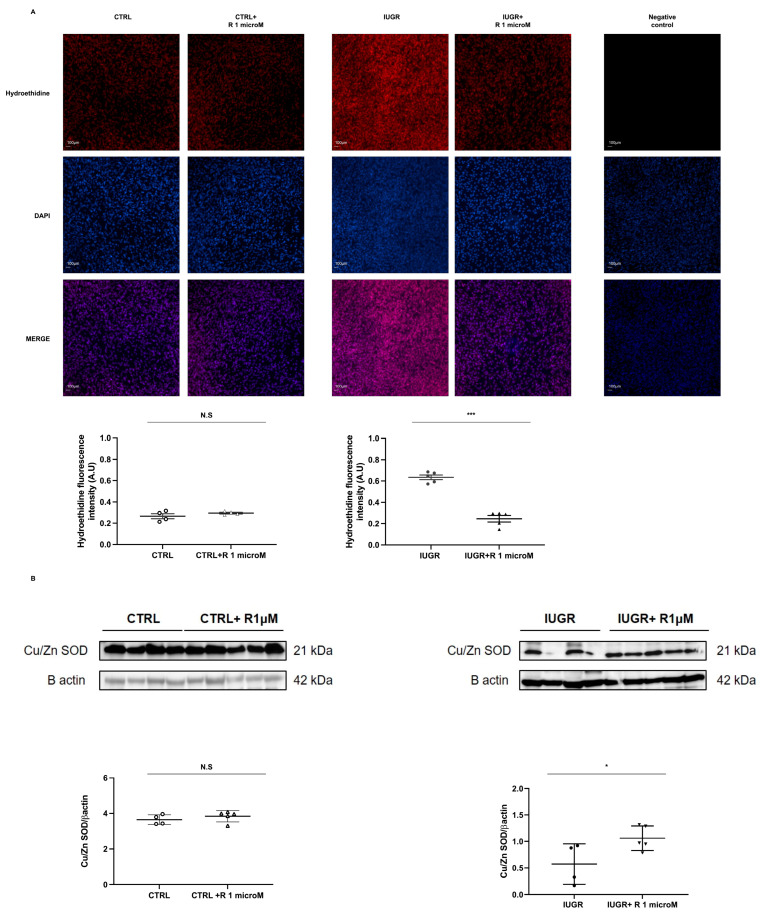
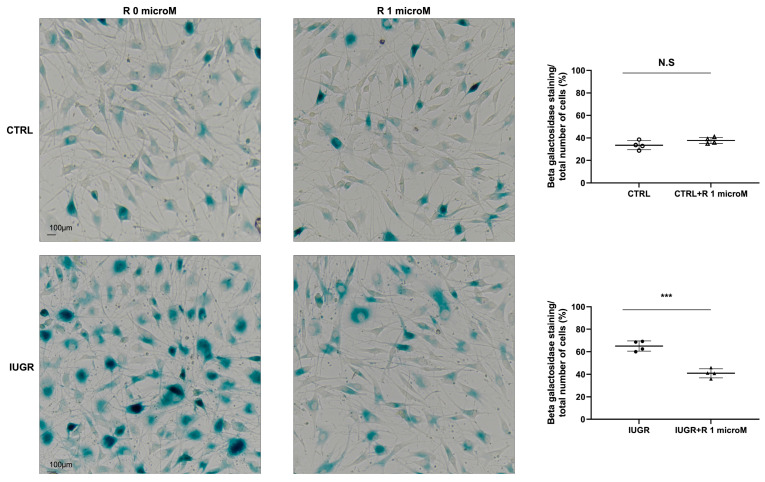
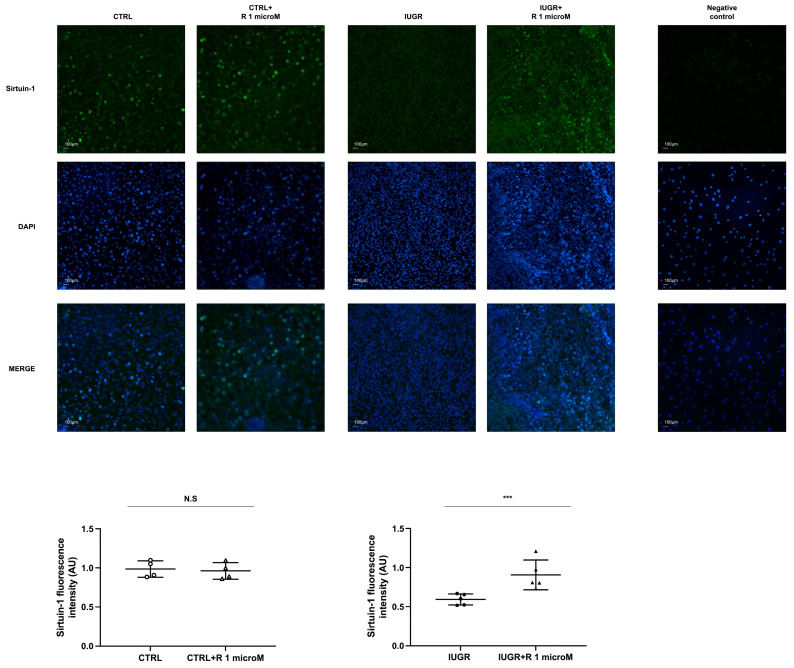
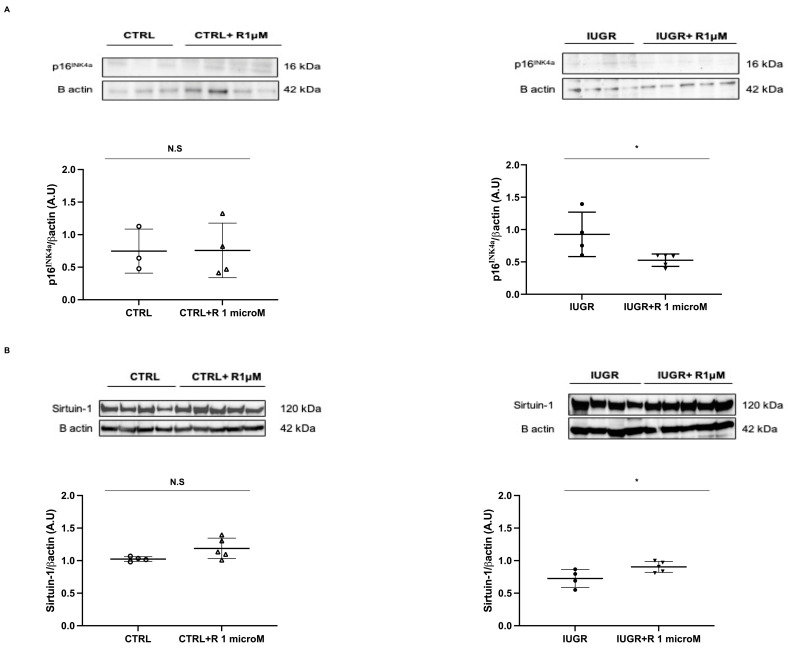
Individuals born after intrauterine growth restriction (IUGR) are at risk of developing cardiovascular diseases (CVDs). Endothelial dysfunction plays a role in the pathogenesis of CVDs; and endothelial colony-forming cells (ECFCs) have been identified as key factors in endothelial repair. In a rat model of IUGR induced by a maternal low-protein diet, we observed an altered functionality of ECFCs in 6-month-old males, which was associated with arterial hypertension related to oxidative stress and stress-induced premature senescence (SIPS). Resveratrol (R), a polyphenol compound, was found to improve cardiovascular function. In this study, we investigated whether resveratrol could reverse ECFC dysfunctions in the IUGR group. ECFCs were isolated from IUGR and control (CTRL) males and were treated with R (1 μM) or dimethylsulfoxide (DMSO) for 48 h. In the IUGR-ECFCs, R increased proliferation (5'-bromo-2'-deoxyuridine (BrdU) incorporation, < 0.001) and improved capillary-like outgrowth sprout formation (in Matrigel), nitric oxide (NO) production (fluorescent dye, < 0.01), and endothelial nitric oxide synthase (eNOS) expression (immunofluorescence, < 0.001). In addition, R decreased oxidative stress with reduced superoxide anion production (fluorescent dye, < 0.001); increased Cu/Zn superoxide dismutase expression (Western blot, < 0.05); and reversed SIPS with decreased beta-galactosidase activity ( < 0.001), and decreased p16 ( < 0.05) and increased Sirtuin-1 ( < 0.05) expressions (Western blot). No effects of R were observed in the CTRL-ECFCs. These results suggest that R reverses long-term ECFC dysfunctions related to IUGR.
宫内生长受限(IUGR)后出生的个体有发生心血管疾病(CVD)的风险。内皮功能障碍在 CVD 的发病机制中起作用;内皮祖细胞(ECFCs)已被确定为内皮修复的关键因素。在由母体低蛋白饮食诱导的 IUGR 大鼠模型中,我们观察到 6 月龄雄性 ECFC 的功能发生改变,这与与氧化应激和应激诱导的早衰(SIPS)相关的动脉高血压有关。白藜芦醇(R)是一种多酚化合物,被发现可改善心血管功能。在这项研究中,我们研究了白藜芦醇是否可以逆转 IUGR 组中 ECFC 的功能障碍。从 IUGR 和对照(CTRL)雄性中分离 ECFC,并将其用 R(1 μM)或二甲亚砜(DMSO)处理 48 小时。在 IUGR-ECFC 中,R 增加了增殖(5'-溴-2'-脱氧尿苷(BrdU)掺入,<0.001),并改善了毛细血管样外生芽形成(在 Matrigel 中),一氧化氮(NO)产生(荧光染料,<0.01)和内皮型一氧化氮合酶(eNOS)表达(免疫荧光,<0.001)。此外,R 减少了超氧阴离子产生(荧光染料,<0.001),从而减少了氧化应激;增加了 Cu/Zn 超氧化物歧化酶的表达(Western blot,<0.05);并通过降低β-半乳糖苷酶活性(<0.001),降低 p16(<0.05)和增加 Sirtuin-1(<0.05)的表达(Western blot)来逆转 SIPS。R 在 CTRL-ECFC 中没有作用。这些结果表明,R 逆转了与 IUGR 相关的长期 ECFC 功能障碍。