Ma Chao, Zhang Mengmeng, Ding Yi, Xue Yan, Wang Hongju, Li Pengfei, Wu Dapeng
College of Mechanical and Electrical Engineering, School of 3D Printing, Xinxiang University, Xinxiang 453003, China.
School of Business, Henan Normal University, Xinxiang 453007, China.
Nanomaterials (Basel). 2023 May 30;13(11):1768. doi: 10.3390/nano13111768.
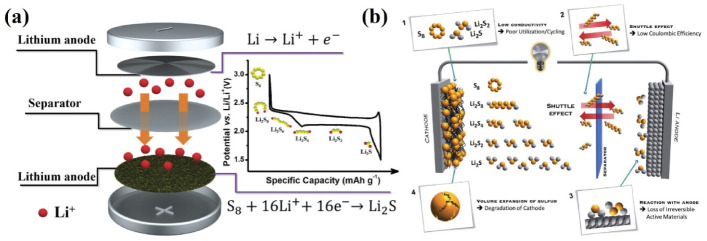
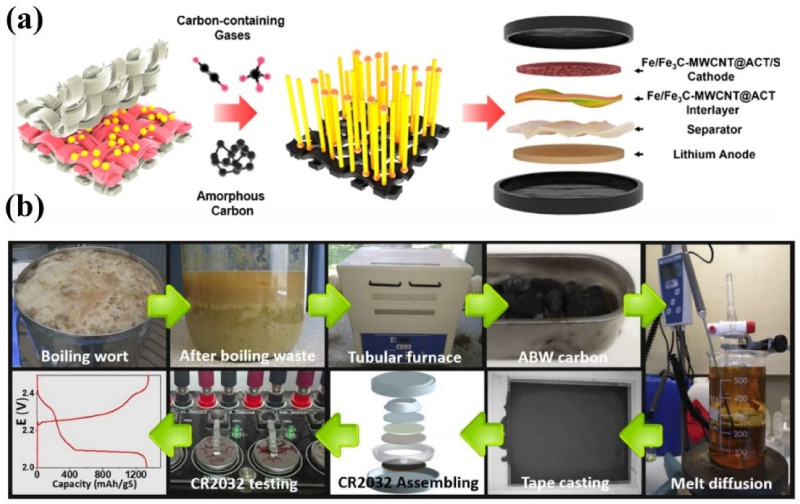
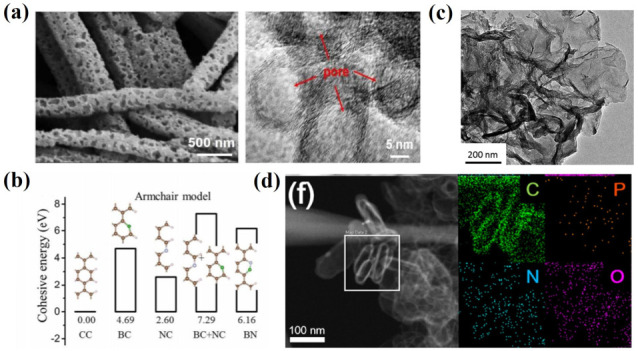
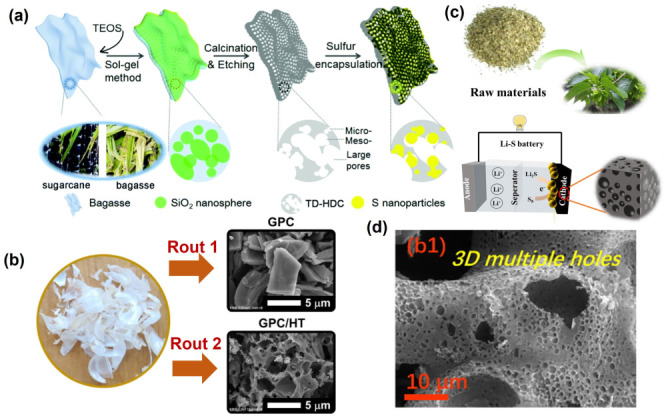
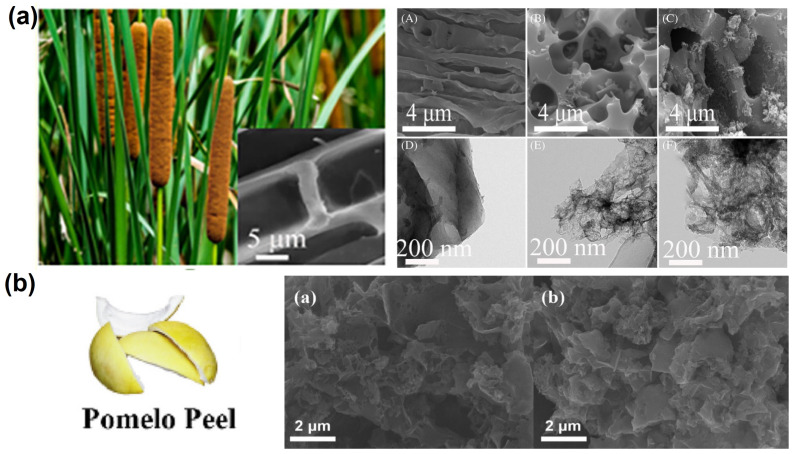
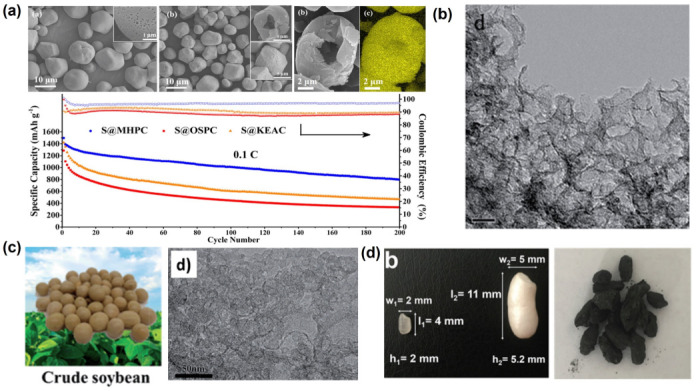
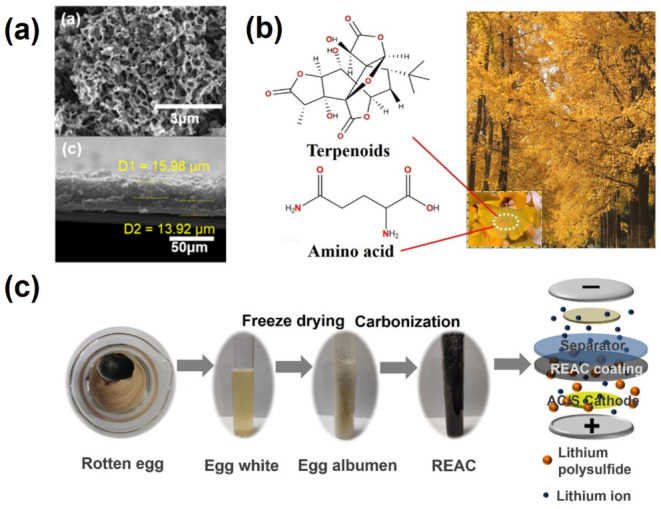
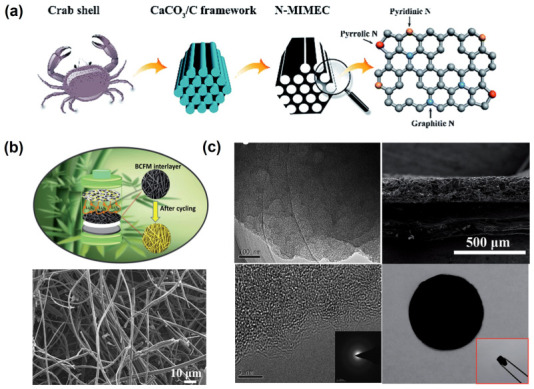
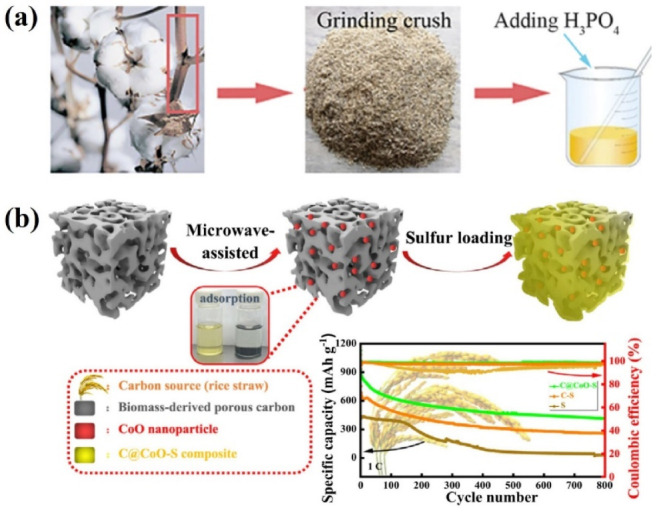
Lithium-sulfur batteries (LSBs) with a high energy density have been regarded as a promising energy storage device to harness unstable but clean energy from wind, tide, solar cells, and so on. However, LSBs still suffer from the disadvantages of the notorious shuttle effect of polysulfides and low sulfur utilization, which greatly hider their final commercialization. Biomasses represent green, abundant and renewable resources for the production of carbon materials to address the aforementioned issues by taking advantages of their intrinsic hierarchical porous structures and heteroatom-doping sites, which could attribute to the strong physical and chemical adsorptions as well as excellent catalytic performances of LSBs. Therefore, many efforts have been devoted to improving the performances of biomass-derived carbons from the aspects of exploring new biomass resources, optimizing the pyrolysis method, developing effective modification strategies, or achieving further understanding about their working principles in LSBs. This review firstly introduces the structures and working principles of LSBs and then summarizes recent developments in research on carbon materials employed in LSBs. Particularly, this review focuses on recent progresses in the design, preparation and application of biomass-derived carbons as host or interlayer materials in LSBs. Moreover, outlooks on the future research of LSBs based on biomass-derived carbons are discussed.
具有高能量密度的锂硫电池(LSBs)被视为一种很有前景的储能装置,可用于收集来自风能、潮汐能、太阳能电池等不稳定但清洁的能源。然而,锂硫电池仍然存在多硫化物穿梭效应严重和硫利用率低的缺点,这极大地阻碍了它们的最终商业化。生物质是生产碳材料的绿色、丰富且可再生的资源,通过利用其固有的分级多孔结构和杂原子掺杂位点来解决上述问题,这可能归因于锂硫电池强大的物理和化学吸附以及优异的催化性能。因此,人们从探索新的生物质资源、优化热解方法、开发有效的改性策略或进一步了解它们在锂硫电池中的工作原理等方面,为提高生物质衍生碳的性能付出了诸多努力。本文综述首先介绍了锂硫电池的结构和工作原理,然后总结了锂硫电池中所用碳材料的研究进展。特别地,本文综述重点关注了生物质衍生碳作为锂硫电池的主体或夹层材料在设计、制备和应用方面的最新进展。此外,还讨论了基于生物质衍生碳的锂硫电池未来研究的展望。