Instituto Politécnico Nacional, Centro de Investigación en Computación, Juan de Dios Bátiz Ave., México City 07738, Mexico.
Electrical and Computer Engineering Department, University of Michigan, 4901 Evergreen Rd, Dearborn, MI 48128, USA.
Sensors (Basel). 2023 Jun 5;23(11):5352. doi: 10.3390/s23115352.
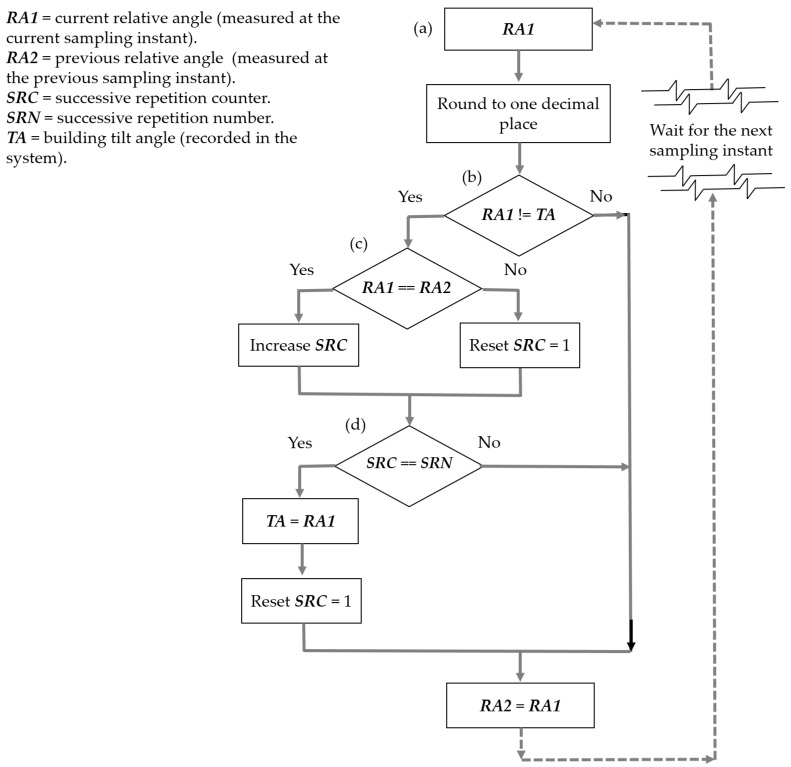
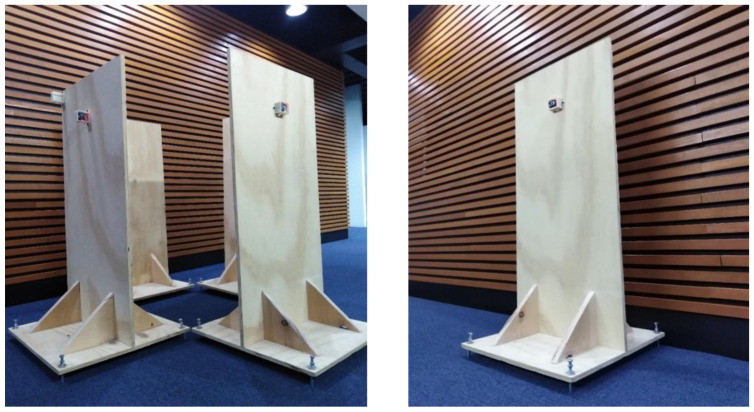
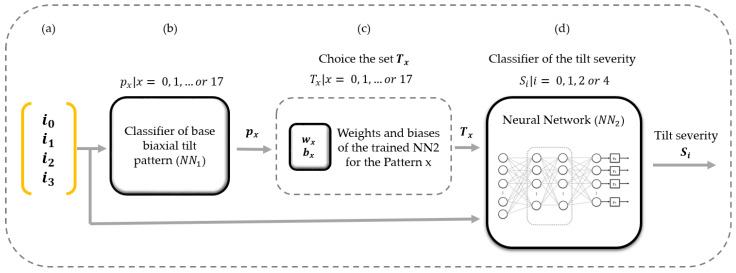
Applications of MEMS-based sensing technology are beneficial and versatile. If these electronic sensors integrate efficient processing methods, and if supervisory control and data acquisition (SCADA) software is also required, then mass networked real-time monitoring will be limited by cost, revealing a research gap related to the specific processing of signals. Static and dynamic accelerations are very noisy, and small variations of correctly processed static accelerations can be used as measurements and patterns of the biaxial inclination of many structures. This paper presents a biaxial tilt assessment for buildings based on a parallel training model and real-time measurements using inertial sensors, Wi-Fi Xbee, and Internet connectivity. The specific structural inclinations of the four exterior walls and their severity of rectangular buildings in urban areas with differential soil settlements can be supervised simultaneously in a control center. Two algorithms, combined with a new procedure using successive numeric repetitions designed especially for this work, process the gravitational acceleration signals, improving the final result remarkably. Subsequently, the inclination patterns based on biaxial angles are generated computationally, considering differential settlements and seismic events. The two neural models recognize 18 inclination patterns and their severity using an approach in cascade with a parallel training model for the severity classification. Lastly, the algorithms are integrated into monitoring software with 0.1° resolution, and their performance is verified on a small-scale physical model for laboratory tests. The classifiers had a precision, recall, F1-score, and accuracy greater than 95%.
基于 MEMS 的传感技术的应用具有很大的益处和多样性。如果这些电子传感器集成了高效的处理方法,如果还需要监督控制和数据采集 (SCADA) 软件,那么大规模的网络化实时监测将受到成本的限制,这就揭示了与信号具体处理相关的研究空白。静态和动态加速度非常嘈杂,经过正确处理的静态加速度的微小变化可以用作许多结构双轴倾斜的测量值和模式。本文提出了一种基于并行训练模型和使用惯性传感器、Wi-Fi Xbee 和互联网连接进行实时测量的建筑物双轴倾斜评估方法。在控制中心可以同时监视四个外墙的具体结构倾斜度以及城市地区具有不同土壤沉降的矩形建筑物的倾斜度严重程度。两种算法,结合一种使用专门为此工作设计的连续数值重复的新程序,处理重力加速度信号,显著提高最终结果。随后,根据双轴角度生成基于倾斜度的模式,考虑到差异沉降和地震事件。这两个神经网络模型使用级联方法和严重程度的并行训练模型识别 18 种倾斜模式及其严重程度。最后,将算法集成到监测软件中,分辨率为 0.1°,并在实验室测试的小型物理模型上验证其性能。分类器的精度、召回率、F1 分数和准确性均大于 95%。