Laboratory for Cellular Function Conversion Technology, RIKEN Center for Integrative Medical Sciences, Yokohama, Japan.
Liver Cancer Prevention Research Unit, RIKEN Cluster for Pioneering Research, Wako, Saitama, Japan.
Cell Death Dis. 2023 Jun 13;14(6):358. doi: 10.1038/s41419-023-05847-4.
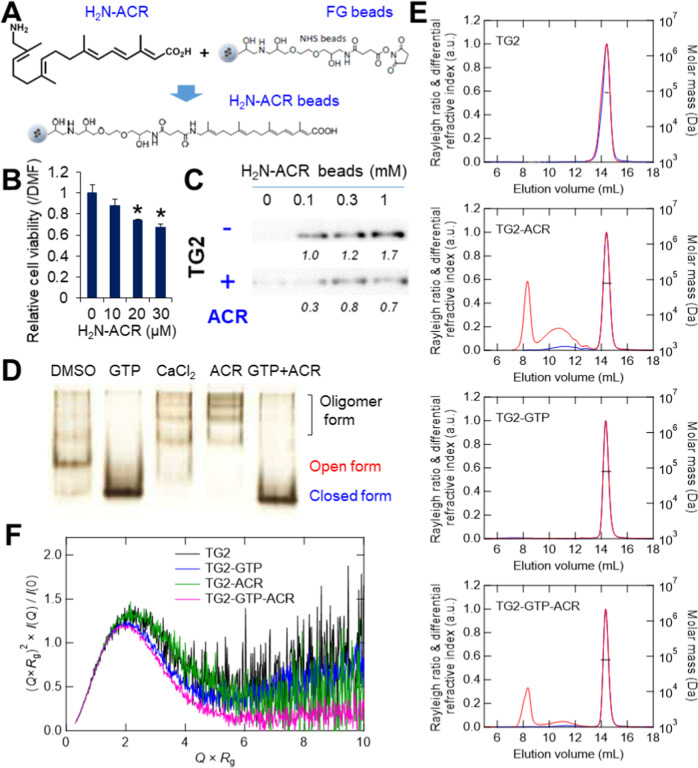
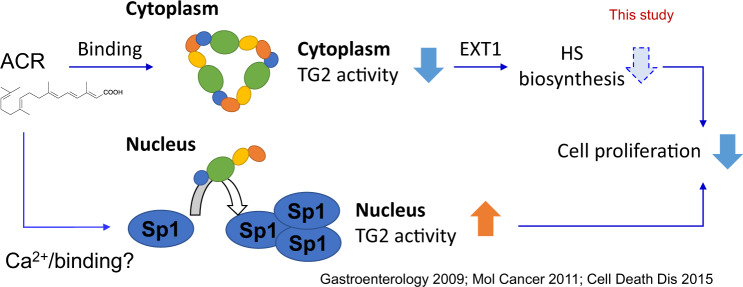
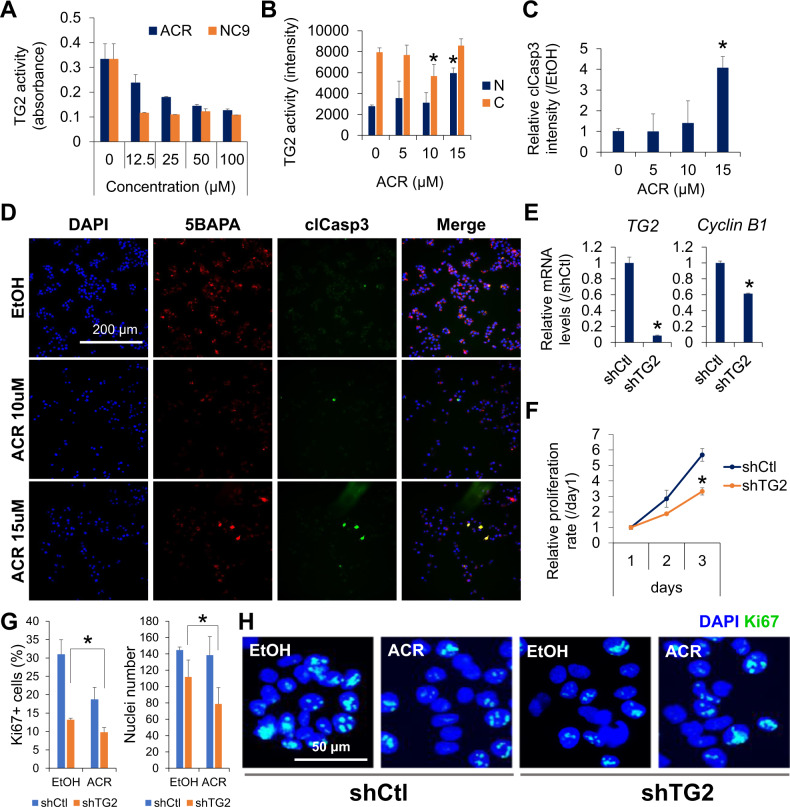
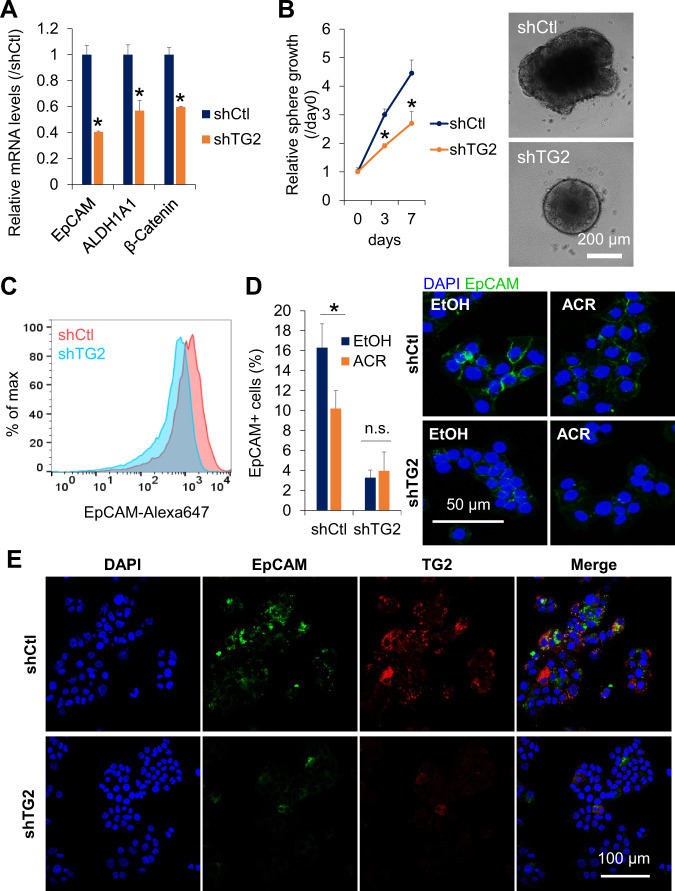
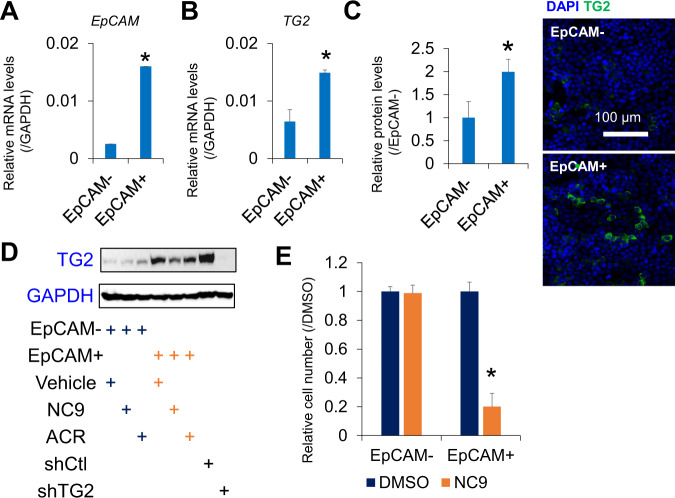
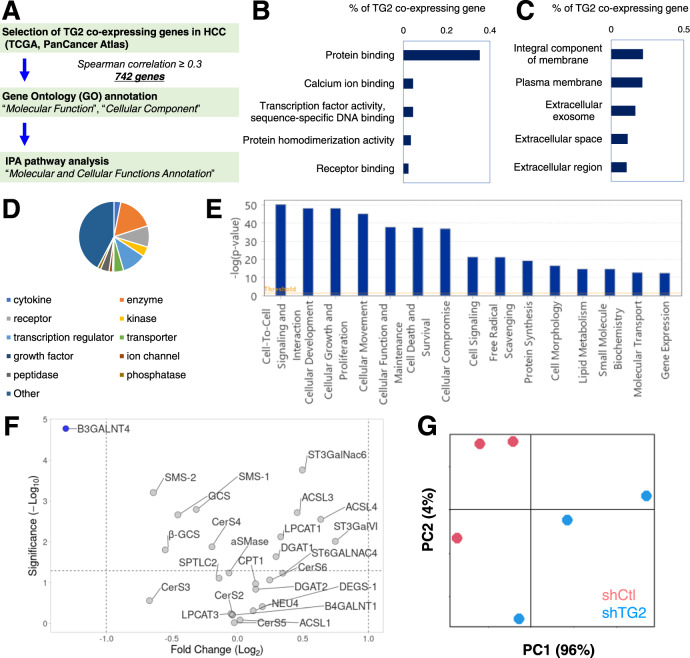
Transglutaminase 2 (TG2) is a multifunctional protein that promotes or suppresses tumorigenesis, depending on intracellular location and conformational structure. Acyclic retinoid (ACR) is an orally administered vitamin A derivative that prevents hepatocellular carcinoma (HCC) recurrence by targeting liver cancer stem cells (CSCs). In this study, we examined the subcellular location-dependent effects of ACR on TG2 activity at a structural level and characterized the functional role of TG2 and its downstream molecular mechanism in the selective depletion of liver CSCs. A binding assay with high-performance magnetic nanobeads and structural dynamic analysis with native gel electrophoresis and size-exclusion chromatography-coupled multi-angle light scattering or small-angle X-ray scattering showed that ACR binds directly to TG2, induces oligomer formation of TG2, and inhibits the transamidase activity of cytoplasmic TG2 in HCC cells. The loss-of-function of TG2 suppressed the expression of stemness-related genes, spheroid proliferation and selectively induced cell death in an EpCAM+ liver CSC subpopulation in HCC cells. Proteome analysis revealed that TG2 inhibition suppressed the gene and protein expression of exostosin glycosyltransferase 1 (EXT1) and heparan sulfate biosynthesis in HCC cells. In contrast, high levels of ACR increased intracellular Ca concentrations along with an increase in apoptotic cells, which probably contributed to the enhanced transamidase activity of nuclear TG2. This study demonstrates that ACR could act as a novel TG2 inhibitor; TG2-mediated EXT1 signaling is a promising therapeutic target in the prevention of HCC by disrupting liver CSCs.
转谷氨酰胺酶 2(TG2)是一种多功能蛋白,其促癌或抑癌作用取决于细胞内位置和构象结构。无环维甲酸(ACR)是一种口服维生素 A 衍生物,通过靶向肝癌干细胞(CSCs)预防肝细胞癌(HCC)复发。在这项研究中,我们在结构水平上检查了 ACR 对 TG2 活性的亚细胞位置依赖性影响,并表征了 TG2 的功能作用及其下游分子机制在选择性耗尽肝 CSCs 中的作用。使用高性能磁珠进行的结合测定、使用天然凝胶电泳和尺寸排阻色谱-多角光散射或小角 X 射线散射进行的结构动力学分析表明,ACR 直接与 TG2 结合,诱导 TG2 的寡聚形成,并抑制 HCC 细胞中细胞质 TG2 的转酰胺酶活性。TG2 的功能丧失抑制了 HCC 细胞中与干性相关基因的表达、球体增殖,并选择性诱导 EpCAM+肝 CSC 亚群中的细胞死亡。蛋白质组分析显示,TG2 抑制抑制了 HCC 细胞中 EXT1 糖基转移酶 1(EXT1)和肝素硫酸生物合成的基因和蛋白表达。相比之下,高水平的 ACR 增加了细胞内 Ca 浓度,同时增加了凋亡细胞,这可能有助于核 TG2 的转酰胺酶活性增强。这项研究表明,ACR 可以作为一种新型的 TG2 抑制剂;通过破坏肝 CSCs,TG2 介导的 EXT1 信号可能成为预防 HCC 的有前途的治疗靶点。