Sheikh Md Abdul Kuddus, Kowal Dominik, Mahyuddin Muhammad Haris, Cala' Roberto, Auffray Etiennette, Witkowski Marcin Eugeniusz, Makowski Michal, Drozdowski Winicjusz, Wang Hong, Dujardin Christophe, Cortecchia Daniele, Birowosuto Muhammad Danang
Łukasiewicz Research Network-PORT Polish Center for Technology Development, Stabłowicka 147, Wrocław 54-066, Poland.
Research Group of Advanced Functional Materials and Research Center for Nanoscience and Nanotechnology, Institut Teknologi Bandung, Jl. Ganesha 10, Bandung 40132 Indonesia.
J Phys Chem C Nanomater Interfaces. 2023 Apr 26;127(22):10737-10747. doi: 10.1021/acs.jpcc.3c00824. eCollection 2023 Jun 8.
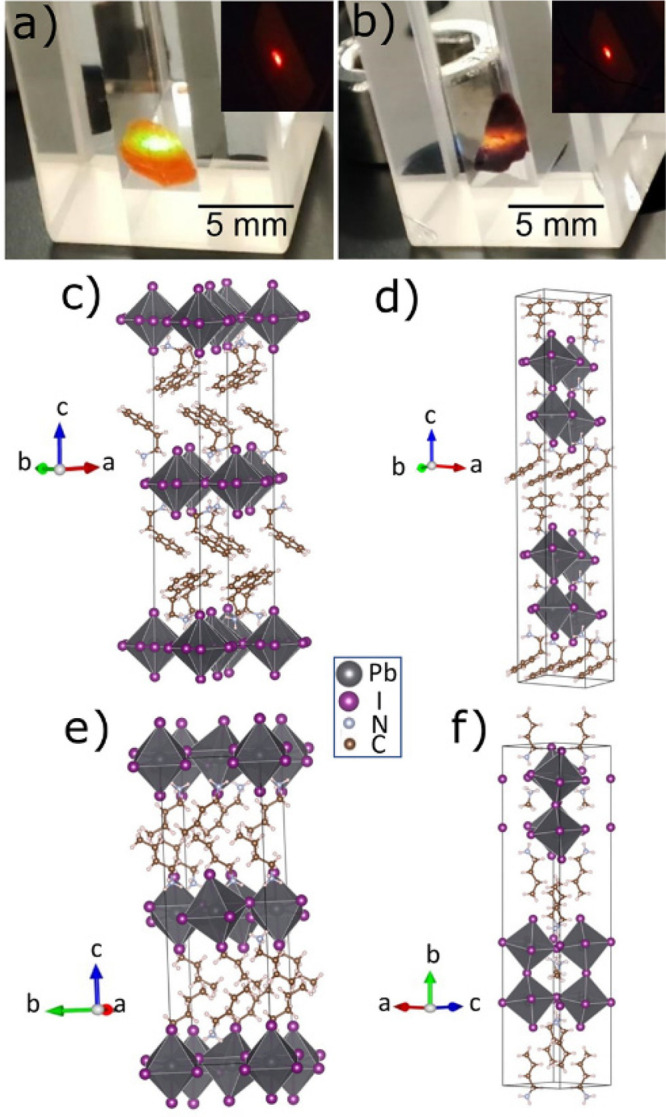
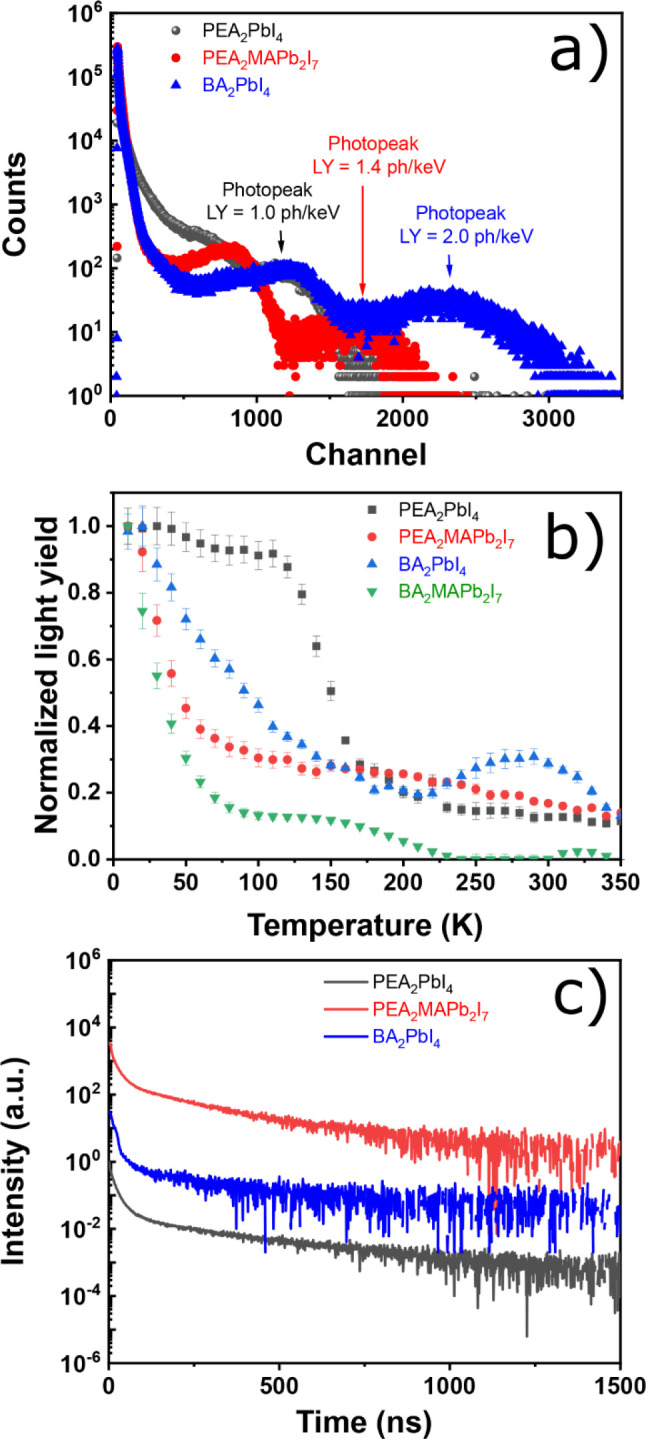
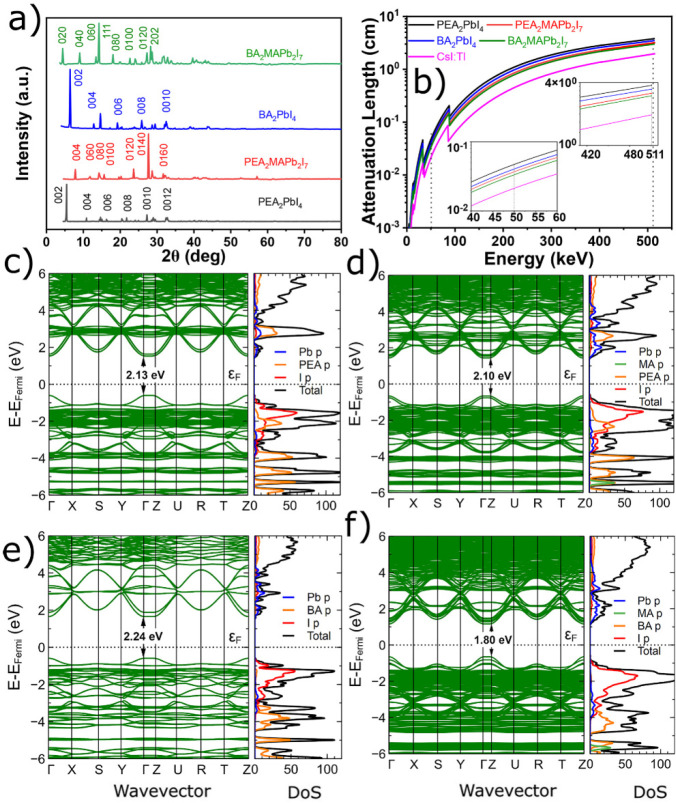
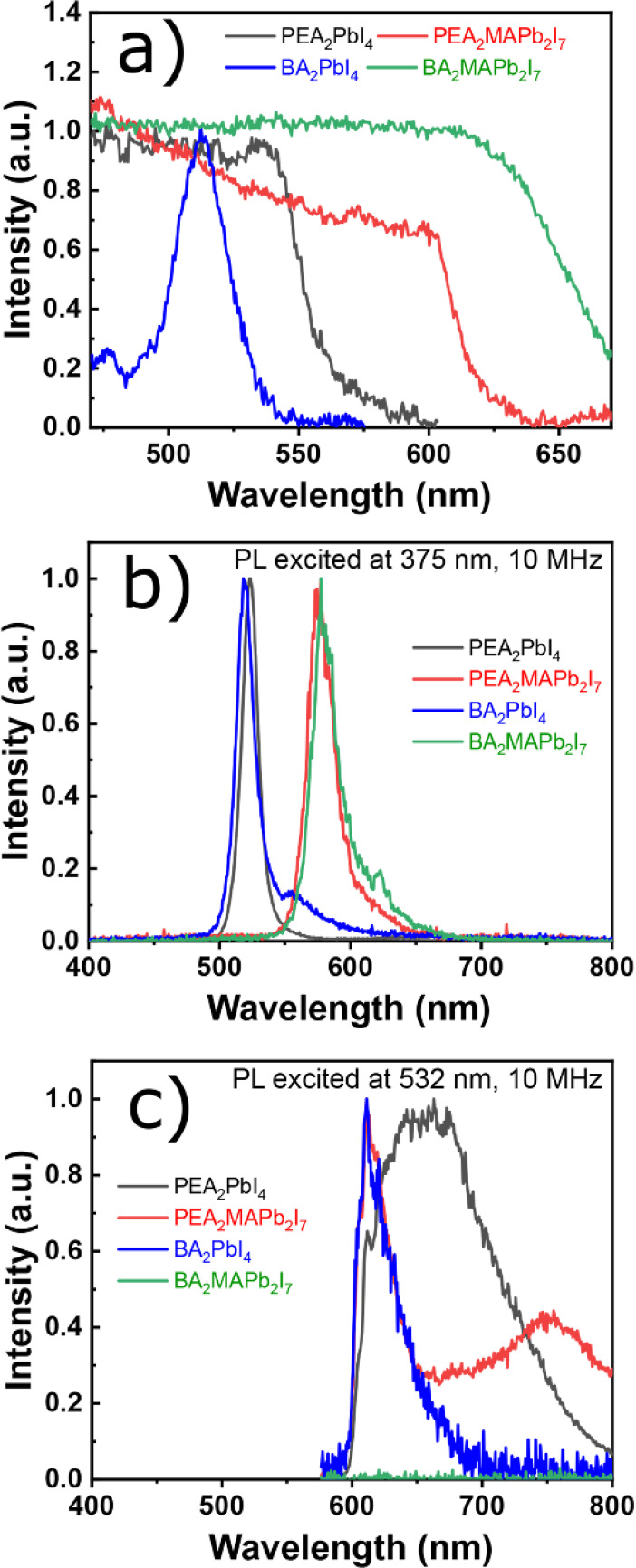
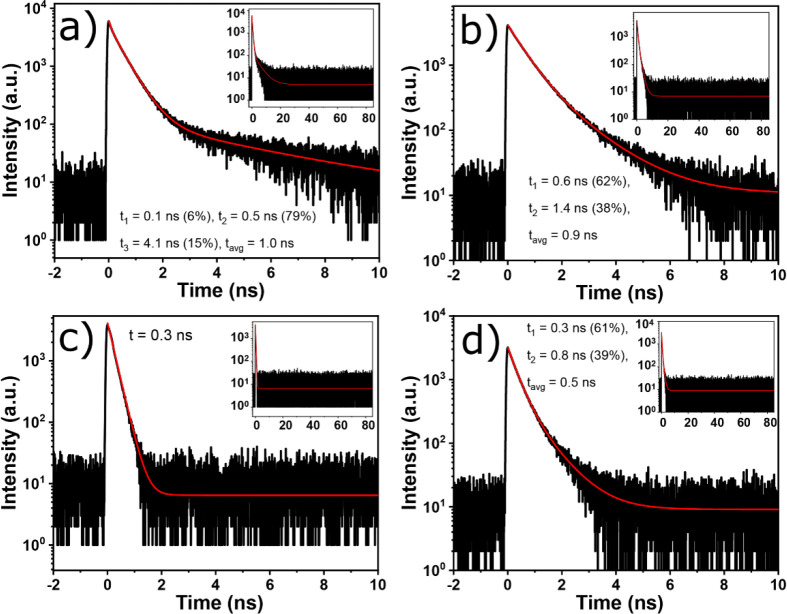
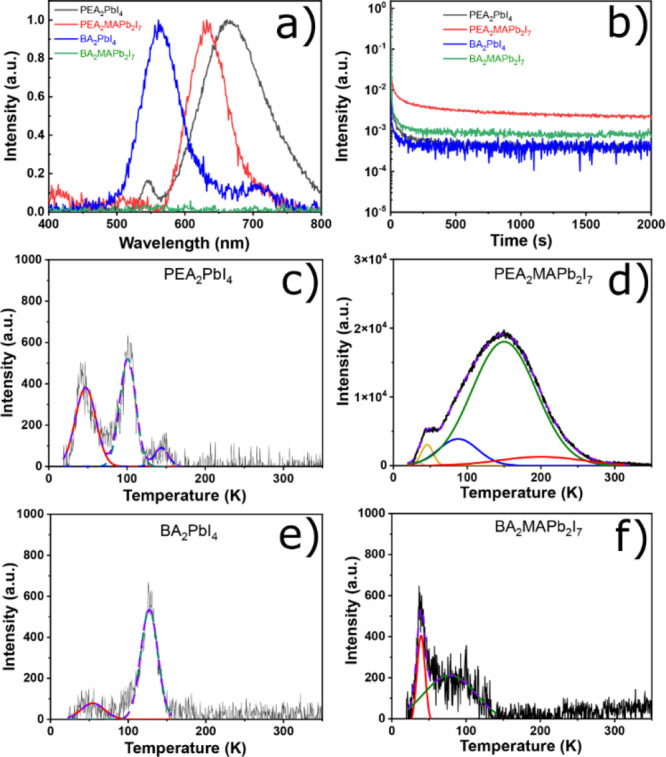
Quantum-well (QW) hybrid organic-inorganic perovskite (HOIP) crystals, e.g., APbX (A = BA, PEA; X = Br, I), demonstrated significant potentials as scintillating materials for wide energy radiation detection compared to their individual three-dimensional (3D) counterparts, e.g., BPbX (B = MA). Inserting 3D into QW structures resulted in new structures, namely ABPbX perovskite crystals, and they may have promising optical and scintillation properties toward higher mass density and fast timing scintillators. In this article, we investigate the crystal structure as well as optical and scintillation properties of iodide-based QW HOIP crystals, APbI and AMAPbI. APbI crystals exhibit green and red emission with the fastest PL decay time <1 ns, while AMAPbI crystals exhibit a high mass density of >3.0 g/cm and tunable smaller bandgaps <2.1 eV resulting from quantum and dielectric confinement. We observe that APbI and PEAMAPbI show emission under X- and γ-ray excitations. We further observe that some QW HOIP iodide scintillators exhibit shorter radiation absorption lengths (∼3 cm at 511 keV) and faster scintillation decay time components (∼0.5 ns) compared to those of QW HOIP bromide scintillators. Finally, we investigate the light yields of iodide-based QW HOIP crystals at 10 K (∼10 photons/keV), while at room temperature they still show pulse height spectra with light yields between 1 and 2 photons/keV, which is still >5 times lower than those for bromides. The lower light yields can be the drawbacks of iodide-based QW HOIP scintillators, but the promising high mass density and decay time results of our study can provide the right pathway for further improvements toward fast-timing applications.
量子阱(QW)混合有机-无机钙钛矿(HOIP)晶体,例如APbX(A = BA、PEA;X = Br、I),与它们各自的三维(3D)对应物,例如BPbX(B = MA)相比,作为用于宽能辐射探测的闪烁材料显示出显著潜力。将3D结构插入量子阱结构中产生了新的结构,即ABPbX钙钛矿晶体,并且它们对于更高质量密度和快速计时闪烁体可能具有有前景的光学和闪烁特性。在本文中,我们研究了基于碘化物的量子阱HOIP晶体APbI和AMAPbI的晶体结构以及光学和闪烁特性。APbI晶体表现出绿色和红色发射,其最快的光致发光衰减时间<1 ns,而AMAPbI晶体表现出>3.0 g/cm的高质量密度以及由于量子和介电限制导致的可调谐较小带隙<2.1 eV。我们观察到APbI和PEAMAPbI在X射线和γ射线激发下显示出发射。我们进一步观察到,与量子阱HOIP溴化物闪烁体相比,一些量子阱HOIP碘化物闪烁体表现出更短的辐射吸收长度(在511 keV时约为3 cm)和更快的闪烁衰减时间分量(约0.5 ns)。最后,我们研究了基于碘化物的量子阱HOIP晶体在10 K时的光产额(约10个光子/keV),而在室温下它们仍然显示出光产额在1至2个光子/keV之间的脉冲高度谱,这仍然比溴化物低>5倍。较低的光产额可能是基于碘化物的量子阱HOIP闪烁体的缺点,但我们研究中有前景的高质量密度和衰减时间结果可为快速计时应用的进一步改进提供正确途径。