Quiroz-Aldave Juan Eduardo, Durand-Vásquez María Del Carmen, Lobato-Jeri Carlos Jhonatan, Muñoz-Moreno Juan-Manuel, Deutz Gómez Condori Diana Carolina, Ildefonso-Najarro Sofía Pilar, Contreras-Yametti Felipe, Zavaleta-Gutiérrez Francisca, Concepción-Urteaga Luis, Concepción-Zavaleta Marcio José
Division of Medicine, Hospital de Apoyo Chepén, Chepén, Perú.
Division of Family Medicine, Hospital de Apoyo Chepén, Chepén, Perú.
touchREV Endocrinol. 2023 May;19(1):78-84. doi: 10.17925/EE.2023.19.1.78. Epub 2023 Feb 7.
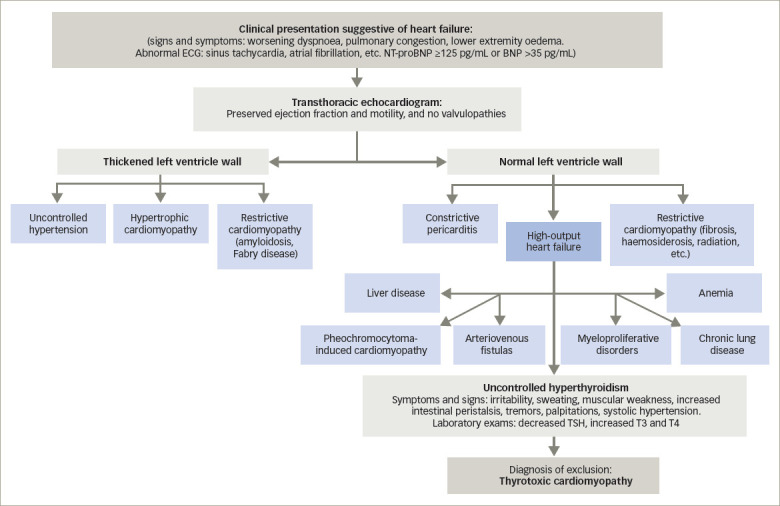
Thyroid hormones, mainly triiodothyronine, have genomic and non-genomic effects on cardiomyocytes related to the contractile function of the heart. Thyrotoxicosis, which is the set of signs and symptoms derived from the excess of circulating thyroid hormones, leads to increased cardiac output and decreased systemic vascular resistance, increasing the volume of circulating blood and causing systolic hypertension. In addition, the shortening of the refractory period of cardiomyocytes produces sinus tachycardia and atrial fibrillation. This leads to heart failure. Approximately 1% of patients with thyrotoxicosis develop thyrotoxic cardiomyopathy, a rare but potentially fatal form of dilated cardiomyopathy. Thyrotoxic cardiomyopathy represents a diagnosis of exclusion, and prompt identification is crucial as it is a reversible cause of heart failure, and heart function can be recovered after achieving a euthyroid state using antithyroid drugs. Radioactive iodine therapy and surgery are not the best initial therapeutic approach. Moreover, it is important to manage cardiovascular symptoms, for which beta blockers are the first-line therapeutic option.
甲状腺激素,主要是三碘甲状腺原氨酸,对心肌细胞具有与心脏收缩功能相关的基因组和非基因组效应。甲状腺毒症是指由于循环甲状腺激素过多而产生的一系列体征和症状,它会导致心输出量增加和全身血管阻力降低,使循环血量增加并引起收缩期高血压。此外,心肌细胞不应期缩短会导致窦性心动过速和心房颤动。这会导致心力衰竭。约1%的甲状腺毒症患者会发展为甲状腺毒症性心肌病,这是一种罕见但可能致命的扩张型心肌病。甲状腺毒症性心肌病是一种排除性诊断,及时识别至关重要,因为它是心力衰竭的可逆病因,使用抗甲状腺药物使甲状腺功能恢复正常后心脏功能可以恢复。放射性碘治疗和手术并非最佳的初始治疗方法。此外,处理心血管症状很重要,β受体阻滞剂是治疗心血管症状的一线选择。