
广谱泛属和泛科病毒疫苗。
Broad-spectrum pan-genus and pan-family virus vaccines.
机构信息
Duke-NUS Medical School, National University of Singapore, Singapore, Singapore.
Department of Microbiology and Immunology, The University of Melbourne, at the Peter Doherty Institute for Infection and Immunity, Melbourne, VIC 3000, Australia; HKU-Pasteur Research Pole, School of Public Health, Li Ka Shing Faculty of Medicine, The University of Hong Kong, Hong Kong SAR, China.
出版信息
Cell Host Microbe. 2023 Jun 14;31(6):902-916. doi: 10.1016/j.chom.2023.05.017.
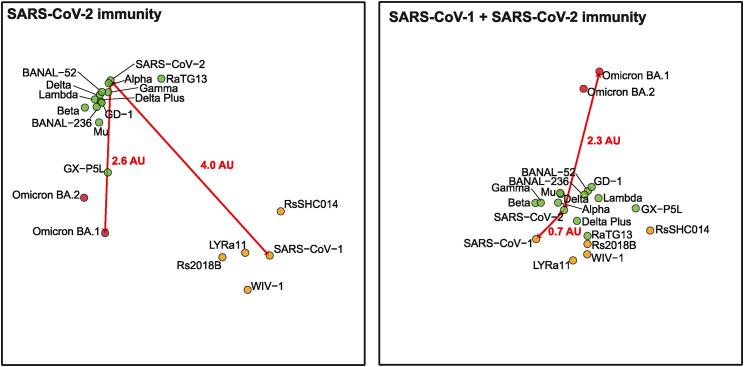
Although the development and clinical application of SARS-CoV-2 vaccines during the COVID-19 pandemic demonstrated unprecedented vaccine success in a short time frame, it also revealed a limitation of current vaccines in their inability to provide broad-spectrum or universal protection against emerging variants. Broad-spectrum vaccines, therefore, remain a dream and challenge for vaccinology. This review will focus on current and future efforts in developing universal vaccines targeting different viruses at the genus and/or family levels, with a special focus on henipaviruses, influenza viruses, and coronaviruses. It is evident that strategies for developing broad-spectrum vaccines will be virus-genus or family specific, and it is almost impossible to adopt a universal approach for different viruses. On the other hand, efforts in developing broad-spectrum neutralizing monoclonal antibodies have been more successful and it is worth considering broad-spectrum antibody-mediated immunization, or "universal antibody vaccine," as an alternative approach for early intervention for future disease X outbreaks.
虽然在 COVID-19 大流行期间,SARS-CoV-2 疫苗的开发和临床应用在短时间内取得了前所未有的疫苗成功,但也暴露出当前疫苗的一个局限性,即它们无法针对新兴变体提供广谱或普遍保护。因此,广谱疫苗仍然是疫苗学的一个梦想和挑战。本综述将重点介绍目前和未来针对属和/或科水平的不同病毒开发通用疫苗的努力,特别关注亨尼帕病毒、流感病毒和冠状病毒。显然,开发广谱疫苗的策略将因病毒属或家族而异,对于不同的病毒几乎不可能采用通用方法。另一方面,开发广谱中和单克隆抗体的努力已经更加成功,值得考虑广谱抗体介导的免疫接种,或“通用抗体疫苗”,作为未来疾病 X 爆发的早期干预的替代方法。


 Zotero 插件