Song Liqun, Ping Xingxing, Mao Zhenchuan, Zhao Jianlong, Yang Yuhong, Li Yan, Xie Bingyan, Ling Jian
Insititute of Vegetables and Flowers, Chinese Academy of Agricultural Sciences, Beijing, China.
State Key Laboratory of Vegetable Biobreeding, Institute of Vegetables and Flowers, Chinese Academy of Agricultural Sciences, Beijing, China.
Front Plant Sci. 2023 May 30;14:1163271. doi: 10.3389/fpls.2023.1163271. eCollection 2023.
Root-knot nematodes (RKN) disease is a devastating disease in crops production. Existing studies have shown that resistant and susceptible crops are enriched with different rhizosphere microorganisms, and microorganisms enriched in resistant crops can antagonize pathogenic bacteria. However, the characteristics of rhizosphere microbial communities of crops after RKN infestation remain largely unknown.
In this study, we compared the changes in rhizosphere bacterial communities between highly RKN-resistant (cm3) and highly RKN-susceptible (cuc) after RKN infection through a pot experiment.
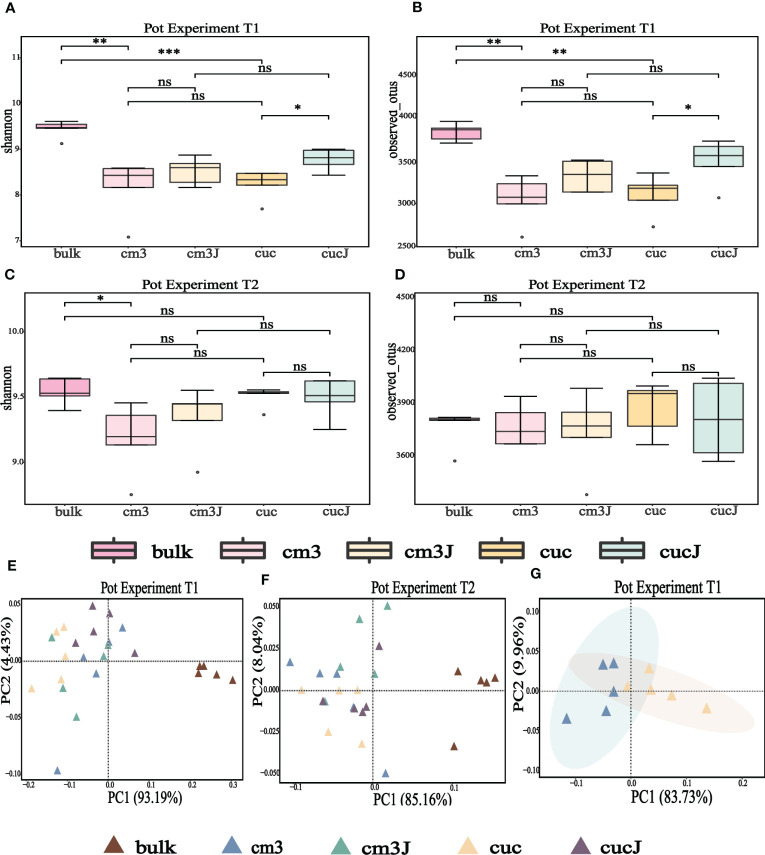
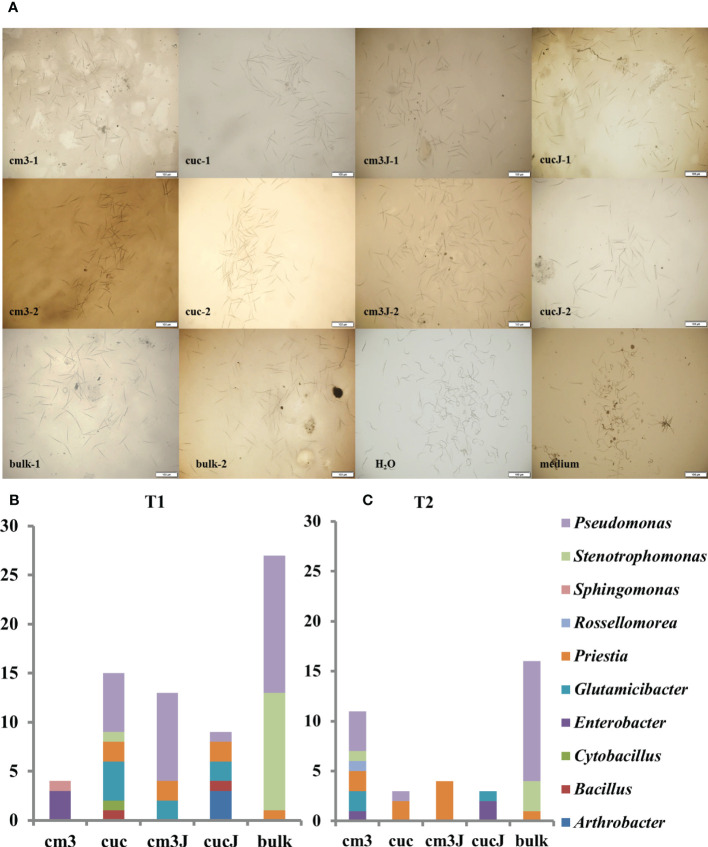
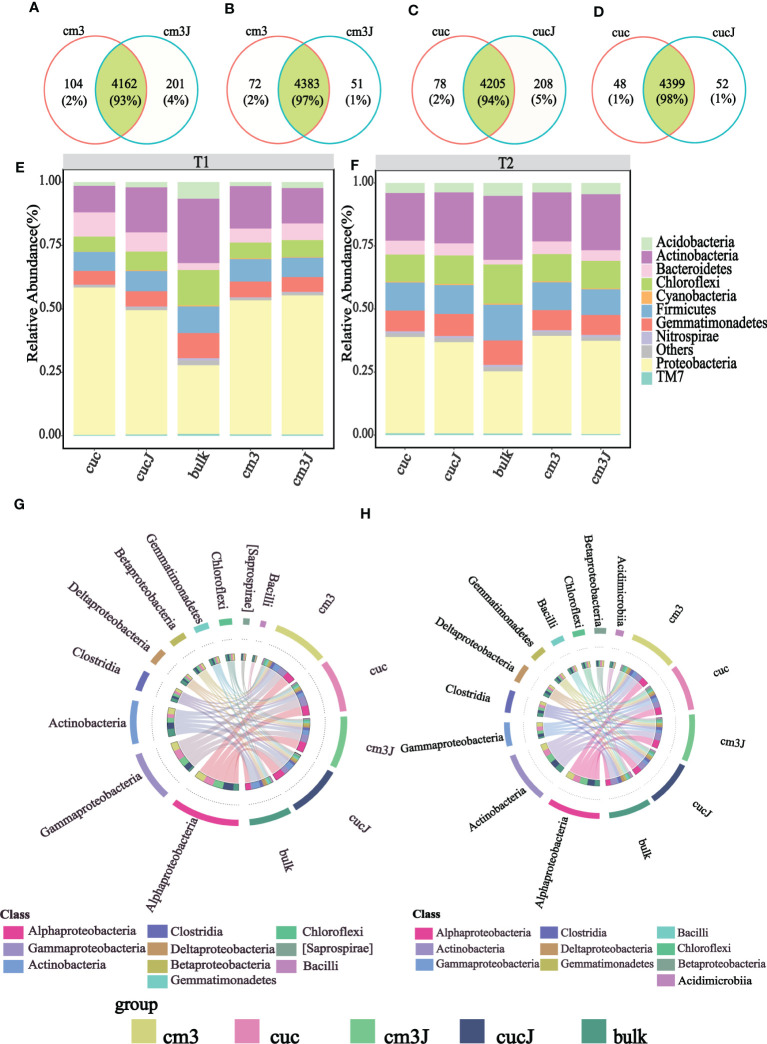
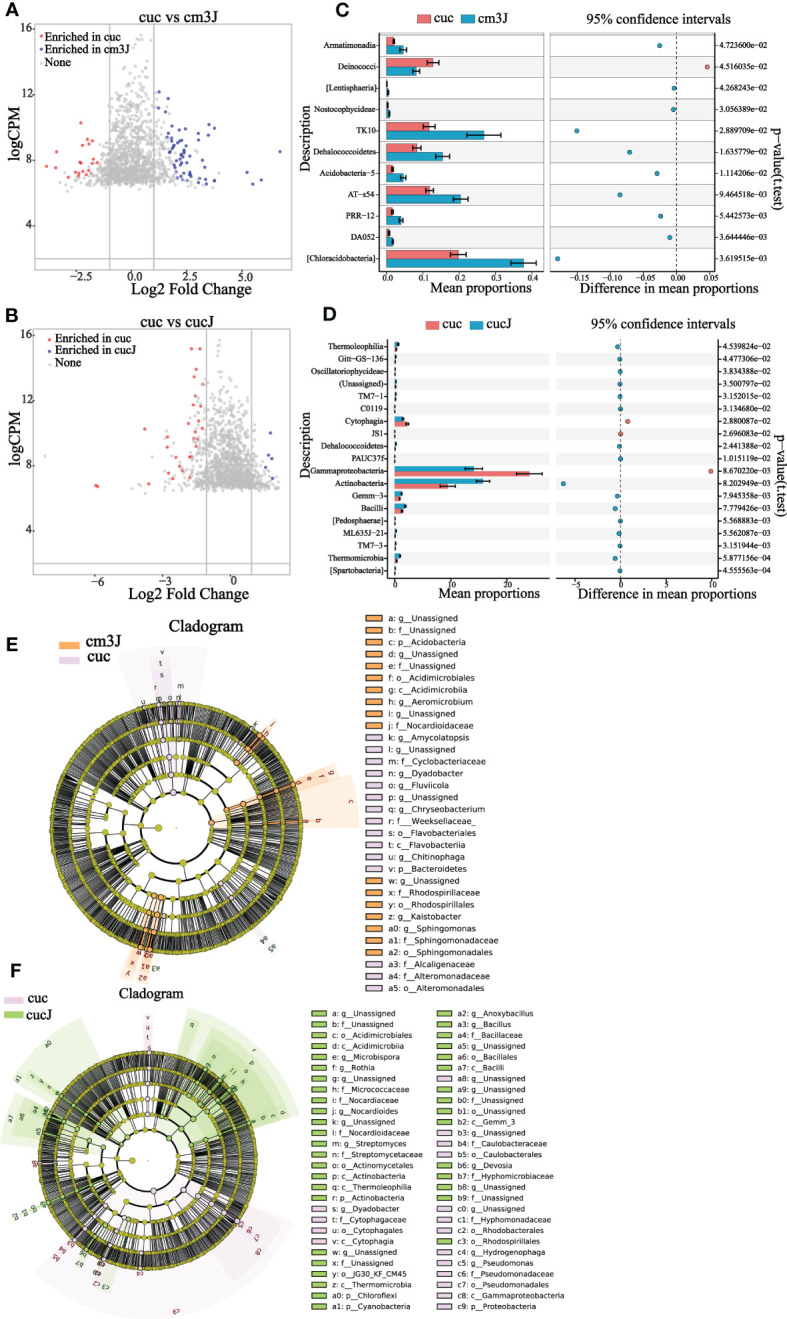
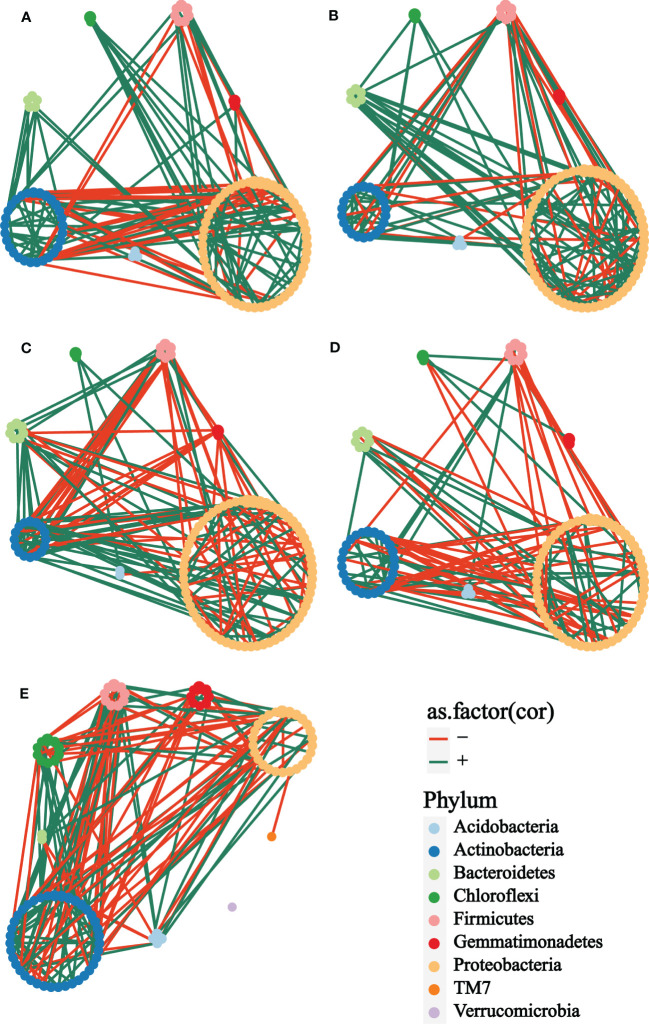
The results showed that the strongest response of rhizosphere bacterial communities of crops to RKN infestation occurred during early growth, as evidenced by changes in species diversity and community composition. However, the more stable structure of the rhizosphere bacterial community in cm3 was reflected in less changes in species diversity and community composition after RKN infestation, forming a more complex and positively co-occurrence network than cuc. Moreover, we observed that both cm3 and cuc recruited bacteria after RKN infestation, but the bacteria enriched in cm3 were more abundant including beneficial bacteria Acidobacteria, Nocardioidaceae and Sphingomonadales. In addition, the cuc was enriched with beneficial bacteria Actinobacteria, Bacilli and Cyanobacteria. We also found that more antagonistic bacteria than cuc were screened in cm3 after RKN infestation and most of them were (Proteobacteria, Pseudomonadaceae), and Proteobacteria were also enriched in cm3 after RKN infestation. We hypothesized that the cooperation between Pseudomonas and the beneficial bacteria in cm3 could inhibit the infestation of RKN.
Thus, our results provide valuable insights into the role of rhizosphere bacterial communities on RKN diseases of crops, and further studies are needed to clarify the bacterial communities that suppress RKN in crops rhizosphere.
根结线虫病是作物生产中的一种毁灭性病害。现有研究表明,抗性作物和感病作物根际富集有不同的微生物,且抗性作物中富集的微生物可拮抗病原菌。然而,根结线虫侵染后作物根际微生物群落的特征仍知之甚少。
在本研究中,我们通过盆栽试验比较了根结线虫高抗(cm3)和高感(黄瓜)品种在根结线虫侵染后根际细菌群落的变化。
结果表明,作物根际细菌群落对根结线虫侵染的最强响应发生在生长早期,这可通过物种多样性和群落组成的变化得以证明。然而,cm3根际细菌群落结构更稳定,表现为根结线虫侵染后物种多样性和群落组成变化较小,且比黄瓜形成了更复杂的正相关共生网络。此外,我们观察到cm3和黄瓜在根结线虫侵染后均招募了细菌,但cm3中富集的细菌更为丰富,包括有益细菌酸杆菌门、诺卡氏菌科和鞘脂单胞菌目。另外,黄瓜中富集了有益细菌放线菌门、芽孢杆菌和蓝细菌。我们还发现,根结线虫侵染后cm3中筛选出的拮抗细菌比黄瓜更多,其中大多数为变形菌门(假单胞菌科),且根结线虫侵染后cm3中变形菌门也有富集。我们推测假单胞菌与cm3中的有益细菌之间的合作可抑制根结线虫的侵染。
因此,我们的研究结果为根际细菌群落在作物根结线虫病中的作用提供了有价值的见解,还需要进一步研究来阐明抑制作物根际根结线虫的细菌群落。