Unidad de Investigación en Medicina Experimental, Facultad de Medicina, Universidad Nacional Autónoma de México, Mexico City, Mexico.
Posgrado en Ciencias Biológicas, Unidad de Posgrado, Edificio D, 1° Piso, Circuito de Posgrados, Universidad Nacional Autónoma de México, Mexico City, Mexico.
Cancer Med. 2023 Jul;12(14):15632-15649. doi: 10.1002/cam4.6123. Epub 2023 Jun 16.
Patients with cervical cancer (CC) may experience local recurrence very often after treatment; when only clinical parameters are used, most cases are diagnosed in late stages, which decreases the chance of recovery. Molecular markers can improve the prediction of clinical outcome. Glycolysis is altered in 70% of CCs, so molecular markers of this pathway associated with the aggressiveness of CC can be identified.
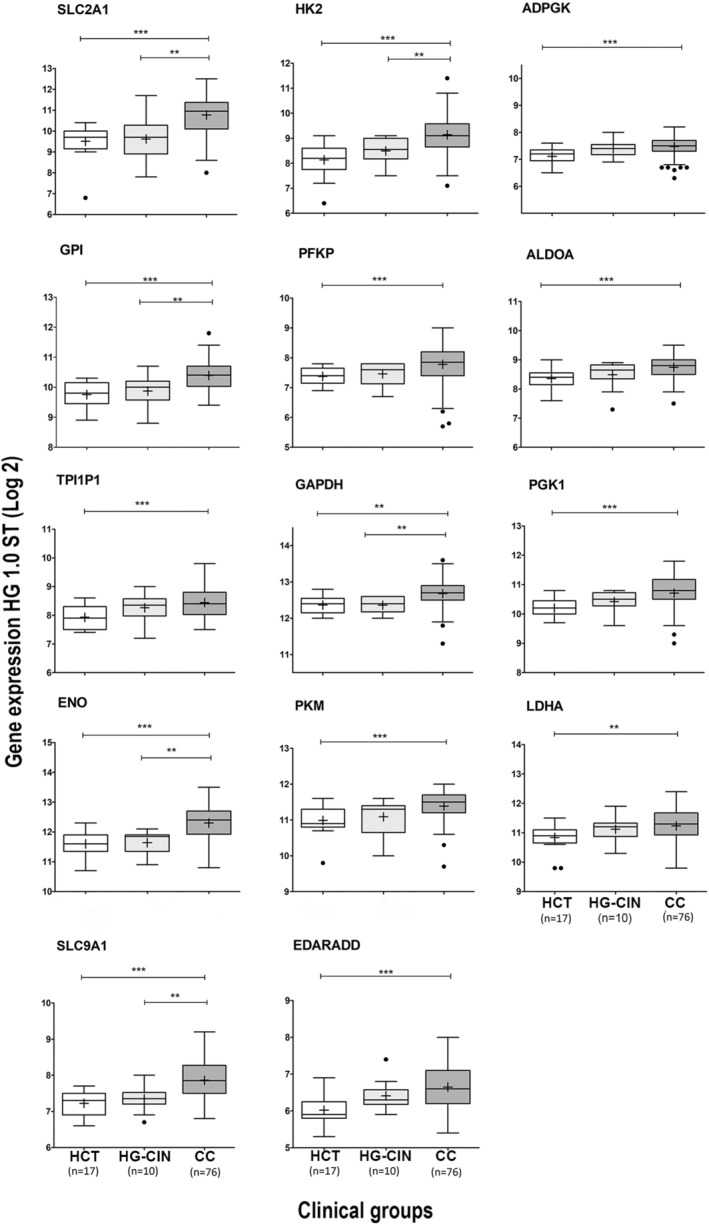
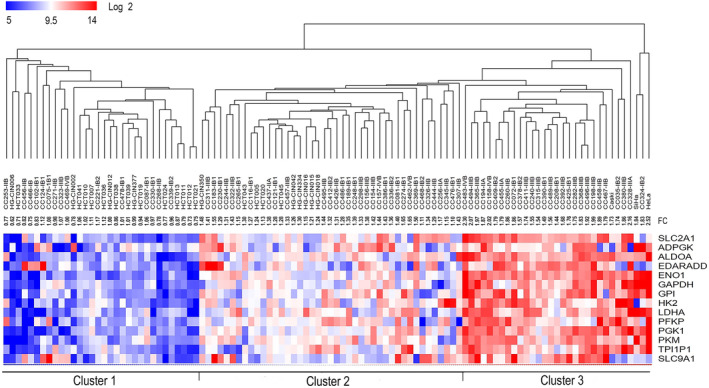
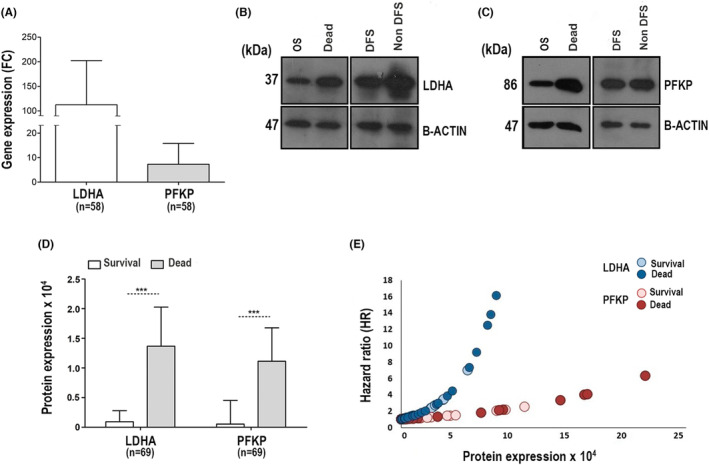
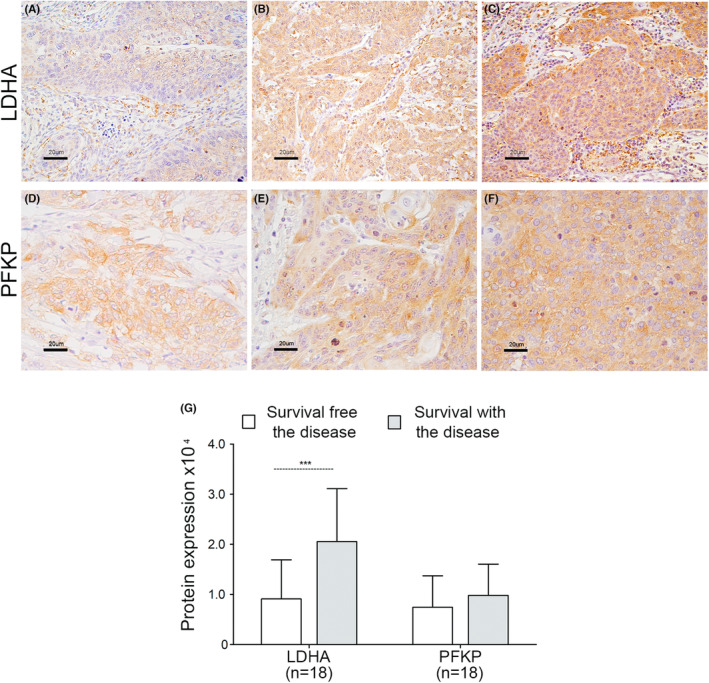
The expression of 14 glycolytic genes was analyzed in 97 CC and 29 healthy cervical tissue (HCT) with microarray; only LDHA and PFKP were validated at the mRNA and protein levels in 36 of those CC samples and in 109 new CC samples, and 31 HCT samples by qRT-PCR, Western blotting, or immunohistochemistry. A replica analysis was performed on 295 CC from The Cancer Genome Atlas (TCGA) database.
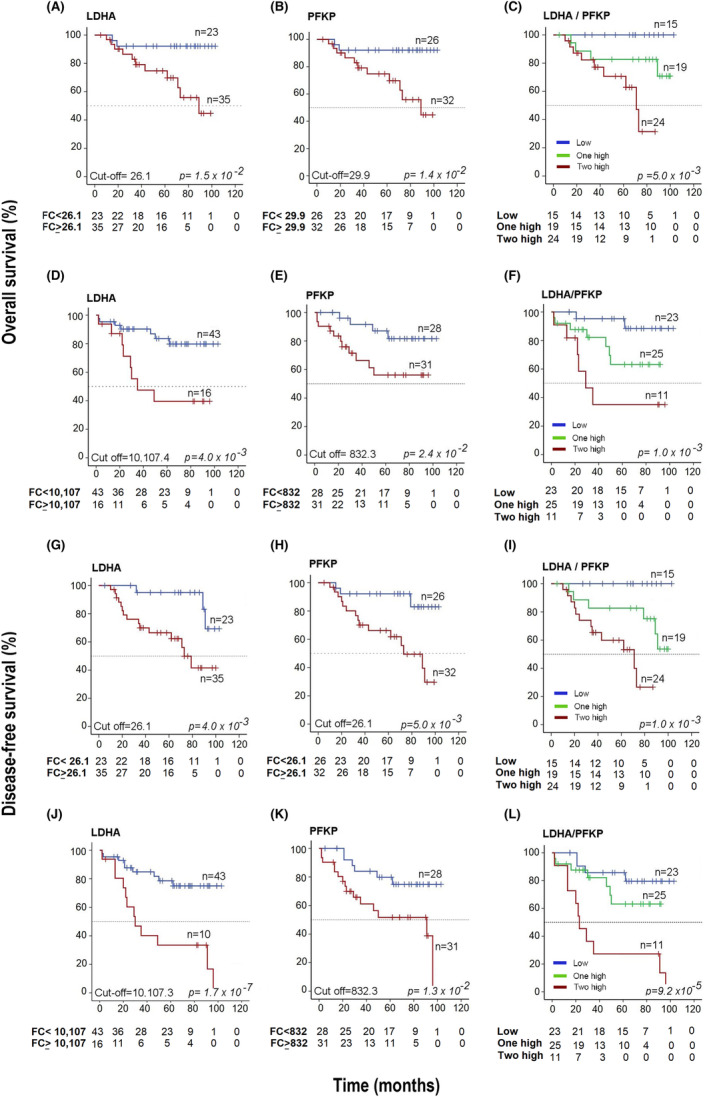
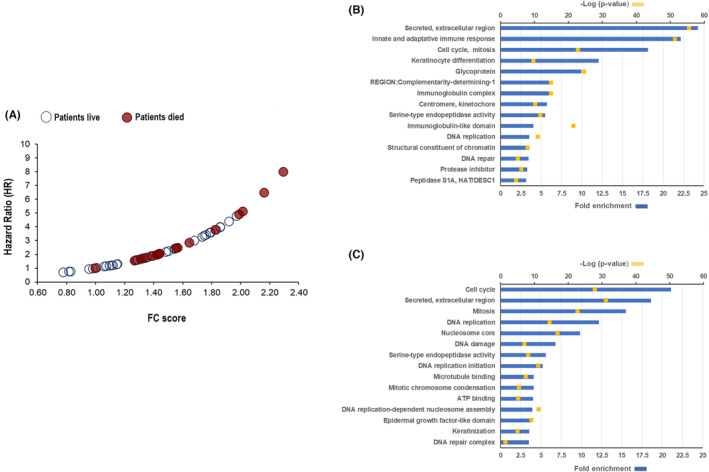
The protein expression of LDHA and PFKP was associated with poor overall survival [OS: LDHA HR = 4.0 (95% CI = 1.4-11.1); p = 8.0 × 10 ; PFKP HR = 3.3 (95% CI = 1.1-10.5); p = 4.0 × 10 ] and disease-free survival [DFS: LDHA HR = 4.5 (95% CI = 1.9-10.8); p = 1.0 × 10 ; PFKP HR = 3.2 (95% CI = 1.2-8.2); p = 1.8 × 10 ] independent of FIGO clinical stage, and the results for mRNA expression were similar. The risk of death was greater in patients with overexpression of both biomarkers than in patients with advanced FIGO stage [HR = 8.1 (95% CI = 2.6-26.1; p = 4.3 × 10 ) versus HR = 7 (95% CI 1.6-31.1, p = 1.0 × 10 )] and increased exponentially as the expression of LDHA and PFKP increased.
LDHA and PFKP overexpression at the mRNA and protein levels was associated with poor OS and DFS and increased risk of death in CC patients regardless of FIGO stage. The measurement of these two markers could be very useful for evaluating clinical evolution and the risk of death from CC and could facilitate better treatment decision making.
宫颈癌(CC)患者在治疗后可能经常出现局部复发;当仅使用临床参数时,大多数病例被诊断为晚期,这降低了康复的机会。分子标志物可以改善临床结局的预测。70%的 CC 中糖酵解发生改变,因此可以识别与 CC 侵袭性相关的该途径的分子标志物。
使用微阵列分析 97 例 CC 和 29 例健康宫颈组织(HCT)中的 14 个糖酵解基因的表达;仅在 36 例 CC 样本和 109 例新 CC 样本以及 31 例 HCT 样本中,通过 qRT-PCR、Western blotting 或免疫组织化学验证 LDHA 和 PFKP 的 mRNA 和蛋白质水平。在癌症基因组图谱(TCGA)数据库中的 295 例 CC 中进行了复制分析。
LDHA 和 PFKP 的蛋白表达与总生存期不良相关[OS:LDHA HR=4.0(95%CI=1.4-11.1);p=8.0×10⁻⁴;PFKP HR=3.3(95%CI=1.1-10.5);p=4.0×10⁻⁴]和无病生存期[DFS:LDHA HR=4.5(95%CI=1.9-10.8);p=1.0×10⁻⁴;PFKP HR=3.2(95%CI=1.2-8.2);p=1.8×10⁻⁴]独立于 FIGO 临床分期,mRNA 表达的结果相似。与晚期 FIGO 分期的患者相比,同时表达两种生物标志物的患者死亡风险更高[HR=8.1(95%CI=2.6-26.1;p=4.3×10⁻⁴)与 HR=7(95%CI 1.6-31.1,p=1.0×10⁻⁴)],并且随着 LDHA 和 PFKP 表达的增加而呈指数级增加。
在 mRNA 和蛋白质水平上的 LDHA 和 PFKP 过表达与宫颈癌患者的总生存期和无病生存期不良以及死亡风险增加相关,而与 FIGO 分期无关。这两种标志物的测量对于评估宫颈癌的临床演变和死亡风险非常有用,并可以促进更好的治疗决策。