Center of Pharmaceutics, Shanghai Institute of Materia Medica, Chinese Academy of Sciences, Shanghai, 201203, China.
College of Chemistry and Chemical Engineering, Inner Mongolia University, Huhhot, 010021, China.
Nat Commun. 2023 Jun 16;14(1):3593. doi: 10.1038/s41467-023-39035-x.
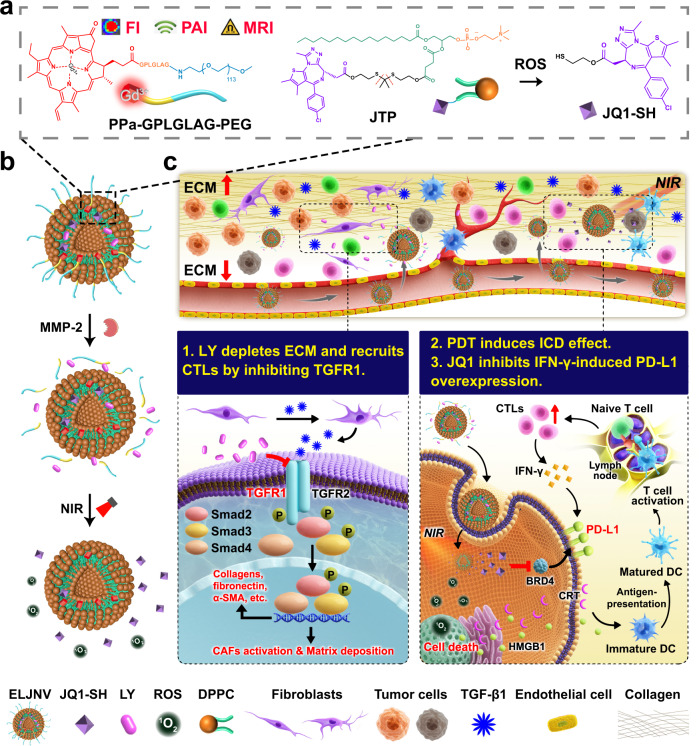
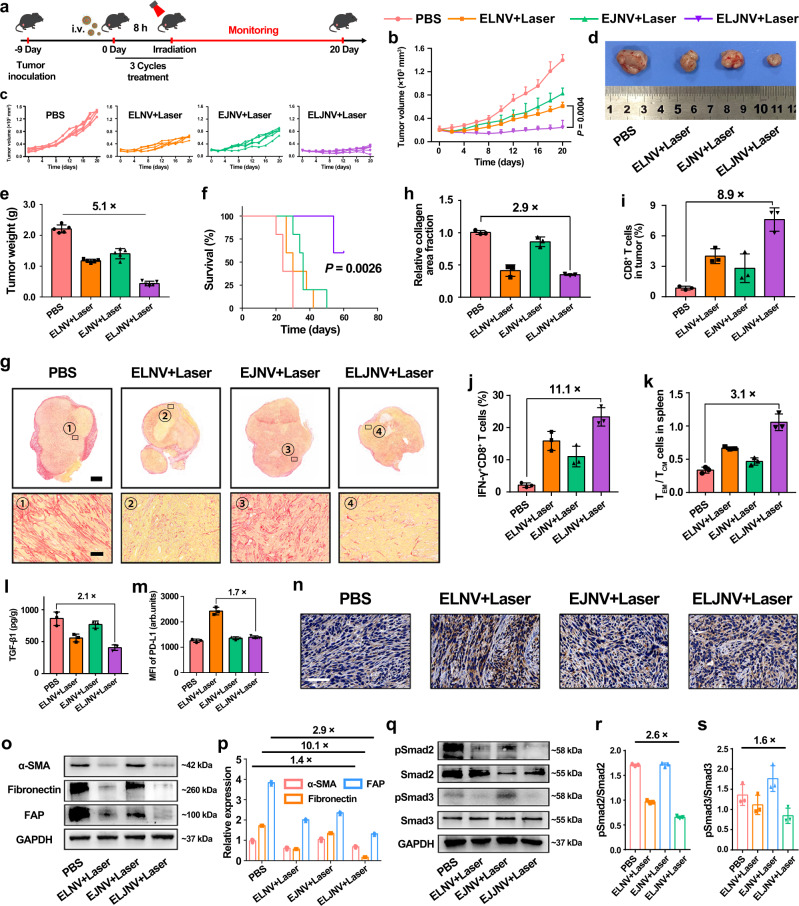
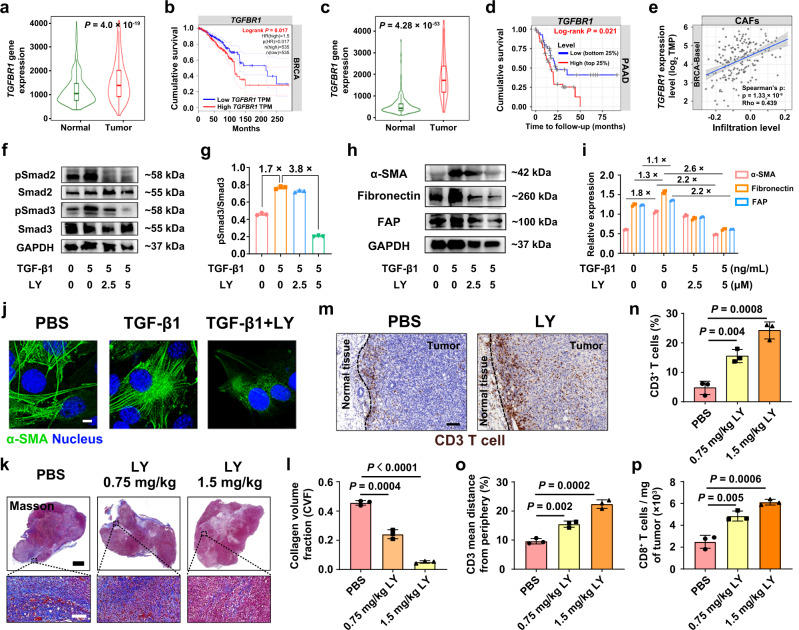
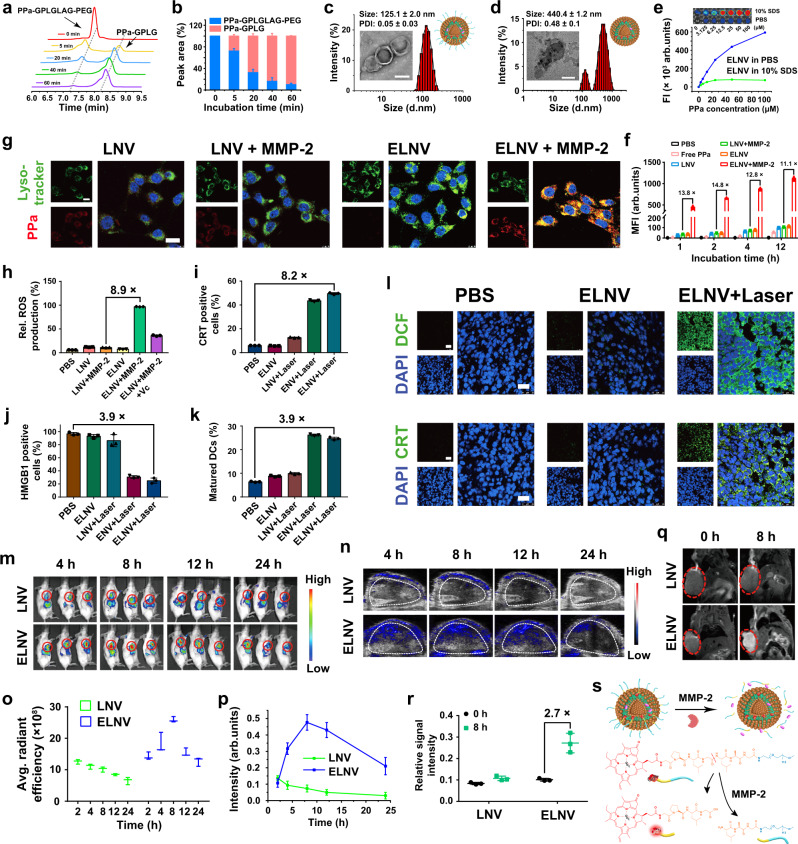
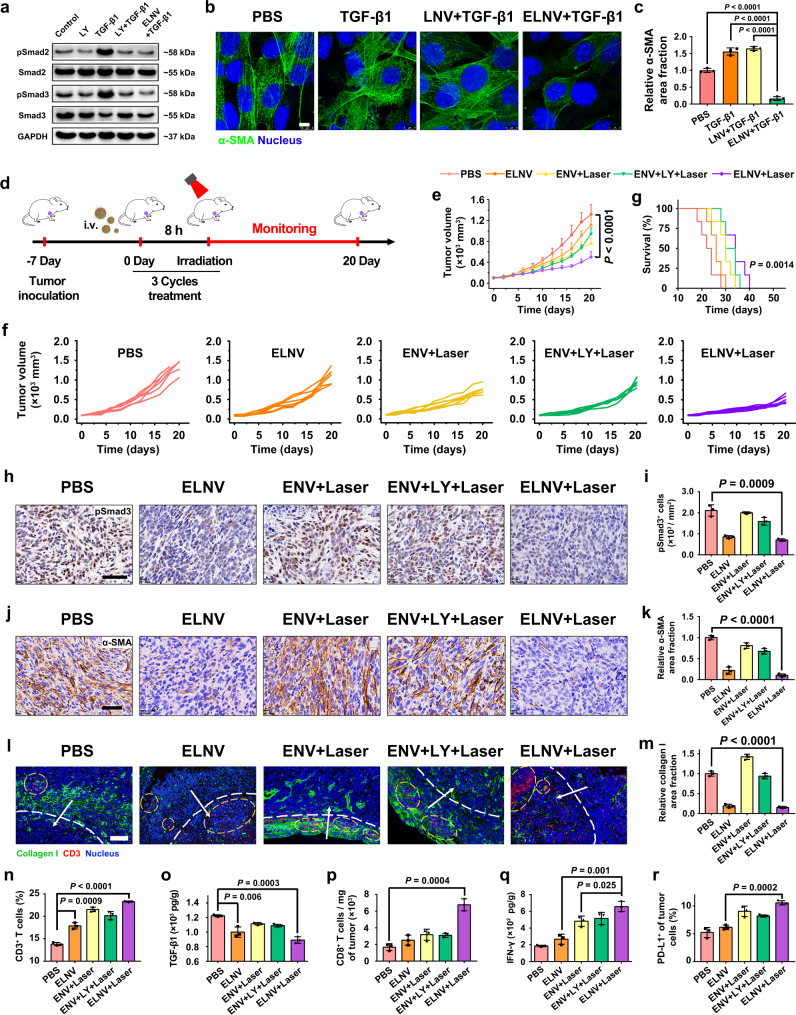
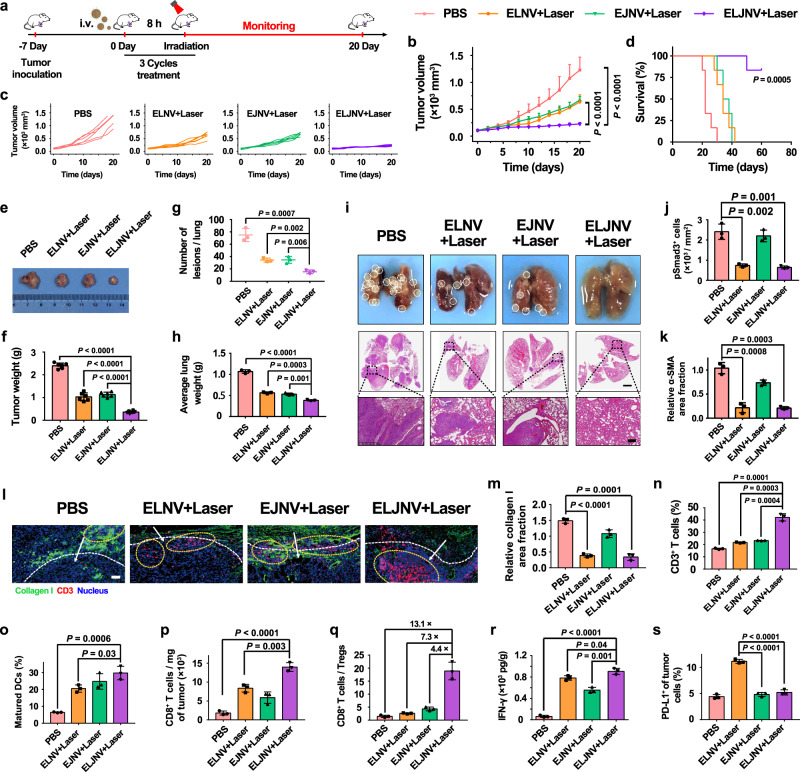
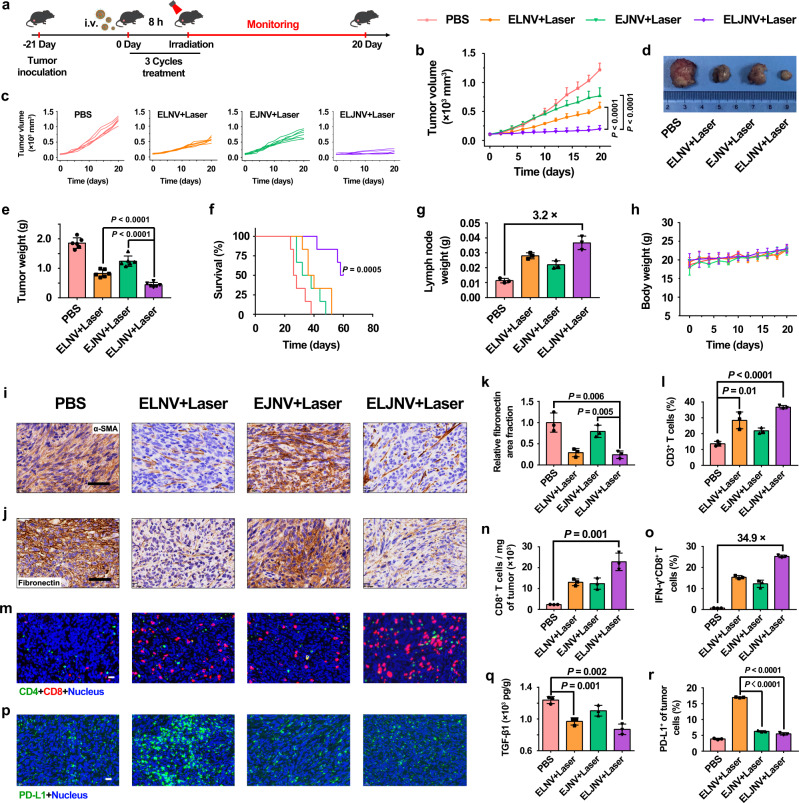
The immune-excluded tumors (IETs) show limited response to current immunotherapy due to intrinsic and adaptive immune resistance. In this study, it is identified that inhibition of transforming growth factor-β (TGF-β) receptor 1 can relieve tumor fibrosis, thus facilitating the recruitment of tumor-infiltrating T lymphocytes. Subsequently, a nanovesicle is constructed for tumor-specific co-delivery of a TGF-β inhibitor (LY2157299, LY) and the photosensitizer pyropheophorbide a (PPa). The LY-loaded nanovesicles suppress tumor fibrosis to promote intratumoral infiltration of T lymphocytes. Furthermore, PPa chelated with gadolinium ion is capable of fluorescence, photoacoustic and magnetic resonance triple-modal imaging-guided photodynamic therapy, to induce immunogenic death of tumor cells and elicit antitumor immunity in preclinical cancer models in female mice. These nanovesicles are further armored with a lipophilic prodrug of the bromodomain-containing protein 4 inhibitor (i.e., JQ1) to abolish programmed death ligand 1 expression of tumor cells and overcome adaptive immune resistance. This study may pave the way for nanomedicine-based immunotherapy of the IETs.
免疫豁免肿瘤 (IET) 由于内在和适应性免疫抵抗,对当前的免疫疗法反应有限。在这项研究中,确定抑制转化生长因子-β (TGF-β) 受体 1 可以减轻肿瘤纤维化,从而促进肿瘤浸润 T 淋巴细胞的募集。随后,构建了一种用于肿瘤特异性共递送 TGF-β 抑制剂 (LY2157299,LY) 和光增敏剂原卟啉 a (PPa) 的纳米囊泡。载 LY 的纳米囊泡抑制肿瘤纤维化,促进肿瘤内 T 淋巴细胞浸润。此外,与钆离子螯合的 PPa 能够进行荧光、光声和磁共振三模态成像引导的光动力治疗,以诱导肿瘤细胞的免疫原性死亡,并在雌性小鼠的临床前癌症模型中引发抗肿瘤免疫。这些纳米囊泡进一步用溴结构域蛋白 4 抑制剂的亲脂性前药 (即 JQ1) 包裹,以消除肿瘤细胞程序性死亡配体 1 的表达并克服适应性免疫抵抗。这项研究可能为基于纳米医学的 IET 免疫疗法铺平道路。