• 文献检索
  • 文档翻译
  • 深度研究
  • 学术资讯
  • Suppr Zotero 插件Zotero 插件
  • 邀请有礼
  • 套餐&价格
  • 历史记录
应用&插件
Suppr Zotero 插件Zotero 插件浏览器插件Mac 客户端Windows 客户端微信小程序
定价
高级版会员购买积分包购买API积分包
服务
文献检索文档翻译深度研究API 文档MCP 服务
关于我们
关于 Suppr公司介绍联系我们用户协议隐私条款
关注我们

Suppr 超能文献

核心技术专利:CN118964589B侵权必究
粤ICP备2023148730 号-1Suppr @ 2026

文献检索

告别复杂PubMed语法,用中文像聊天一样搜索,搜遍4000万医学文献。AI智能推荐,让科研检索更轻松。

立即免费搜索

文件翻译

保留排版,准确专业,支持PDF/Word/PPT等文件格式,支持 12+语言互译。

免费翻译文档

深度研究

AI帮你快速写综述,25分钟生成高质量综述,智能提取关键信息,辅助科研写作。

立即免费体验

是菊苣(菊科)孢子体自交不亲和S位点的一个候选基因。

is a candidate gene of the S-locus for sporophytic self-incompatibility in chicory (, Asteraceae).

作者信息

Palumbo Fabio, Draga Samela, Magon Gabriele, Gabelli Giovanni, Vannozzi Alessandro, Farinati Silvia, Scariolo Francesco, Lucchin Margherita, Barcaccia Gianni

机构信息

Department of Agronomy, Food, Natural resources, Animals and Environment (DAFNAE), University of Padua, Padua, Italy.

出版信息

Front Plant Sci. 2023 Jun 2;14:1204538. doi: 10.3389/fpls.2023.1204538. eCollection 2023.

DOI:10.3389/fpls.2023.1204538
PMID:37332702
原文链接:https://pmc.ncbi.nlm.nih.gov/articles/PMC10272723/
Abstract

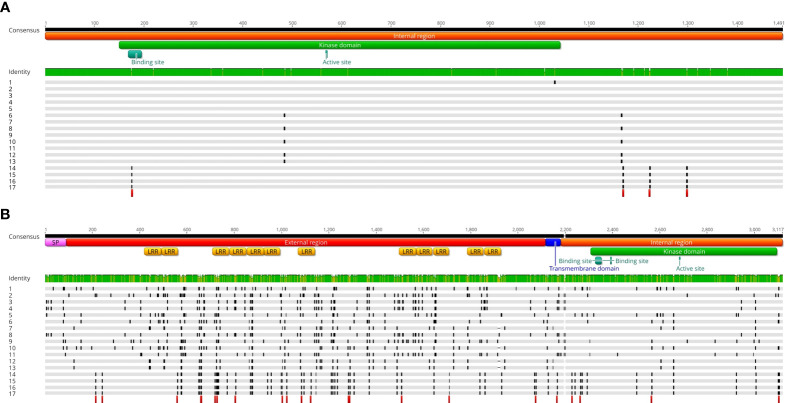
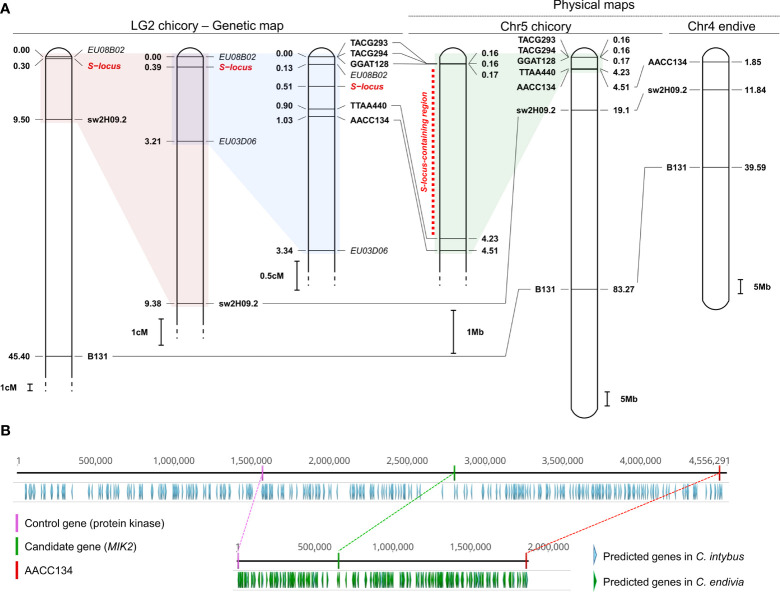
The genus offers a unique opportunity to study the sporophytic self-incompatibility (SSI) system, being composed of species characterized by highly efficient self-incompatibility (e.g., ) and complete self-compatibility (e.g., ). To this end, the chicory genome was used to map seven previously identified SSI locus-associated markers. The region containing the S-locus was therefore restricted to an ~4 M bp window on chromosome 5. Among the genes predicted in this region, () was particularly promising as a candidate for SSI. Its ortholog in Arabidopsis ( is involved in pollen-stigma recognition reactions, and its protein structure is similar to that of S-receptor kinase (SRK), a key component of the SSI system in the genus. The amplification and sequencing of in chicory and endive accessions revealed two contrasting scenarios. In , was fully conserved even when comparing different botanical varieties (i.e., smooth and curly endive). In , 387 polymorphic positions and 3 INDELs were identified when comparing accessions of different biotypes all belonging to the same botanical variety (i.e., radicchio). The polymorphism distribution throughout the gene was uneven, with hypervariable domains preferentially localized in the LRR-rich extracellular region, putatively identified as the receptor domain. The gene was hypothesized to be under positive selection, as the nonsynonymous mutations were more than double the synonymous ones (dN/dS = 2.17). An analogous situation was observed when analyzing the first 500 bp of the promoter: no SNPs were observed among the endive samples, whereas 44 SNPs and 6 INDELs were detected among the chicory samples. Further analyses are needed to confirm the role of MIK2 in SSI and to demonstrate whether the 23 species-specific nonsynonymous SNPs in the CDS and/or the species-specific 10 bp-INDEL found in a CCAAT box region of the promoter are responsible for the contrasting sexual behaviors of chicory and endive.

摘要

该属为研究孢子体自交不亲和(SSI)系统提供了独特的机会,它由具有高效自交不亲和特性的物种(如……)和完全自交亲和的物种(如……)组成。为此,利用菊苣基因组对7个先前鉴定的与SSI位点相关的标记进行定位。因此,包含S位点的区域被限制在5号染色体上约4兆碱基对的窗口内。在该区域预测的基因中,(……)作为SSI的候选基因特别有前景。其拟南芥直系同源基因(……)参与花粉 - 柱头识别反应,其蛋白质结构与S受体激酶(SRK)相似,SRK是该属SSI系统的关键组成部分。菊苣和苦苣材料中该基因的扩增和测序揭示了两种截然不同的情况。在苦苣中,即使比较不同的植物变种(即光滑叶和皱叶苦苣),该基因也完全保守。在菊苣中,当比较属于同一植物变种(即红菊苣)的不同生物型的材料时,鉴定出387个多态性位点和3个插入缺失。整个基因的多态性分布不均匀,高变区优先定位在富含亮氨酸重复序列(LRR)的细胞外区域,推测该区域为受体结构域。该基因被假定处于正选择之下,因为非同义突变是同义突变的两倍多(dN/dS = 2.17)。在分析该基因启动子的前500 bp时也观察到类似情况:苦苣样品中未观察到单核苷酸多态性(SNP),而菊苣样品中检测到44个SNP和6个插入缺失。需要进一步分析以确认MIK2在SSI中的作用,并证明编码区中的23个物种特异性非同义SNP和/或在启动子的CCAAT框区域中发现的物种特异性10 bp插入缺失是否导致菊苣和苦苣不同的有性生殖行为。
https://cdn.ncbi.nlm.nih.gov/pmc/blobs/6f99/10272723/c7f9cf5715f7/fpls-14-1204538-g003.jpg
https://cdn.ncbi.nlm.nih.gov/pmc/blobs/6f99/10272723/b1135f9ec1f6/fpls-14-1204538-g001.jpg
https://cdn.ncbi.nlm.nih.gov/pmc/blobs/6f99/10272723/d50c63d37171/fpls-14-1204538-g002.jpg
https://cdn.ncbi.nlm.nih.gov/pmc/blobs/6f99/10272723/c7f9cf5715f7/fpls-14-1204538-g003.jpg
https://cdn.ncbi.nlm.nih.gov/pmc/blobs/6f99/10272723/b1135f9ec1f6/fpls-14-1204538-g001.jpg
https://cdn.ncbi.nlm.nih.gov/pmc/blobs/6f99/10272723/d50c63d37171/fpls-14-1204538-g002.jpg
https://cdn.ncbi.nlm.nih.gov/pmc/blobs/6f99/10272723/c7f9cf5715f7/fpls-14-1204538-g003.jpg

相似文献

1
is a candidate gene of the S-locus for sporophytic self-incompatibility in chicory (, Asteraceae).是菊苣(菊科)孢子体自交不亲和S位点的一个候选基因。
Front Plant Sci. 2023 Jun 2;14:1204538. doi: 10.3389/fpls.2023.1204538. eCollection 2023.
2
High-density genetic maps for loci involved in nuclear male sterility (NMS1) and sporophytic self-incompatibility (S-locus) in chicory (Cichorium intybus L., Asteraceae).高密度遗传图谱为菊苣核雄性不育(NMS1)和孢子体自交不亲和(S 座位)相关基因座定位
Theor Appl Genet. 2013 Aug;126(8):2103-21. doi: 10.1007/s00122-013-2122-9. Epub 2013 May 21.
3
The genomes of chicory, endive, great burdock and yacon provide insights into Asteraceae palaeo-polyploidization history and plant inulin production.菊苣、菊苣、牛蒡和亚贡雪莲的基因组为研究菊科古多倍体化历史和植物菊粉的生产提供了线索。
Mol Ecol Resour. 2022 Nov;22(8):3124-3140. doi: 10.1111/1755-0998.13675. Epub 2022 Jul 4.
4
Pipeline to Design Inbred Lines and F1 Hybrids of Leaf Chicory (Radicchio) Using Male Sterility and Genotyping-by-Sequencing.利用雄性不育和简化基因组测序设计叶用菊苣(红菊苣)自交系和F1杂交种的流程
Plants (Basel). 2023 Mar 9;12(6):1242. doi: 10.3390/plants12061242.
5
Genotyping by RAD Sequencing Analysis Assessed the Genetic Distinctiveness of Experimental Lines and Narrowed Down the Genomic Region Responsible for Leaf Shape in Endive ( L.).通过 RAD 测序分析进行基因型分析评估了实验品系的遗传独特性,并缩小了菊苣叶片形状的基因组区域。
Genes (Basel). 2020 Apr 23;11(4):462. doi: 10.3390/genes11040462.
6
A search for diagnostic AFLP markers in Cichorium species with emphasis on endive and chicory cultivar groups.在菊苣属物种中寻找诊断性扩增片段长度多态性(AFLP)标记,重点关注结球苣荬菜和菊苣品种组。
Genome. 2000 Jun;43(3):470-6. doi: 10.1139/g00-024.
7
Genetic diversity and relationship of chicory (Cichorium intybus L.) using sequence-related amplified polymorphism markers.利用序列相关扩增多态性标记分析菊苣(Cichorium intybus L.)的遗传多样性及亲缘关系
Genet Mol Res. 2014 Sep 26;13(3):7736-46. doi: 10.4238/2014.September.26.11.
8
Comparison of carbohydrate partitioning and expression patterns of some genes involved in carbohydrate biosynthesis pathways in annual and biennial species of Cichorium spp.比较菊苣属一年生和二年生种中碳水化合物分配和一些参与碳水化合物生物合成途径的基因表达模式。
Phytochemistry. 2021 Mar;183:112620. doi: 10.1016/j.phytochem.2020.112620. Epub 2020 Dec 24.
9
Construction of the First SNP-Based Linkage Map Using Genotyping-by-Sequencing and Mapping of the Male-Sterility Gene in Leaf Chicory.利用简化基因组测序构建第一张基于单核苷酸多态性的连锁图谱并定位叶用菊苣雄性不育基因
Front Plant Sci. 2019 Mar 11;10:276. doi: 10.3389/fpls.2019.00276. eCollection 2019.
10
Intra- and interspecific chromosome polymorphisms in cultivated Cichorium L. species (Asteraceae).栽培菊苣属(菊科)种内和种间染色体多态性。
Genet Mol Biol. 2013 Sep;36(3):357-63. doi: 10.1590/S1415-47572013005000025. Epub 2013 Jul 19.

引用本文的文献

1
S-RNase-based self-incompatibility in angiosperms: Degradation, condensation, and evolution.被子植物中基于S-RNase的自交不亲和性:降解、浓缩与进化
Plant Physiol. 2025 Sep 1;199(1). doi: 10.1093/plphys/kiaf360.
2
RNA-seq analyses on gametogenic tissues of alfalfa (Medicago sativa) revealed plant reproduction- and ploidy-related genes.对紫花苜蓿(Medicago sativa)配子组织的 RNA-seq 分析揭示了与植物生殖和倍性相关的基因。
BMC Plant Biol. 2024 Sep 3;24(1):826. doi: 10.1186/s12870-024-05542-2.
3
The distribution of self-incompatibility systems in angiosperms: the relationship between mating system diversity, life span, growth habit and latitude in a changing global environment.

本文引用的文献

1
Transcriptional and post-transcriptional controls for tuning gene expression in plants.植物基因表达的转录和转录后调控。
Curr Opin Plant Biol. 2023 Feb;71:102315. doi: 10.1016/j.pbi.2022.102315. Epub 2022 Nov 30.
2
Ancestral self-compatibility facilitates the establishment of allopolyploids in Brassicaceae.祖先自交亲和性促进了十字花科异源多倍体的建立。
Plant Reprod. 2023 Mar;36(1):125-138. doi: 10.1007/s00497-022-00451-6. Epub 2022 Oct 25.
3
The genomes of chicory, endive, great burdock and yacon provide insights into Asteraceae palaeo-polyploidization history and plant inulin production.
被子植物中自交不亲和系统的分布:在不断变化的全球环境中,交配系统多样性、寿命、生长习性与纬度之间的关系。
Ann Bot. 2025 Feb 8;135(1-2):25-42. doi: 10.1093/aob/mcae056.
4
Molecular insights into self-incompatibility systems: From evolution to breeding.分子水平上的自交不亲和系统研究进展:从进化到育种。
Plant Commun. 2024 Feb 12;5(2):100719. doi: 10.1016/j.xplc.2023.100719. Epub 2023 Sep 16.
5
Genome-Wide Datasets of Chicories ( L.) for Marker-Assisted Crop Breeding Applications: A Systematic Review and Meta-Analysis.菊苣(L.)全基因组数据集在作物标记辅助育种中的应用:系统评价与元分析。
Int J Mol Sci. 2023 Jul 19;24(14):11663. doi: 10.3390/ijms241411663.
菊苣、菊苣、牛蒡和亚贡雪莲的基因组为研究菊科古多倍体化历史和植物菊粉的生产提供了线索。
Mol Ecol Resour. 2022 Nov;22(8):3124-3140. doi: 10.1111/1755-0998.13675. Epub 2022 Jul 4.
4
Development of first linkage map for Silphium integrifolium (Asteraceae) enables identification of sporophytic self-incompatibility locus.首次构建完整的山菅兰(菊科)连锁图谱,鉴定出孢子体自交不亲和基因座。
Heredity (Edinb). 2022 May;128(5):304-312. doi: 10.1038/s41437-022-00530-4. Epub 2022 Apr 18.
5
Cell-cell signaling during the Brassicaceae self-incompatibility response.十字花科植物自交不亲和反应中的细胞间信号传导。
Trends Plant Sci. 2022 May;27(5):472-487. doi: 10.1016/j.tplants.2021.10.011. Epub 2021 Nov 27.
6
Pollen-Pistil Interactions as Reproductive Barriers.花粉-柱头相互作用作为生殖障碍。
Annu Rev Plant Biol. 2021 Jun 17;72:615-639. doi: 10.1146/annurev-arplant-080620-102159.
7
Expasy, the Swiss Bioinformatics Resource Portal, as designed by its users.瑞士生物信息学资源门户 Expasy,由其用户设计。
Nucleic Acids Res. 2021 Jul 2;49(W1):W216-W227. doi: 10.1093/nar/gkab225.
8
Impact of whole genome triplication on the evolutionary history and the functional dynamics of regulatory genes involved in Brassica self-incompatibility signalling pathway.全基因组三倍体对调控基因的进化历史和功能动态的影响,这些调控基因参与芸薹属自交不亲和信号通路。
Plant Reprod. 2020 Mar;33(1):43-58. doi: 10.1007/s00497-020-00385-x. Epub 2020 Feb 20.
9
Breakdown of gametophytic self-incompatibility in subdivided populations.配子体自交不亲和性在细分群体中的崩溃。
Evolution. 2020 Feb;74(2):270-282. doi: 10.1111/evo.13897. Epub 2020 Jan 2.
10
The Paradox of Self-Fertile Varieties in the Context of Self-Incompatible Genotypes in Olive.油橄榄自交不亲和基因型背景下自交可育品种的悖论
Front Plant Sci. 2019 Jun 26;10:725. doi: 10.3389/fpls.2019.00725. eCollection 2019.