Majd Alireza, Richter Mikayla N, Samuel Ryan M, Cesiulis Andrius, Ghazizadeh Zaniar, Wang Jeffrey, Fattahi Faranak
Department of Cellular and Molecular Pharmacology, University of California, San Francisco, California, USA.
Division of Cardiovascular Medicine, Department of Medicine, Stanford University School of Medicine, Stanford, California, USA.
medRxiv. 2023 Jun 5:2023.06.02.23290906. doi: 10.1101/2023.06.02.23290906.
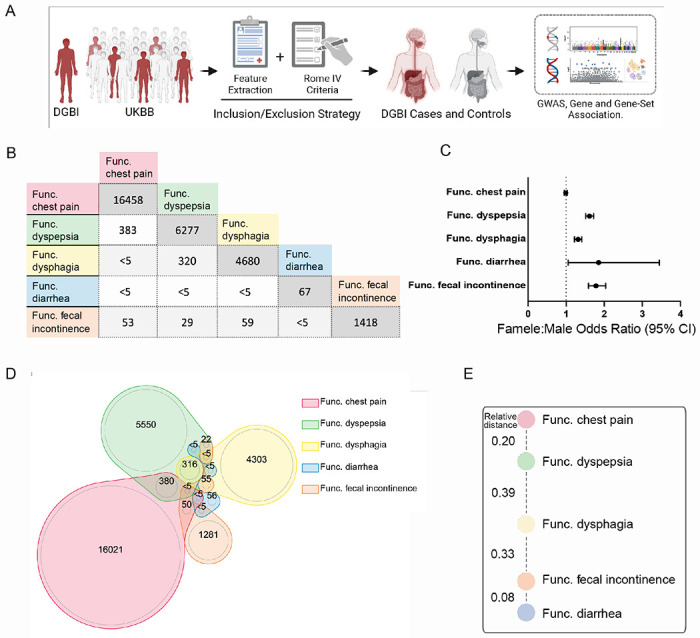
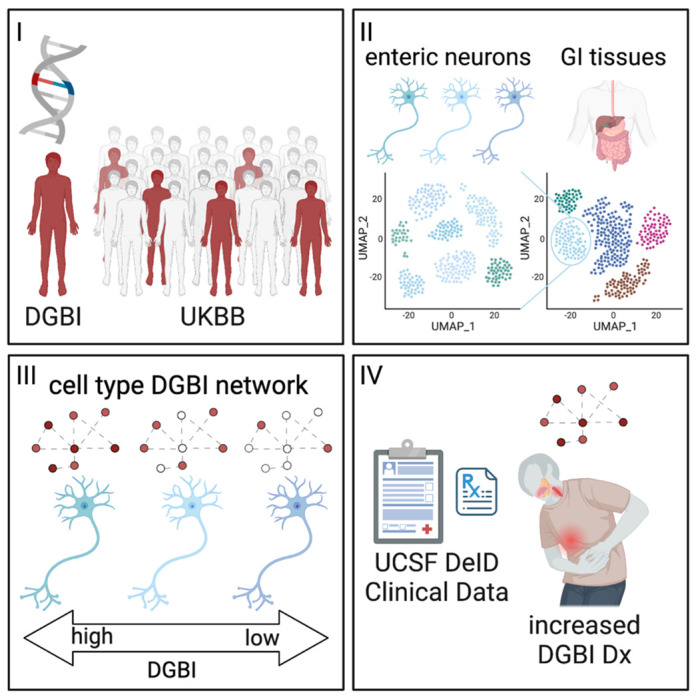
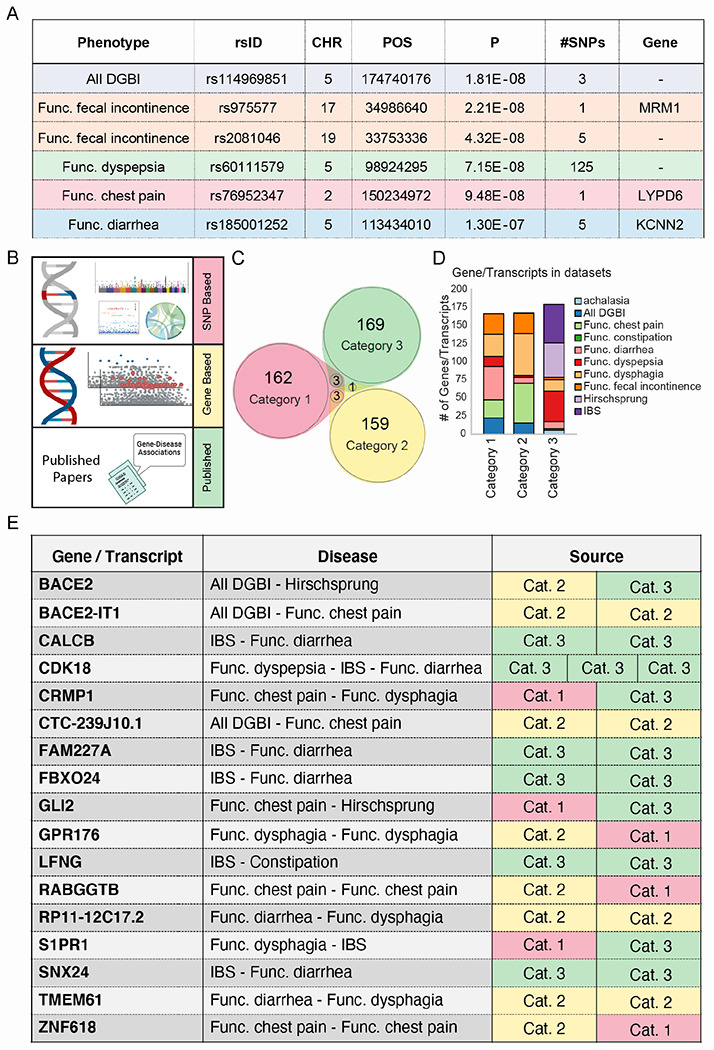
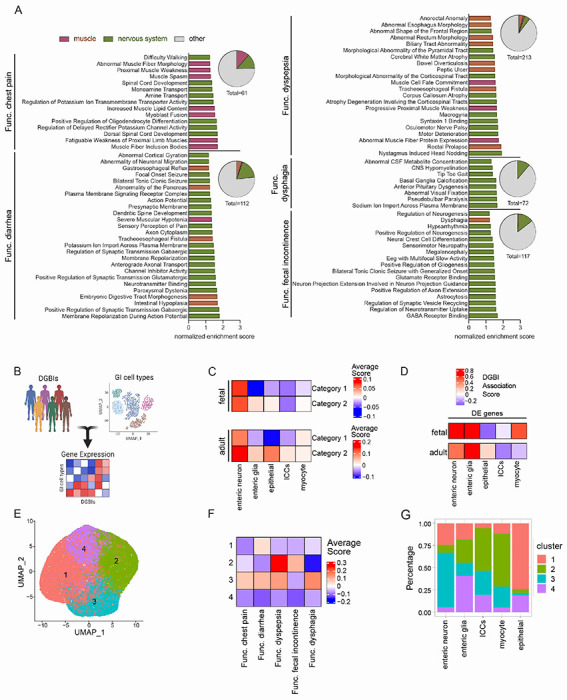
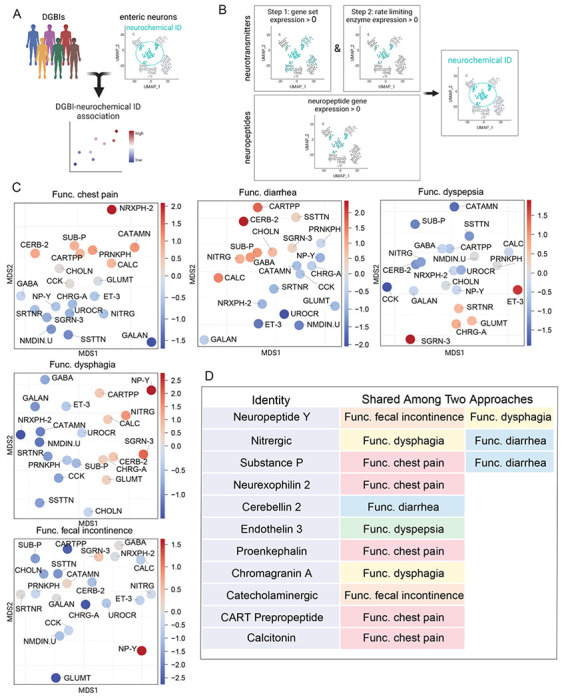
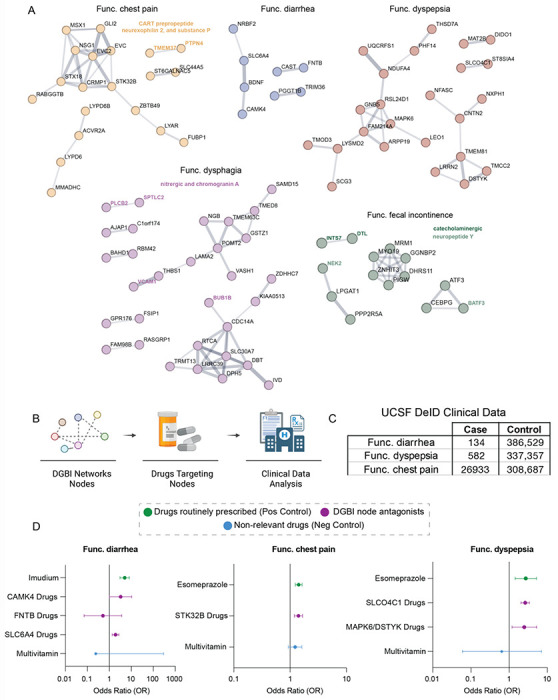
Disorders of gut-brain interaction (DGBIs), formerly known as functional gastrointestinal disorders, are extremely common and historically difficult to manage. This is largely because their cellular and molecular mechanisms have remained poorly understood and understudied. One approach to unravel the molecular underpinnings of complex disorders such as DGBIs is performing genome wide association studies (GWASs). However, due to the heterogenous and non-specific nature of GI symptoms, it has been difficult to accurately classify cases and controls. Thus, to perform reliable studies, we need to access large patient populations which has been difficult to date. Here, we leveraged the UK Biobank (UKBB) database, containing genetic and medical record data of over half a million individuals, to perform GWAS for five DGBI categories: functional chest pain, functional diarrhea, functional dyspepsia, functional dysphagia, and functional fecal incontinence. By applying strict inclusion and exclusion criteria, we resolved patient populations and identified genes significantly associated with each condition. Leveraging multiple human single-cell RNA-sequencing datasets, we found that the disease associated genes were highly expressed in enteric neurons, which innervate and control GI functions. Further expression and association testing-based analyses revealed specific enteric neuron subtypes consistently linked with each DGBI. Furthermore, protein-protein interaction analysis of each of the disease associated genes revealed protein networks specific to each DGBI, including hedgehog signaling for functional chest pain and neuronal function and neurotransmission for functional diarrhea and functional dyspepsia. Finally, through retrospective medical record analysis we found that drugs that inhibit these networks are associated with an increased disease risk, including serine/threonine kinase 32B drugs for functional chest pain, solute carrier organic anion transporter family member 4C1, mitogen-activated protein kinase 6, and dual serine/threonine and tyrosine protein kinase drugs for functional dyspepsia, and serotonin transporter drugs for functional diarrhea. This study presents a robust strategy for uncovering the tissues, cell types, and genes involved in DGBIs, presenting novel predictions of the mechanisms underlying these historically intractable and poorly understood diseases.
肠-脑相互作用障碍(DGBIs),以前被称为功能性胃肠疾病,极为常见且历来难以治疗。这主要是因为其细胞和分子机制一直未得到充分理解和研究。揭示诸如DGBIs等复杂疾病分子基础的一种方法是进行全基因组关联研究(GWASs)。然而,由于胃肠道症状的异质性和非特异性,准确分类病例和对照一直很困难。因此,为了进行可靠的研究,我们需要获取大量患者群体的数据,而迄今为止这一直很困难。在此,我们利用英国生物银行(UKBB)数据库,该数据库包含超过50万人的遗传和医疗记录数据,对五种DGBI类别进行GWAS:功能性胸痛、功能性腹泻、功能性消化不良、功能性吞咽困难和功能性大便失禁。通过应用严格的纳入和排除标准,我们确定了患者群体,并鉴定出与每种疾病显著相关的基因。利用多个人类单细胞RNA测序数据集,我们发现疾病相关基因在支配和控制胃肠功能的肠神经元中高度表达。基于进一步表达和关联测试的分析揭示了与每种DGBI始终相关的特定肠神经元亚型。此外,对每个疾病相关基因的蛋白质-蛋白质相互作用分析揭示了每种DGBI特有的蛋白质网络,包括功能性胸痛的刺猬信号通路以及功能性腹泻和功能性消化不良的神经元功能和神经传递。最后,通过回顾性医疗记录分析,我们发现抑制这些网络的药物与疾病风险增加有关,包括功能性胸痛的丝氨酸/苏氨酸激酶32B药物、功能性消化不良的溶质载体有机阴离子转运家族成员4C1、丝裂原活化蛋白激酶6和双丝氨酸/苏氨酸和酪氨酸蛋白激酶药物,以及功能性腹泻的血清素转运药物。这项研究提出了一种强大的策略,用于揭示参与DGBIs的组织、细胞类型和基因,为这些历来难以治疗且了解甚少的疾病的潜在机制提供了新的预测。