Farncombe Family Digestive Health Research Institute, McMaster University, Hamilton, Canada.
Gut Microbes. 2024 Jan-Dec;16(1):2360233. doi: 10.1080/19490976.2024.2360233. Epub 2024 Jul 1.
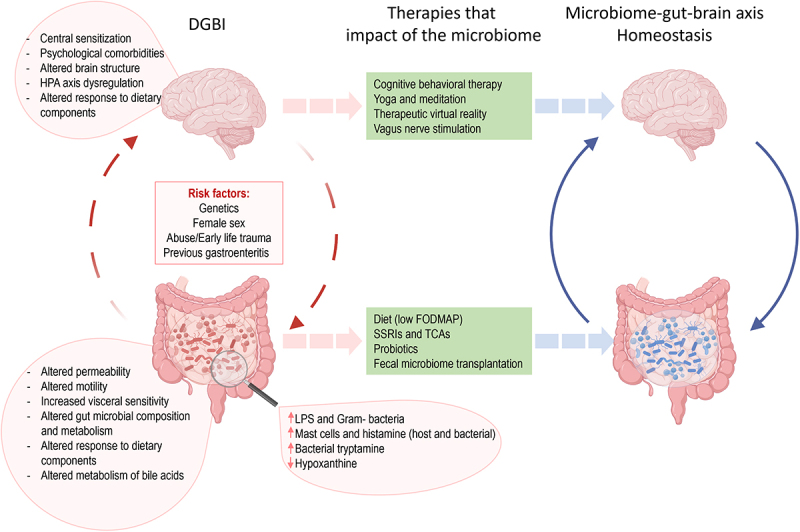
Functional gastrointestinal disorders (FGIDs), chronic disorders characterized by either abdominal pain, altered intestinal motility, or their combination, have a worldwide prevalence of more than 40% and impose a high socioeconomic burden with a significant decline in quality of life. Recently, FGIDs have been reclassified as disorders of gut-brain interaction (DGBI), reflecting the key role of the gut-brain bidirectional communication in these disorders and their impact on psychological comorbidities. Although, during the past decades, the field of DGBIs has advanced significantly, the molecular mechanisms underlying DGBIs pathogenesis and pathophysiology, and the role of the gut microbiome in these processes are not fully understood. This review aims to discuss the latest body of literature on the complex microbiota-gut-brain interactions and their implications in the pathogenesis of DGBIs. A better understanding of the existing communication pathways between the gut microbiome and the brain holds promise in developing effective therapeutic interventions for DGBIs.
功能性胃肠病(FGIDs)是一种以腹痛、肠道运动改变或两者兼有为特征的慢性疾病,其全球患病率超过 40%,给社会经济带来了沉重负担,生活质量显著下降。最近,FGIDs 被重新分类为肠脑互动障碍(DGBI),反映了肠道-大脑双向通讯在这些疾病中的关键作用及其对心理合并症的影响。尽管在过去几十年中,DGBI 领域取得了重大进展,但 DGBI 发病机制和病理生理学的分子机制以及肠道微生物组在这些过程中的作用仍不完全清楚。本综述旨在讨论关于复杂的微生物群-肠道-大脑相互作用及其在 DGBI 发病机制中的意义的最新文献。更好地了解肠道微生物组和大脑之间现有的通讯途径有望为 DGBI 开发有效的治疗干预措施。