Kamioka Hiroshi, Yogosawa Satomi, Oikawa Tsunekazu, Aizawa Daisuke, Ueda Kaoru, Saeki Chisato, Haruki Koichiro, Shimoda Masayuki, Ikegami Toru, Nishikawa Yuji, Saruta Masayuki, Yoshida Kiyotsugu
Department of Biochemistry, The Jikei University School of Medicine, Tokyo, Japan.
Division of Gastroenterology and Hepatology, Department of Internal Medicine, The Jikei University School of Medicine, Tokyo, Japan.
JHEP Rep. 2023 Apr 6;5(7):100759. doi: 10.1016/j.jhepr.2023.100759. eCollection 2023 Jul.
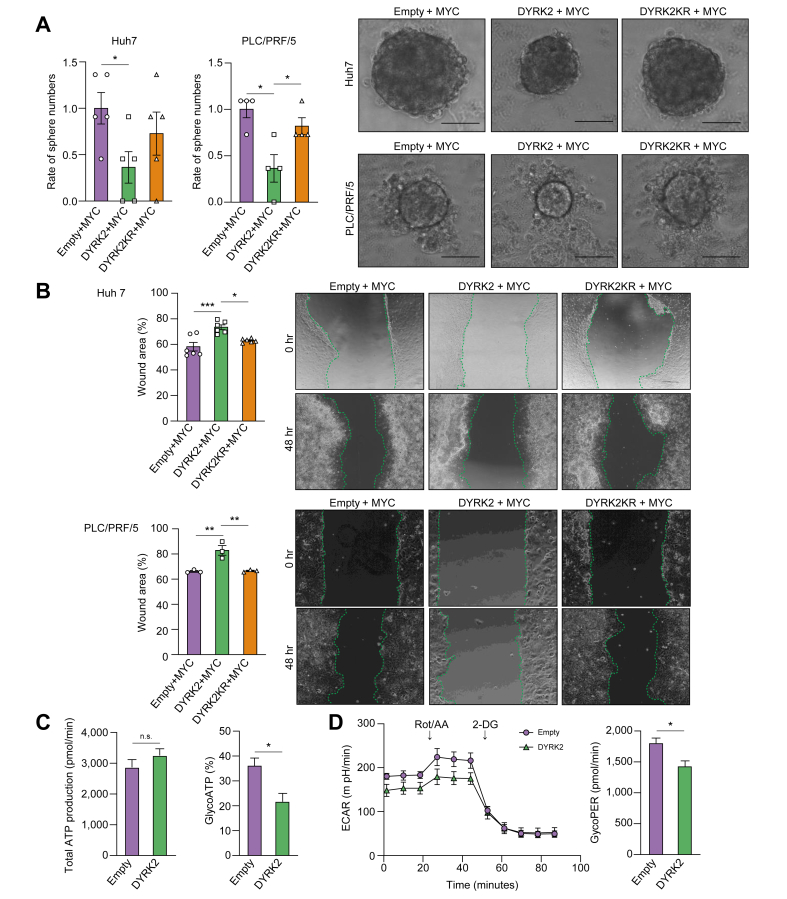
BACKGROUND & AIMS: Hepatocellular carcinoma (HCC) is one of the most common cancers worldwide, and has a poor prognosis. However, the molecular mechanisms underlying hepatocarcinogenesis and progression remain unknown. gain- and loss-of-function analyses in cell lines and xenografts revealed that dual-specificity tyrosine-regulated kinase 2 (DYRK2) influences tumour growth in HCC.
To investigate the role of Dyrk2 during hepatocarcinogenesis, we developed liver-specific conditional knockout mice and an gene delivery system with a hydrodynamic tail vein injection and the Sleeping Beauty transposon. The antitumour effects of gene transfer were investigated in a murine autologous carcinogenesis model.
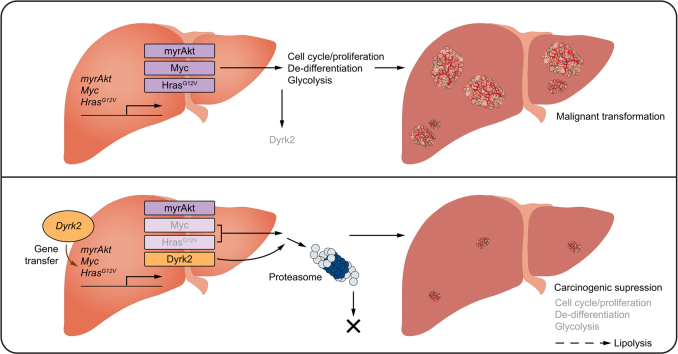
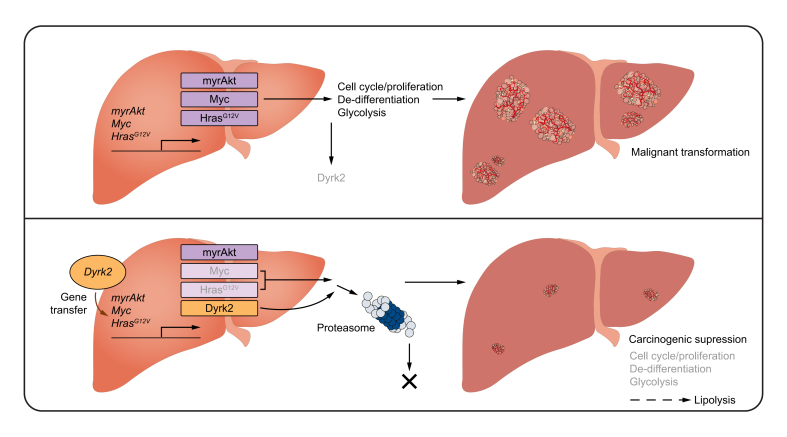
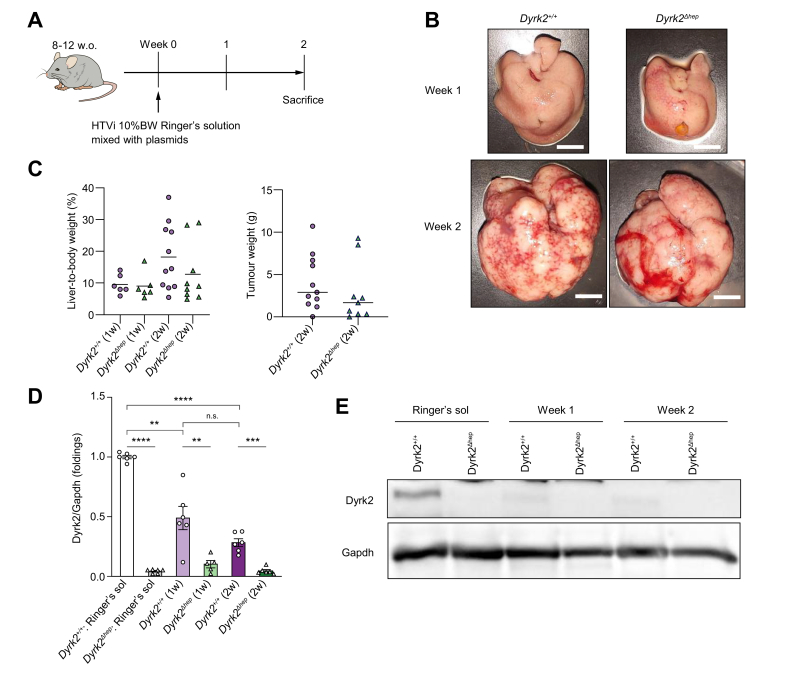
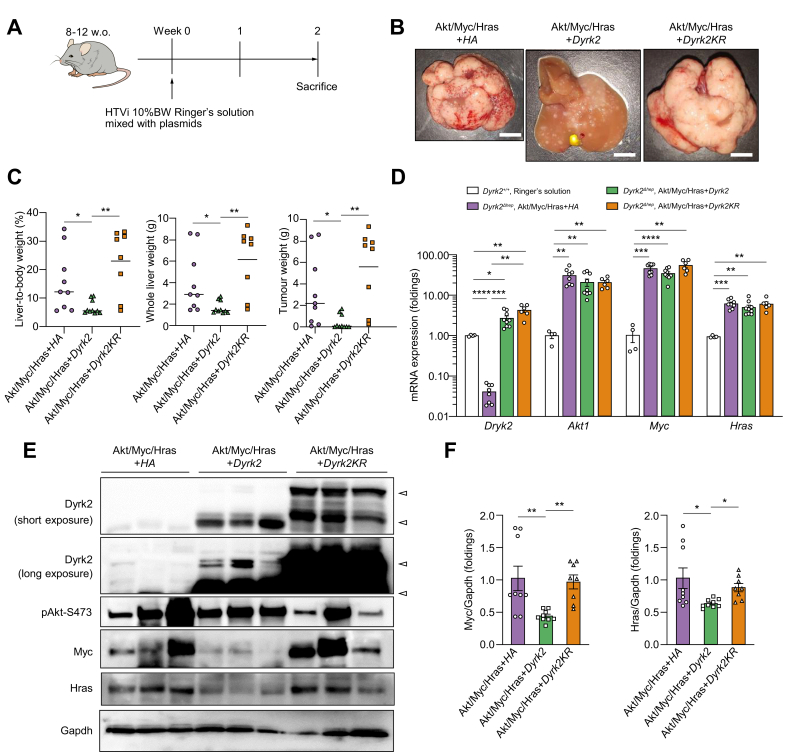
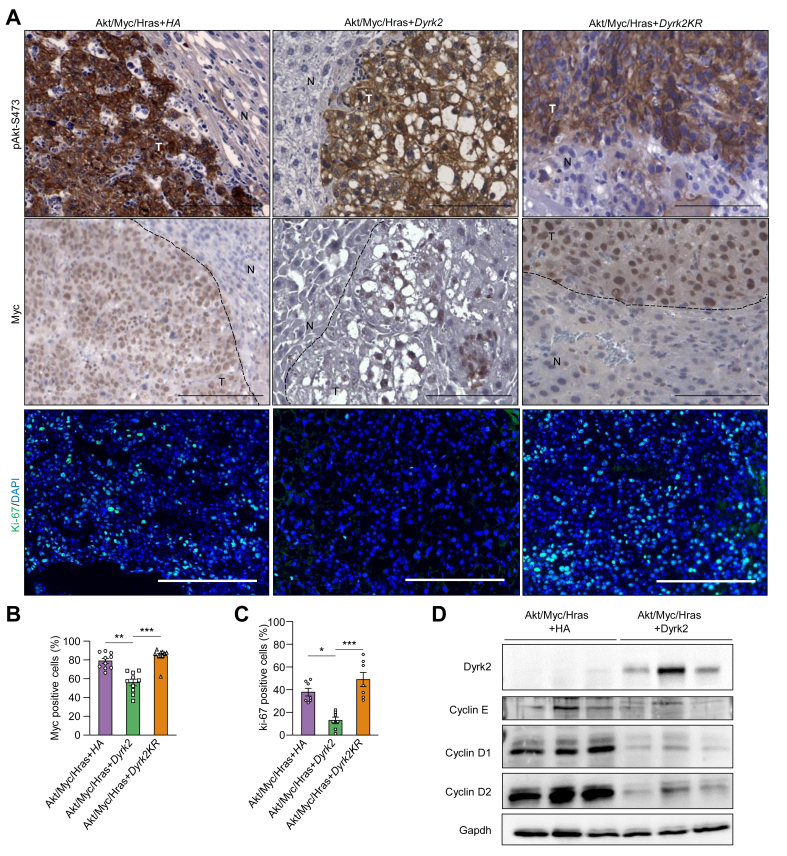
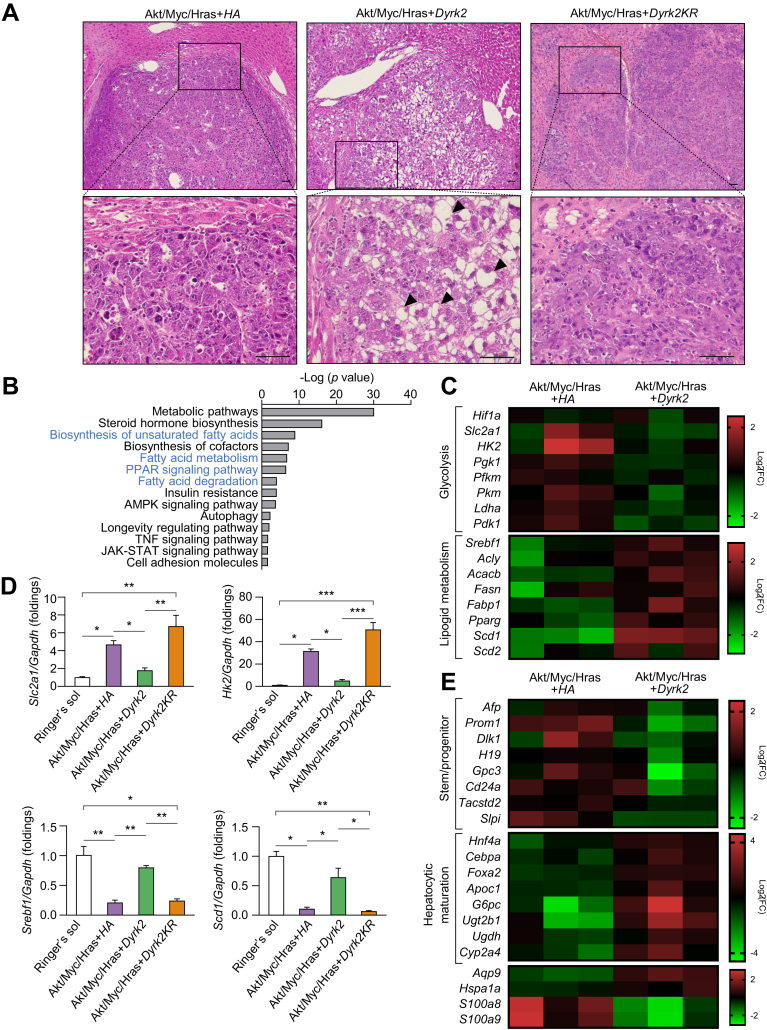
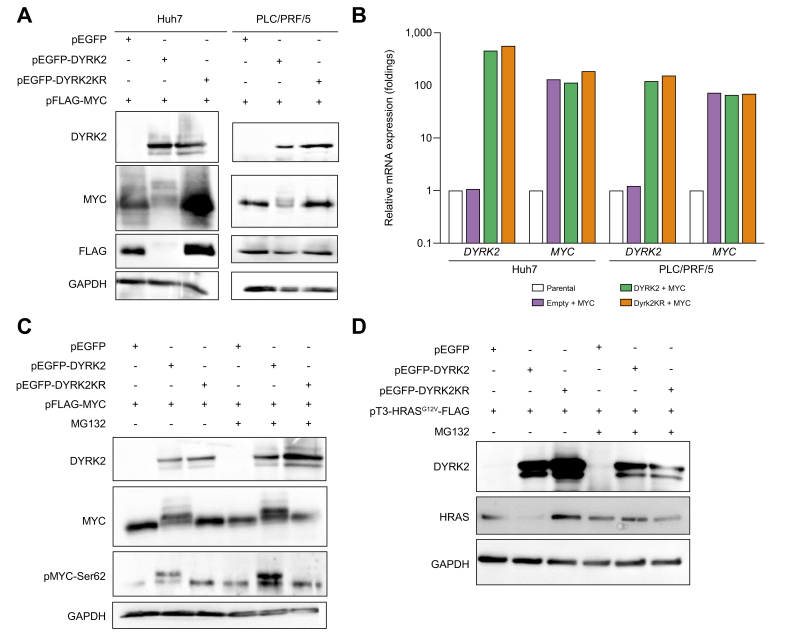
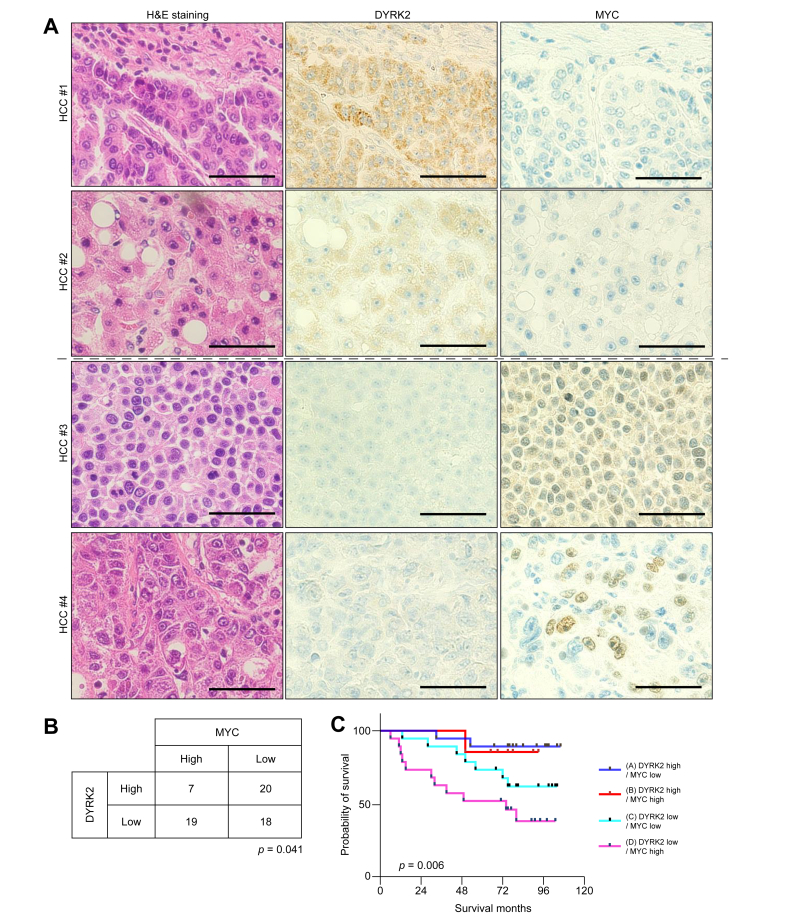
Dyrk2 expression was reduced in tumours, and that its downregulation was induced before hepatocarcinogenesis. gene transfer significantly suppressed carcinogenesis. It also suppresses Myc-induced de-differentiation and metabolic reprogramming, which favours proliferative, and malignant potential by altering gene profiles. Dyrk2 overexpression caused Myc and Hras degradation at the protein level rather than at the mRNA level, and this degradation mechanism was regulated by the proteasome. Immunohistochemical analyses revealed a negative correlation between DYRK2 expression and MYC and longer survival in patients with HCC with high-DYRK2 and low-MYC expressions.
Dyrk2 protects the liver from carcinogenesis by promoting Myc and Hras degradation. Our findings would pave the way for a novel therapeutic approach using gene transfer.
Hepatocellular carcinoma (HCC) is one of the most common cancers, with a poor prognosis. Hence, identifying molecules that can become promising targets for therapies is essential to improve mortality. No studies have clarified the association between DYRK2 and carcinogenesis, although DYRK2 is involved in tumour growth in various cancer cells. This is the first study to show that Dyrk2 expression decreases during hepatocarcinogenesis and that Dyrk2 gene transfer is an attractive approach with tumour suppressive activity against HCC by suppressing Myc-mediated de-differentiation and metabolic reprogramming that favours proliferative and malignant potential via Myc and Hras degradation.
肝细胞癌(HCC)是全球最常见的癌症之一,预后较差。然而,肝癌发生和进展的分子机制仍不清楚。在细胞系和异种移植中进行的功能获得和功能丧失分析表明,双特异性酪氨酸调节激酶2(DYRK2)影响HCC的肿瘤生长。
为了研究Dyrk2在肝癌发生过程中的作用,我们构建了肝脏特异性条件性敲除小鼠以及一种采用尾静脉液压注射和睡美人转座子的基因递送系统。在小鼠自体致癌模型中研究了基因转移的抗肿瘤作用。
肿瘤中Dyrk2表达降低,且其下调在肝癌发生之前就已被诱导。基因转移显著抑制了致癌作用。它还抑制Myc诱导的去分化和代谢重编程,通过改变基因谱促进增殖和恶性潜能。DYRK2过表达在蛋白质水平而非mRNA水平导致Myc和Hras降解,且这种降解机制受蛋白酶体调控。免疫组织化学分析显示,DYRK2表达与MYC呈负相关,且在高DYRK2和低MYC表达的HCC患者中生存期更长。
Dyrk2通过促进Myc和Hras降解保护肝脏免受致癌作用。我们的研究结果将为使用基因转移的新型治疗方法铺平道路。
肝细胞癌(HCC)是最常见的癌症之一,预后较差。因此,识别可成为有前景治疗靶点的分子对于提高生存率至关重要。尽管DYRK2参与多种癌细胞的肿瘤生长,但尚无研究阐明DYRK2与致癌作用之间的关联。这是第一项表明Dyrk2表达在肝癌发生过程中降低且Dyrk2基因转移是一种有吸引力的方法的研究,该方法通过抑制Myc介导的去分化和代谢重编程对HCC具有肿瘤抑制活性,而这种去分化和代谢重编程通过Myc和Hras降解促进增殖和恶性潜能。