Wang Siying, Zhou Yangyang, Yu Ruobing, Ling Jing, Li Botai, Yang Chen, Cheng Zhuoan, Qian Ruolan, Lin Zhang, Yu Chengtao, Zheng Jiaojiao, Zheng Xingling, Jia Qi, Wu Wei, Wu Qiangxin, Chen Mengnuo, Yuan Shengxian, Dong Wei, Shi Yaoping, Jansen Robin, Yang Chen, Hao Yujun, Yao Ming, Qin Wenxin, Jin Haojie
State Key Laboratory of Systems Medicine for Cancer, Shanghai Cancer Institute, Renji Hospital, Shanghai Jiao Tong University School of Medicine, Shanghai, China.
Department of Liver Surgery, Renji Hospital, School of Medicine, Shanghai Jiao Tong University, Shanghai, China.
JHEP Rep. 2023 Jul 12;5(10):100843. doi: 10.1016/j.jhepr.2023.100843. eCollection 2023 Oct.
BACKGROUND & AIMS: Exploiting key regulators responsible for hepatocarcinogenesis is of great importance for the prevention and treatment of hepatocellular carcinoma (HCC). However, the key players contributing to hepatocarcinogenesis remain poorly understood. We explored the molecular mechanisms underlying the carcinogenesis and progression of HCC for the development of potential new therapeutic targets.
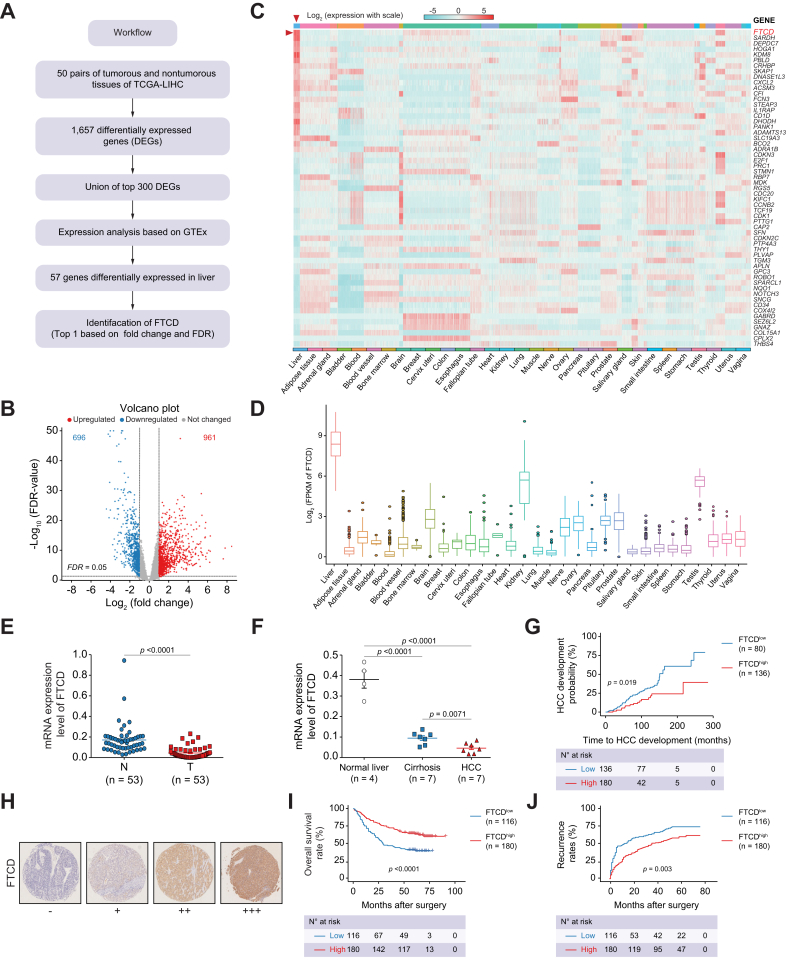
The Cancer Genome Atlas-Liver Hepatocellular Carcinoma (TCGA-LIHC) and Genotype-Tissue Expression (GTEx) databases were used to identify genes with enhanced expression in the liver associated with HCC progression. A murine liver-specific knockout (LKO) model was generated to investigate the role of formimidoyltransferase cyclodeaminase (FTCD) in HCC. Multi-omics analysis of transcriptomics, metabolomics, and proteomics data were applied to further analyse the molecular effects of FTCD expression on hepatocarcinogenesis. Functional and biochemical studies were performed to determine the significance of loss of FTCD expression and the therapeutic potential of Akt inhibitors in FTCD-deficient cancer cells.
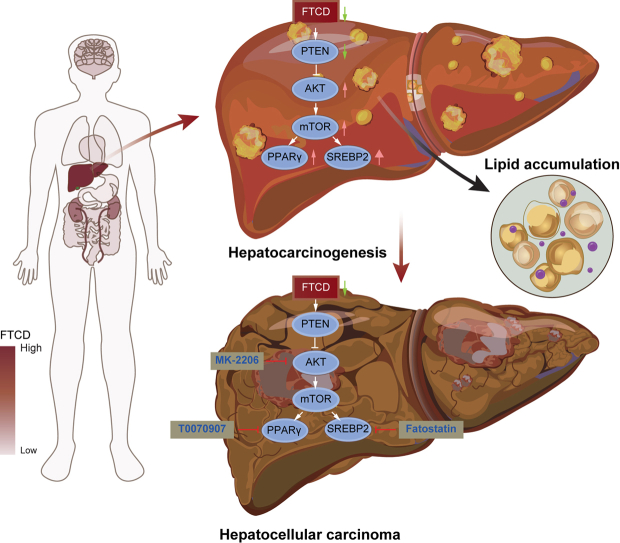
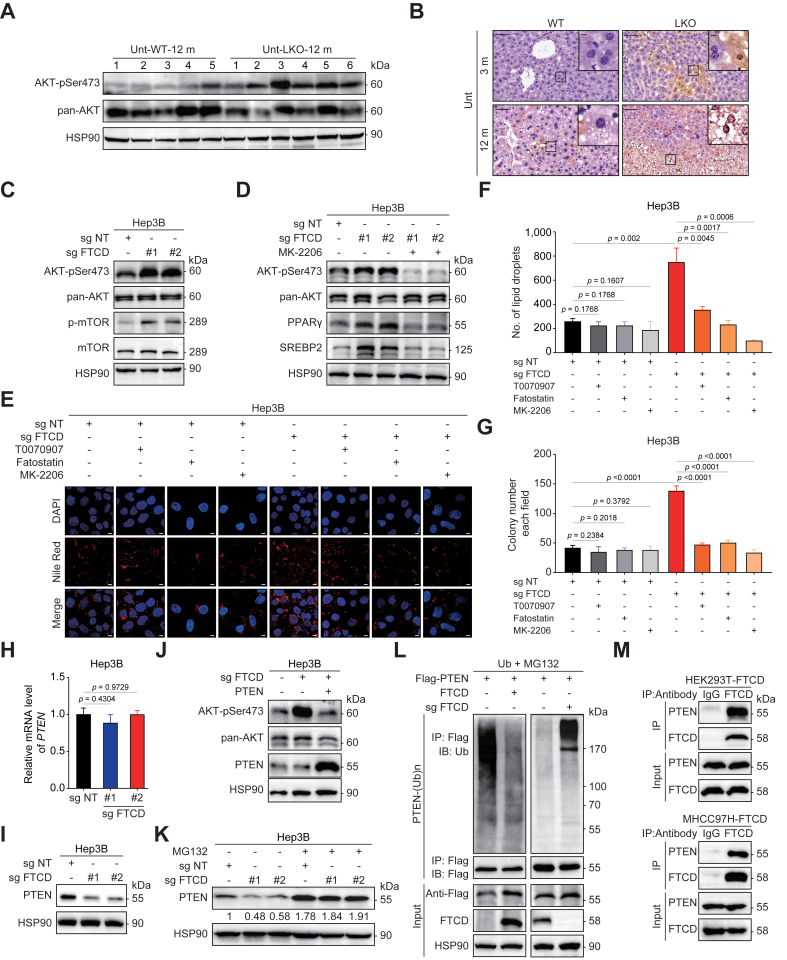
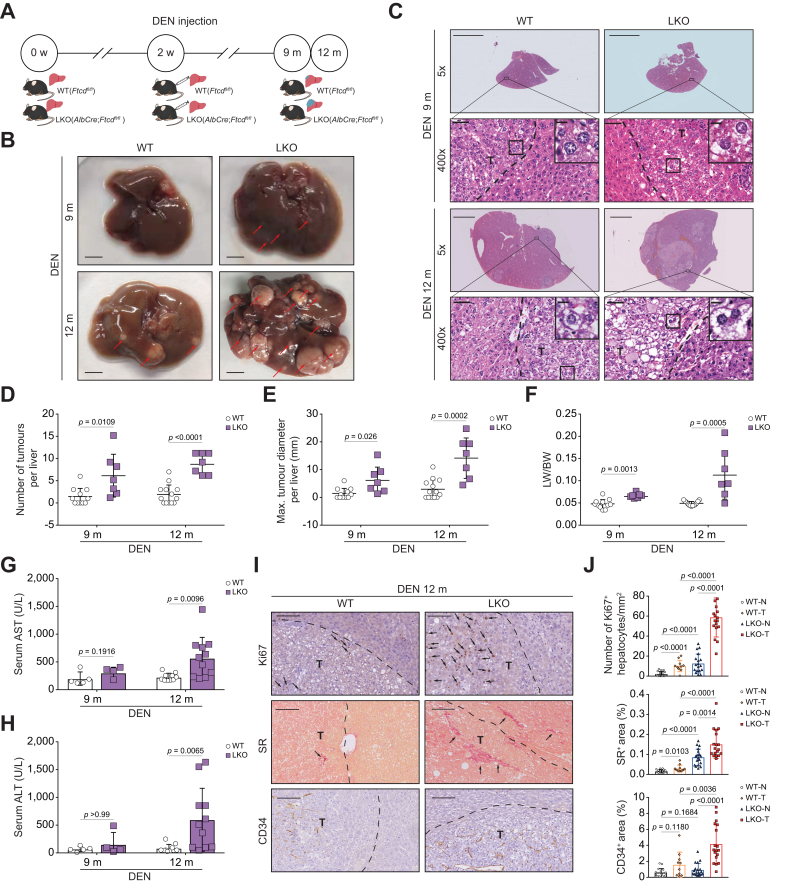
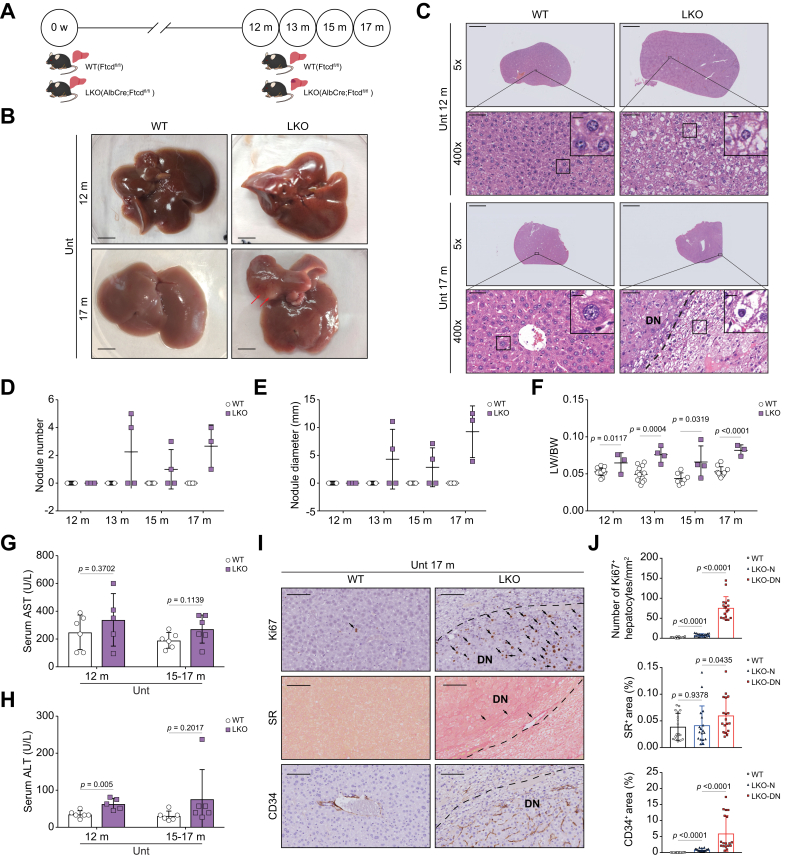
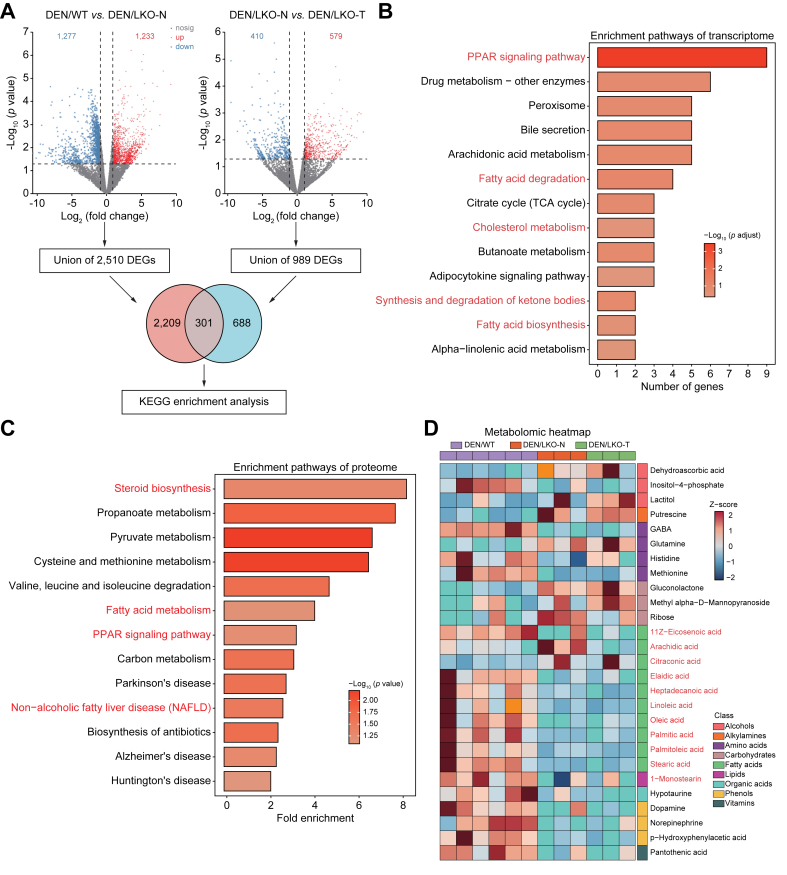
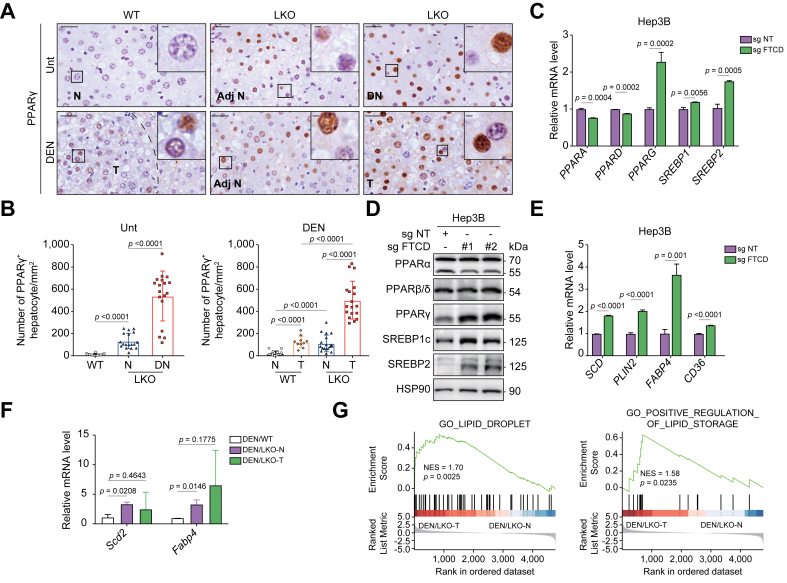
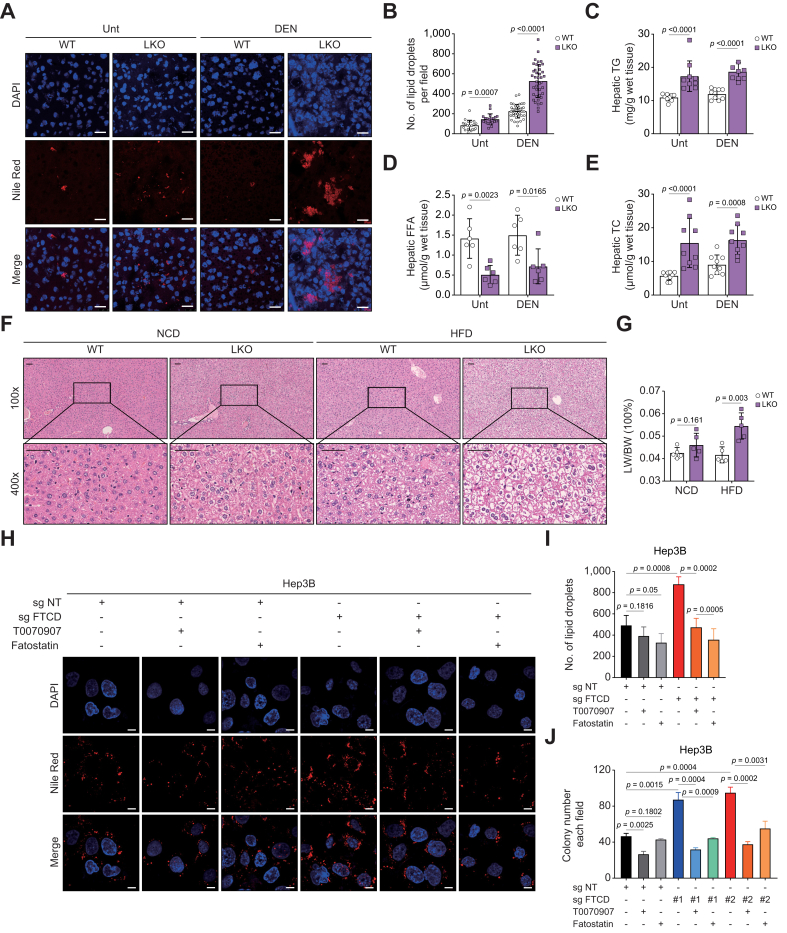
FTCD is highly expressed in the liver but significantly downregulated in HCC. Patients with HCC and low levels of FTCD exhibited worse prognosis, and patients with liver cirrhosis and low FTCD levels exhibited a notable higher probability of developing HCC. Hepatocyte-specific knockout of FTCD promoted both chronic diethylnitrosamine-induced and spontaneous hepatocarcinogenesis in mice. Multi-omics analysis showed that loss of FTCD affected fatty acid and cholesterol metabolism in hepatocarcinogenesis. Mechanistically, loss of FTCD upregulated peroxisome proliferator-activated receptor (PPAR)γ and sterol regulatory element-binding protein 2 (SREBP2) by regulating the PTEN/Akt/mTOR signalling axis, leading to lipid accumulation and hepatocarcinogenesis.
Taken together, we identified a FTCD-regulated lipid metabolic mechanism involving PPARγ and SREBP2 signaling in hepatocarcinogenesis and provide a rationale for therapeutically targeting of HCC driven by downregulation of FTCD.
Exploiting key molecules responsible for hepatocarcinogenesis is significant for the prevention and treatment of HCC. Herein, we identified formimidoyltransferase cyclodeaminase (FTCD) as the top enhanced gene, which could serve as a predictive and prognostic marker for patients with HCC. We generated and characterised the first liver-specific knockout murine model. We found loss of FTCD expression upregulated peroxisome proliferator-activated receptor (PPAR)γ and sterol regulatory element-binding protein 2 (SREBP2) by regulating the PTEN/Akt/mTOR signalling axis, leading to lipid accumulation and hepatocarcinogenesis, and provided a rationale for therapeutic targeting of HCC driven by downregulation of FTCD.
探寻导致肝癌发生的关键调控因子对于肝细胞癌(HCC)的防治至关重要。然而,肝癌发生过程中的关键因素仍未完全明确。我们探究了HCC发生发展的分子机制,以开发潜在的新治疗靶点。
利用癌症基因组图谱-肝细胞癌(TCGA-LIHC)和基因型-组织表达(GTEx)数据库,鉴定在肝脏中表达增强且与HCC进展相关的基因。构建小鼠肝脏特异性敲除(LKO)模型,以研究亚胺甲基转移酶环化脱氨酶(FTCD)在HCC中的作用。应用转录组学、代谢组学和蛋白质组学数据的多组学分析,进一步分析FTCD表达对肝癌发生的分子影响。进行功能和生化研究,以确定FTCD表达缺失的意义以及Akt抑制剂在FTCD缺陷癌细胞中的治疗潜力。
FTCD在肝脏中高表达,但在HCC中显著下调。HCC患者中FTCD水平低者预后较差,肝硬化且FTCD水平低的患者发生HCC的概率显著更高。肝细胞特异性敲除FTCD可促进小鼠慢性二乙基亚硝胺诱导的和自发性肝癌发生。多组学分析表明,FTCD缺失影响肝癌发生过程中的脂肪酸和胆固醇代谢。机制上,FTCD缺失通过调节PTEN/Akt/mTOR信号轴上调过氧化物酶体增殖物激活受体(PPAR)γ和固醇调节元件结合蛋白2(SREBP2),导致脂质蓄积和肝癌发生。
综上所述,我们在肝癌发生过程中鉴定出一种涉及PPARγ和SREBP2信号传导的FTCD调节的脂质代谢机制,并为针对FTCD下调驱动的HCC进行治疗提供了理论依据。
探寻导致肝癌发生的关键分子对HCC的防治具有重要意义。在此,我们鉴定出亚胺甲基转移酶环化脱氨酶(FTCD)为上调最显著的基因,其可作为HCC患者的预测和预后标志物。我们构建并表征了首个肝脏特异性敲除小鼠模型。我们发现FTCD表达缺失通过调节PTEN/Akt/mTOR信号轴上调过氧化物酶体增殖物激活受体(PPAR)γ和固醇调节元件结合蛋白2(SREBP2),导致脂质蓄积和肝癌发生,并为针对FTCD下调驱动的HCC进行治疗提供了理论依据。