Department of Pharmacology and Cancer Biology, Duke University School of Medicine, Durham, North Carolina.
Department of Obstetrics and Gynecology, Division of Gynecologic Oncology, Duke University Medical Center, Durham, North Carolina.
Cancer Res. 2023 Sep 1;83(17):2889-2907. doi: 10.1158/0008-5472.CAN-22-1622.
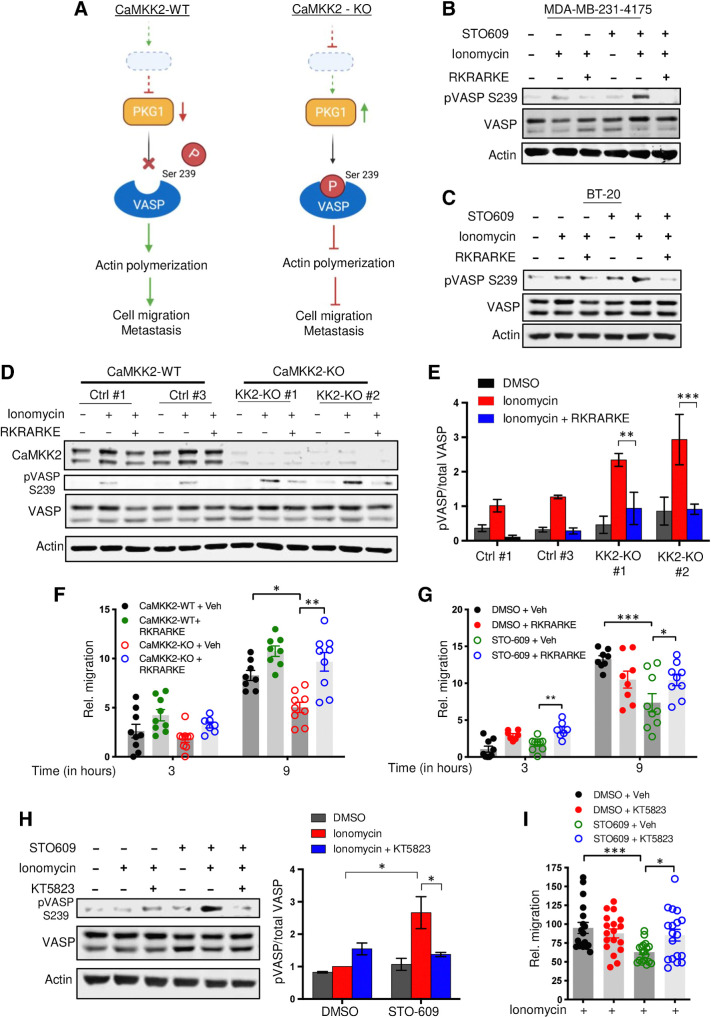
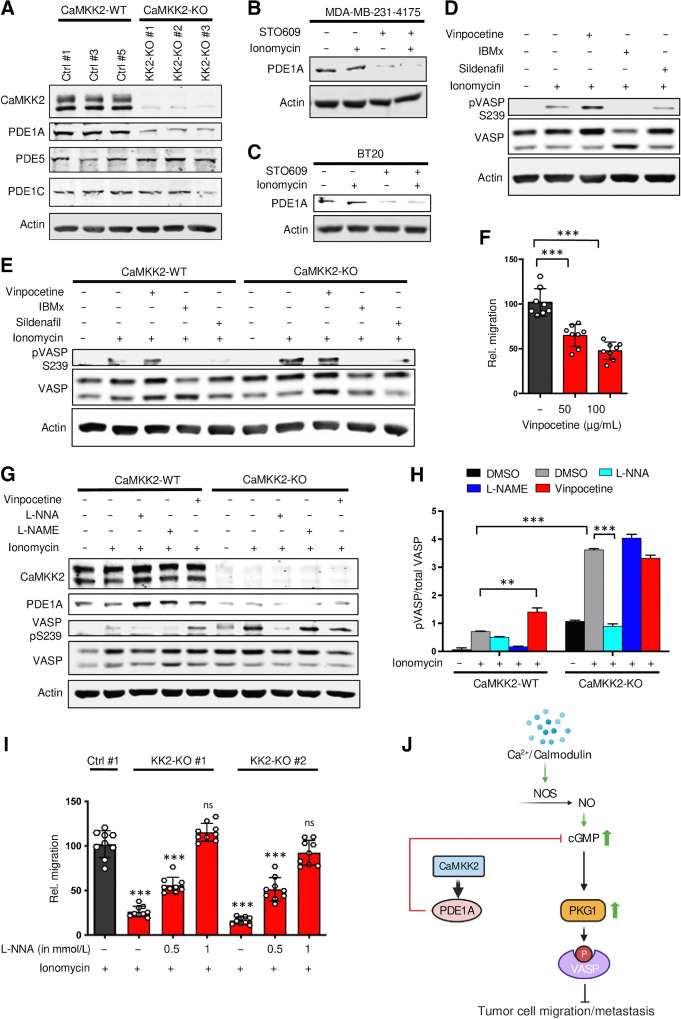
Triple-negative breast cancers (TNBC) tend to become invasive and metastatic at early stages in their development. Despite some treatment successes in early-stage localized TNBC, the rate of distant recurrence remains high, and long-term survival outcomes remain poor. In a search for new therapeutic targets for this disease, we observed that elevated expression of the serine/threonine kinase calcium/calmodulin (CaM)-dependent protein kinase kinase 2 (CaMKK2) is highly correlated with tumor invasiveness. In validation studies, genetic disruption of CaMKK2 expression or inhibition of its activity with small molecule inhibitors disrupted spontaneous metastatic outgrowth from primary tumors in murine xenograft models of TNBC. High-grade serous ovarian cancer (HGSOC), a high-risk, poor prognosis ovarian cancer subtype, shares many features with TNBC, and CaMKK2 inhibition effectively blocked metastatic progression in a validated xenograft model of this disease. Mechanistically, CaMKK2 increased the expression of the phosphodiesterase PDE1A, which hydrolyzed cyclic guanosine monophosphate (cGMP) to decrease the cGMP-dependent activity of protein kinase G1 (PKG1). Inhibition of PKG1 resulted in decreased phosphorylation of vasodilator-stimulated phosphoprotein (VASP), which in its hypophosphorylated state binds to and regulates F-actin assembly to facilitate cell movement. Together, these findings establish a targetable CaMKK2-PDE1A-PKG1-VASP signaling pathway that controls cancer cell motility and metastasis by impacting the actin cytoskeleton. Furthermore, it identifies CaMKK2 as a potential therapeutic target that can be exploited to restrict tumor invasiveness in patients diagnosed with early-stage TNBC or localized HGSOC.
CaMKK2 regulates actin cytoskeletal dynamics to promote tumor invasiveness and can be inhibited to suppress metastasis of breast and ovarian cancer, indicating CaMKK2 inhibition as a therapeutic strategy to arrest disease progression.
三阴性乳腺癌(TNBC)在其发展的早期阶段往往具有侵袭性和转移性。尽管在早期局部 TNBC 中取得了一些治疗成功,但远处复发率仍然很高,长期生存结果仍然不佳。在寻找这种疾病的新治疗靶点的过程中,我们观察到丝氨酸/苏氨酸激酶钙/钙调蛋白(CaM)依赖性蛋白激酶激酶 2(CaMKK2)的表达升高与肿瘤侵袭性高度相关。在验证研究中,CaMKK2 表达的遗传破坏或其活性的小分子抑制剂抑制了 TNBC 小鼠异种移植模型中原发性肿瘤自发转移的生长。高级别浆液性卵巢癌(HGSOC)是一种高风险、预后不良的卵巢癌亚型,与 TNBC 有许多共同特征,CaMKK2 抑制有效地阻断了该疾病已验证的异种移植模型中的转移进展。从机制上讲,CaMKK2 增加了磷酸二酯酶 PDE1A 的表达,磷酸二酯酶 PDE1A 水解环鸟苷单磷酸(cGMP)以降低蛋白激酶 G1(PKG1)的 cGMP 依赖性活性。PKG1 的抑制导致血管扩张刺激磷蛋白(VASP)的磷酸化减少,在其低磷酸化状态下,VASP 与并调节 F-肌动蛋白组装以促进细胞运动。总之,这些发现确立了可靶向的 CaMKK2-PDE1A-PKG1-VASP 信号通路,通过影响肌动蛋白细胞骨架来控制癌细胞的运动和转移。此外,它确定了 CaMKK2 作为一种潜在的治疗靶点,可以用来限制早期 TNBC 或局部 HGSOC 患者的肿瘤侵袭性。
CaMKK2 调节肌动蛋白细胞骨架动力学以促进肿瘤侵袭性,并且可以被抑制以抑制乳腺癌和卵巢癌的转移,表明 CaMKK2 抑制作为一种治疗策略来阻止疾病进展。