Liao Xin, Xie Min, Li Shuying, Yu Xiaolan
Department of Operation Room, Key Laboratory of Birth Defects and Related Diseases of Women and Children, Ministry of Education, West China Second Hospital of Sichuan University, Sichuan Province, Chengdu, China.
Department of Anesthesiology, Key Laboratory of Birth Defects and Related Diseases of Women and Children, Ministry of Education, West China Second Hospital of Sichuan University, Sichuan Province, Chengdu, China.
Perioper Med (Lond). 2023 Jun 19;12(1):27. doi: 10.1186/s13741-023-00317-z.
Catheter-related bladder discomfort (CRBD is a painful complication of intraoperative urinary catheterization after anaesthesia. We conducted this study to compare the effect of tramadol and lornoxicam for the prevention of postoperative CRBD.
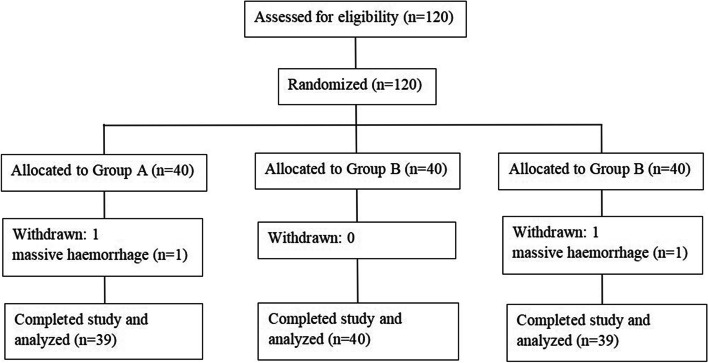
One-hundred twenty patients (aged 18-60 years, ASA physical status 1-2, undergoing elective uterine surgery requiring intraoperative urinary catheterization were randomly divided into three groups with 40 patients in each group. Group T received 1.5 mg/kg tramadol, group L received 8-mg lornoxicam, and group C received normal saline. The study drugs were administered intravenously at the end of the surgery. The incidence and severity of CRBD were reported at 0, 1, 2, and 6 h after arrival at the postanaesthesia care unit (PACU).
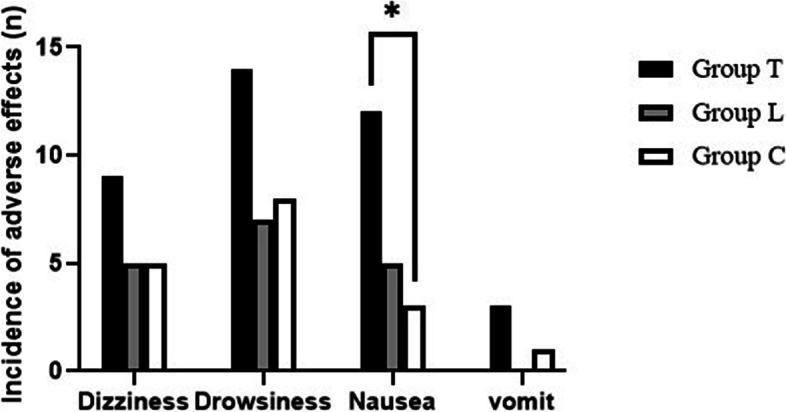
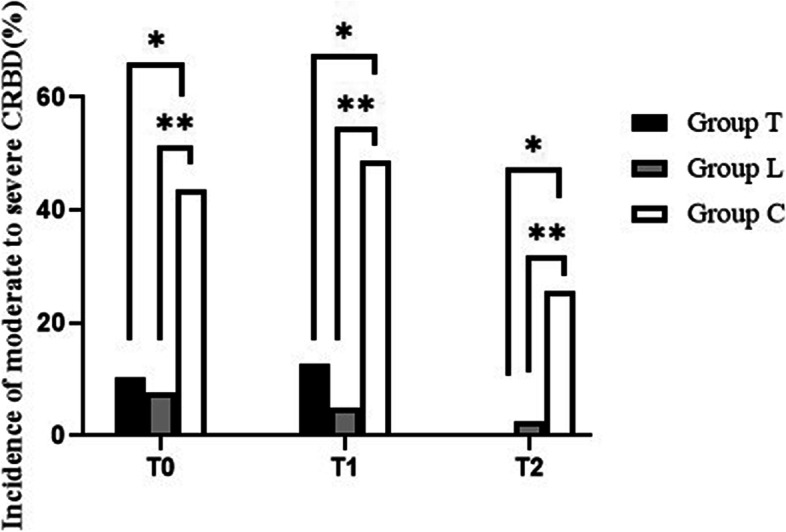
The incidence of CRBD was significantly lower in groups T and L than in group C at 1, 2, and 6 h after surgery. The incidence of moderate to severe CRBD was also significantly lower in groups T and L than in group C at 0, 1, and 2 h after surgery. The severity of CRBD reported as mild, moderate, and severe was reduced in groups T and L compared with group C at most times after surgery. Group T had a higher incidence of nausea than group C, and there were no differences in dizziness, drowsiness, or vomit among the three groups.
Tramadol and lornoxicam administered intravenously at the end of the surgery were both effective in preventing the incidence and severity of CRBD after uterine surgery. However, tramadol increased the incidence of nausea compared with saline, but there was no difference between tramadol and lornoxicam.
ChiCTR2100052003. Registered on 12/10/2021.
导尿管相关膀胱不适(CRBD)是麻醉后术中导尿的一种疼痛并发症。我们开展本研究以比较曲马多和氯诺昔康预防术后CRBD的效果。
120例年龄在18至60岁、美国麻醉医师协会(ASA)身体状况分级为1至2级、接受需要术中导尿的择期子宫手术的患者被随机分为三组,每组40例。T组接受1.5mg/kg曲马多,L组接受8mg氯诺昔康,C组接受生理盐水。研究药物在手术结束时静脉注射。在到达麻醉后护理单元(PACU)后的0、1、2和6小时报告CRBD的发生率和严重程度。
术后1、2和6小时,T组和L组CRBD的发生率显著低于C组。术后0、1和2小时,T组和L组中重度CRBD的发生率也显著低于C组。在术后大多数时间,与C组相比,T组和L组报告为轻度、中度和重度的CRBD严重程度有所降低。T组恶心的发生率高于C组,三组在头晕、嗜睡或呕吐方面无差异。
手术结束时静脉注射曲马多和氯诺昔康均能有效预防子宫手术后CRBD的发生率和严重程度。然而,与生理盐水相比,曲马多增加了恶心的发生率,但曲马多和氯诺昔康之间无差异。
ChiCTR2100052003。于2021年10月12日注册。