Department of Integrated Traditional Chinese and Western Medicine, Union Hospital, Tongji Medical College, Huazhong University of Science and Technology, Hubei Province, 1277 Jiefang Avenue, Wuhan, 430022, China.
Department of Gastrointestinal Surgery, Union Hospital, Tongji Medical College, Huazhong University of Science and Technology, Hubei Province, 1277 Jiefang Avenue, Wuhan, 430022, China.
J Exp Clin Cancer Res. 2023 Jun 19;42(1):150. doi: 10.1186/s13046-023-02702-4.
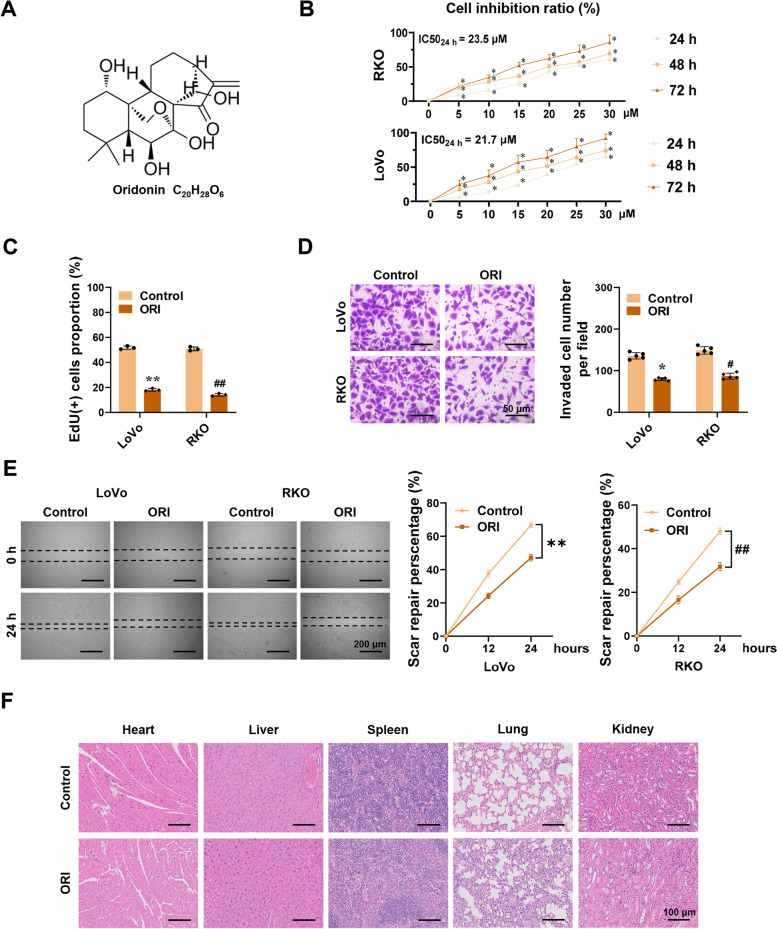
The incidence of colorectal cancer and cancer death rate are increasing every year, and the affected population is becoming younger. Traditional Chinese medicine therapy has a unique effect in prolonging survival time and improving the prognosis of patients with colorectal cancer. Oridonin has been reported to have anti-cancer effects in a variety of tumors, but the exact mechanism remains to be investigated.
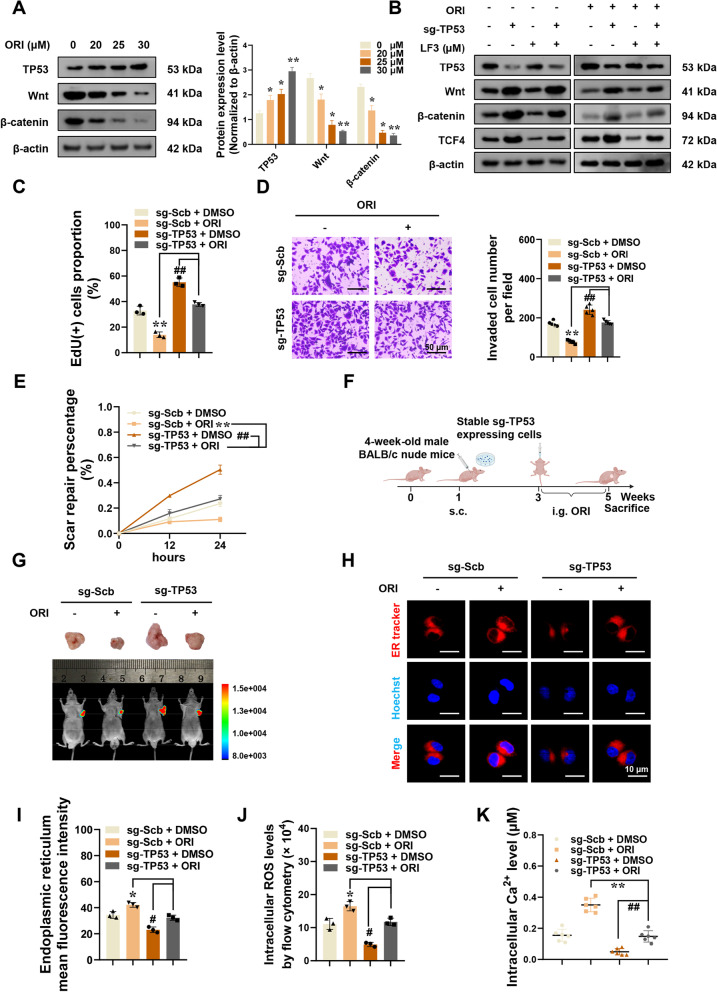
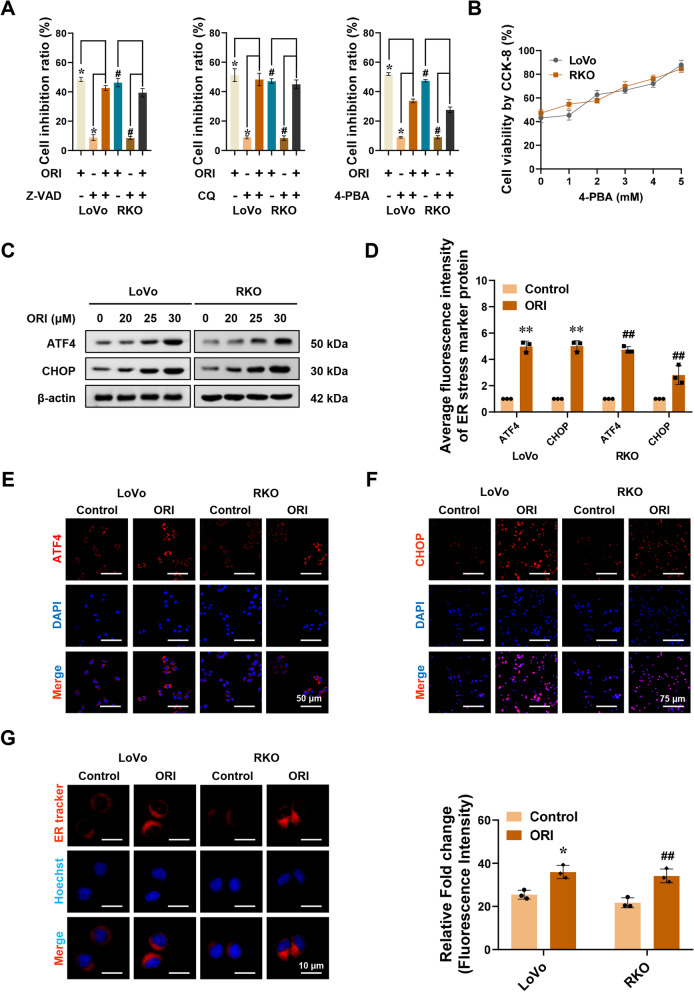
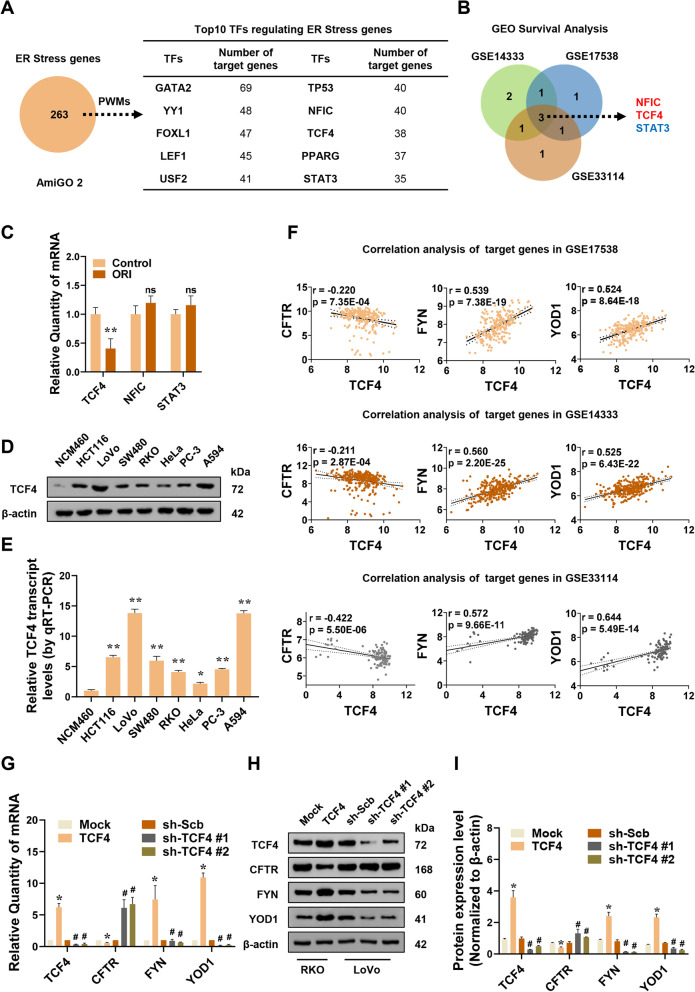
Cell Counting Kit-8 assay (CCK8) and 5-Ethynyl-2'-deoxyuridine (EdU) staining assay, Tranwell, and Wound healing assays were performed to measure cell proliferation, invasion, and migration capacities, respectively. The protein and mRNA expression levels of various molecules were reflected by Western blot and Reverse Transcription quantitative Polymerase Chain Reaction (qRT-PCR). Transcription Factor 4 (TCF4) and its target genes were analyzed by Position Weight Matrices (PWMs) software and the Gene Expression Omnibus (GEO) database. Immunofluorescence (IF) was performed to visualize the expression and position of Endoplasmic Reticulum (ER) stress biomarkers. The morphology of the ER was demonstrated by the ER tracker-red. Reactive Oxygen Species (ROS) levels were measured using a flow cytometer (FCM) or fluorescent staining. Calcium ion (Ca) concentration was quantified by Fluo-3 AM staining. Athymic nude mice were modeled with subcutaneous xenografts.
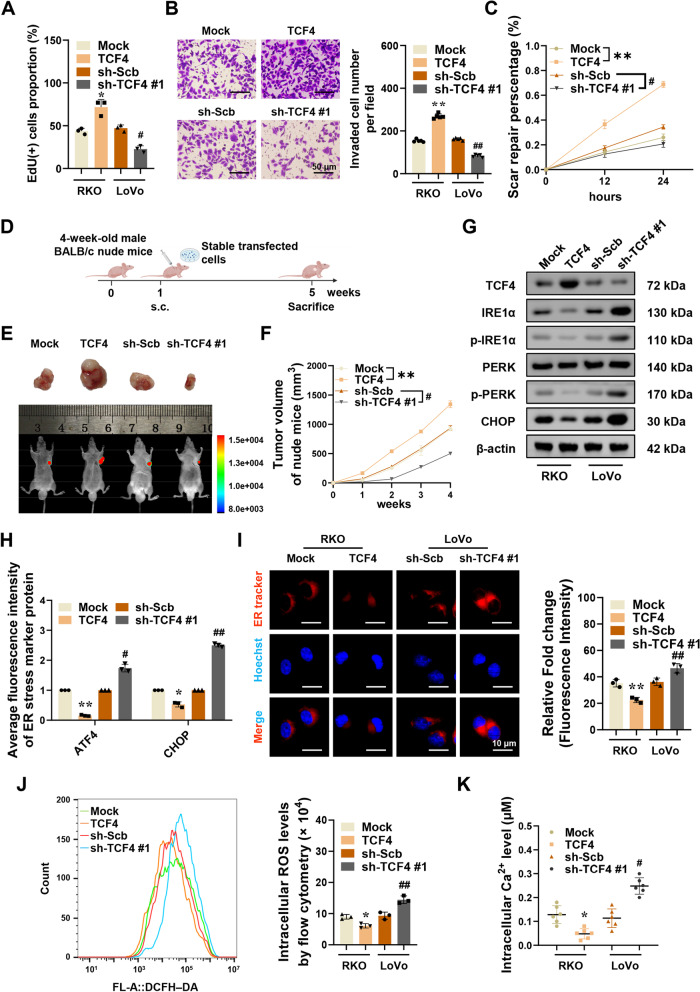
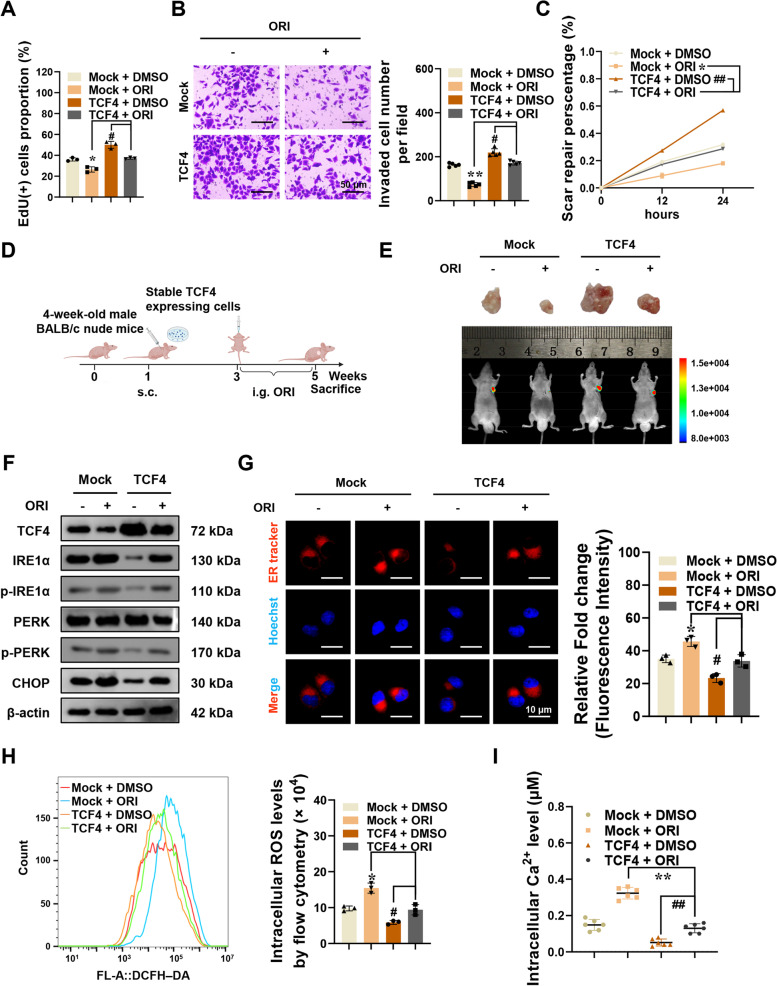
Oridonin inhibited the proliferation, invasion, and migration of colorectal cancer, and this effect was weakened in a concentration-dependent manner by ER stress inhibitors. In addition, oridonin-induced colorectal tumor cells showed increased expression of ER stress biomarkers, loose morphology of ER, increased vesicles, and irregular shape. TCF4 was identified as a regulator of ER stress by PWMs software and GEO survival analysis. In vitro and in vivo experiments confirmed that TCF4 inhibited ER stress, reduced ROS production, and maintained Ca homeostasis. In addition, oridonin also activated TP53 and inhibited TCF4 transactivation, further exacerbating the elevated ROS levels and calcium ion release in tumor cells and inhibiting tumorigenesis in colorectal cancer cells in vivo.
Oridonin upregulated TP53, inhibited TCF4 transactivation, and induced ER stress dysregulation in tumor cells, promoting colorectal cancer cell death. Therefore, TCF4 may be one of the important nodes for tumor cells to regulate ER stress and maintain protein synthesis homeostasis. And the inhibition of the TP53/TCF4 axis plays a key role in the anti-cancer effects of oridonin.
结直肠癌的发病率和癌症死亡率逐年上升,受影响的人群越来越年轻化。中医药疗法在延长结直肠癌患者的生存时间和改善预后方面具有独特的作用。冬凌草甲素已被报道在多种肿瘤中具有抗癌作用,但确切的机制仍有待研究。
通过细胞计数试剂盒-8 检测(CCK8)和 5-乙炔基-2'-脱氧尿苷(EdU)染色检测、Transwell 和划痕愈合实验分别测量细胞增殖、侵袭和迁移能力。通过 Western blot 和逆转录定量聚合酶链反应(qRT-PCR)反映各种分子的蛋白和 mRNA 表达水平。通过位置权重矩阵(PWMs)软件和基因表达综合数据库(GEO)分析转录因子 4(TCF4)及其靶基因。通过免疫荧光(IF)可视化内质网(ER)应激生物标志物的表达和位置。用 ER 追踪剂-red 显示 ER 的形态。通过流式细胞仪(FCM)或荧光染色测量活性氧(ROS)水平。通过 Fluo-3 AM 染色定量钙离子(Ca)浓度。用皮下异种移植建立裸鼠模型。
冬凌草甲素抑制结直肠癌细胞的增殖、侵袭和迁移,这种作用呈浓度依赖性被 ER 应激抑制剂减弱。此外,冬凌草甲素诱导的结直肠肿瘤细胞表现出 ER 应激生物标志物表达增加、ER 形态疏松、小泡增多和形状不规则。通过 PWMs 软件和 GEO 生存分析鉴定 TCF4 为 ER 应激的调节剂。体外和体内实验证实,TCF4 抑制 ER 应激,减少 ROS 产生,维持 Ca 离子稳态。此外,冬凌草甲素还激活了 TP53 并抑制了 TCF4 的反式激活,进一步加剧了肿瘤细胞中升高的 ROS 水平和钙离子释放,并抑制了结直肠癌细胞在体内的肿瘤发生。
冬凌草甲素上调 TP53,抑制 TCF4 反式激活,诱导肿瘤细胞内质网应激失调,促进结直肠癌细胞死亡。因此,TCF4 可能是肿瘤细胞调节内质网应激和维持蛋白质合成稳态的重要节点之一。并且,抑制 TP53/TCF4 轴在冬凌草甲素的抗癌作用中起着关键作用。