Radiology, HUS Medical Imaging Center, University of Helsinki and Helsinki University Hospital, 00290, Helsinki, Finland.
Department of Physics, University of Helsinki, Helsinki, Finland.
Eur Radiol Exp. 2023 Jun 21;7(1):33. doi: 10.1186/s41747-023-00346-9.
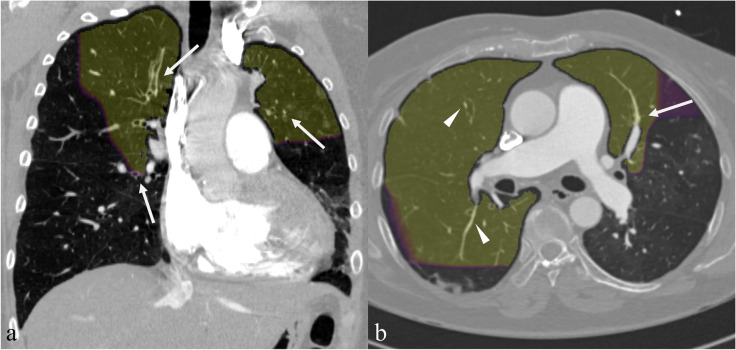
Early diagnosis of the potentially fatal but curable chronic pulmonary embolism (CPE) is challenging. We have developed and investigated a novel convolutional neural network (CNN) model to recognise CPE from CT pulmonary angiograms (CTPA) based on the general vascular morphology in two-dimensional (2D) maximum intensity projection images.
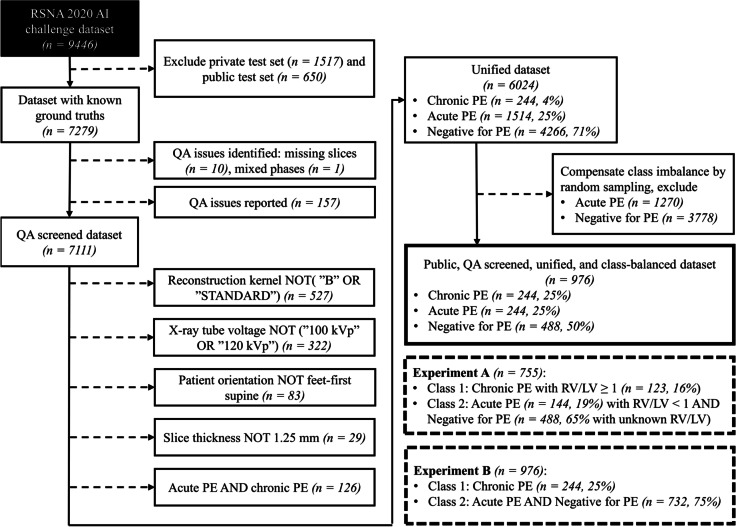
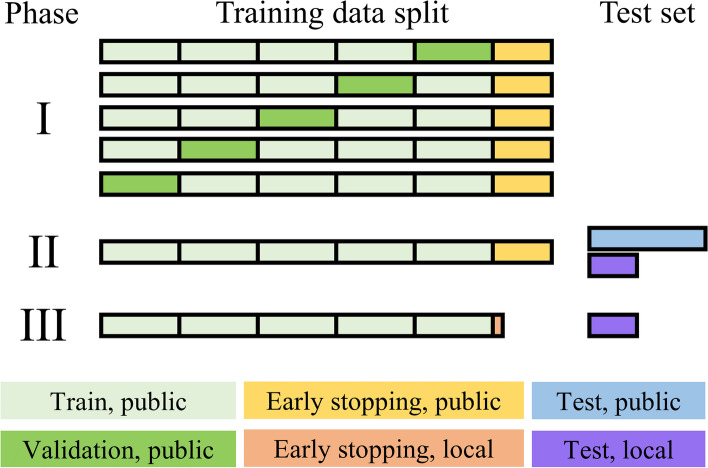
A CNN model was trained on a curated subset of a public pulmonary embolism CT dataset (RSPECT) with 755 CTPA studies, including patient-level labels of CPE, acute pulmonary embolism (APE), or no pulmonary embolism. CPE patients with right-to-left-ventricular ratio (RV/LV) < 1 and APE patients with RV/LV ≥ 1 were excluded from the training. Additional CNN model selection and testing were done on local data with 78 patients without the RV/LV-based exclusion. We calculated area under the receiver operating characteristic curves (AUC) and balanced accuracies to evaluate the CNN performance.
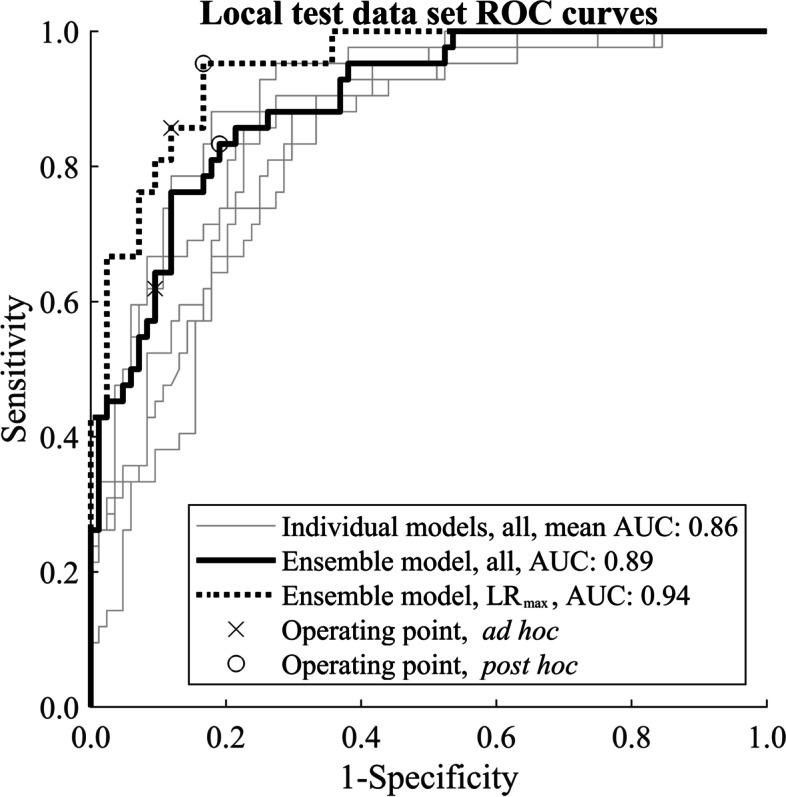
We achieved a very high CPE versus no-CPE classification AUC 0.94 and balanced accuracy 0.89 on the local dataset using an ensemble model and considering CPE to be present in either one or both lungs.
We propose a novel CNN model with excellent predictive accuracy to differentiate chronic pulmonary embolism with RV/LV ≥ 1 from acute pulmonary embolism and non-embolic cases from 2D maximum intensity projection reconstructions of CTPA.
A DL CNN model identifies chronic pulmonary embolism from CTA with an excellent predictive accuracy.
• Automatic recognition of CPE from computed tomography pulmonary angiography was developed. • Deep learning was applied on two-dimensional maximum intensity projection images. • A large public dataset was used for training the deep learning model. • The proposed model showed an excellent predictive accuracy.
早期诊断潜在致命但可治愈的慢性肺栓塞(CPE)具有挑战性。我们开发并研究了一种新的卷积神经网络(CNN)模型,该模型基于二维(2D)最大强度投影图像中的一般血管形态,从 CT 肺动脉造影(CTPA)中识别 CPE。
基于公共肺栓塞 CT 数据集(RSPECT)的一个精选子集对 CNN 模型进行了训练,该数据集包含 755 项 CTPA 研究,包括 CPE、急性肺栓塞(APE)或无肺栓塞的患者水平标签。从训练中排除了 RV/LV<1 的 CPE 患者和 RV/LV≥1 的 APE 患者。在没有基于 RV/LV 排除的 78 名本地患者的情况下,进行了额外的 CNN 模型选择和测试。我们计算了接收器工作特征曲线(ROC)下的面积(AUC)和平衡准确性,以评估 CNN 的性能。
我们在本地数据集上使用集成模型获得了非常高的 CPE 与无 CPE 分类 AUC 0.94 和平衡准确性 0.89,并且认为 CPE 存在于一个或两个肺中。
我们提出了一种新的 CNN 模型,该模型具有出色的预测准确性,可以从 CTPA 的 2D 最大强度投影重建中区分 RV/LV≥1 的慢性肺栓塞与急性肺栓塞和非栓塞病例。
深度学习 CNN 模型从 CTA 以出色的预测准确性识别慢性肺栓塞。
从计算机断层肺动脉造影术自动识别 CPE。
深度学习应用于二维最大强度投影图像。
大型公共数据集用于训练深度学习模型。
所提出的模型显示出出色的预测准确性。