School of Life Science, Yunnan University, Kunming, 650500, China.
Key Laboratory for Plant Diversity and Biogeography of East Asia, Kunming Institute of Botany, Chinese Academy of Science, Kunming, 650201, China.
BMC Biol. 2023 Jun 20;21(1):142. doi: 10.1186/s12915-023-01639-6.
Murraya paniculata (L.) Jack, commonly called orange jessamine in the family Rutaceae, is an important ornamental plant in tropical and subtropical regions which is famous for its strong fragrance. Although genome assemblies have been reported for many Rutaceae species, mainly in the genus Citrus, full genomic information has not been reported for M. paniculata, which is a prerequisite for in-depth genetic studies on Murraya and manipulation using genetic engineering techniques. Here, we report a high-quality chromosome-level genome assembly of M. paniculata and aim to provide insights on the molecular mechanisms of flower volatile biosynthesis.
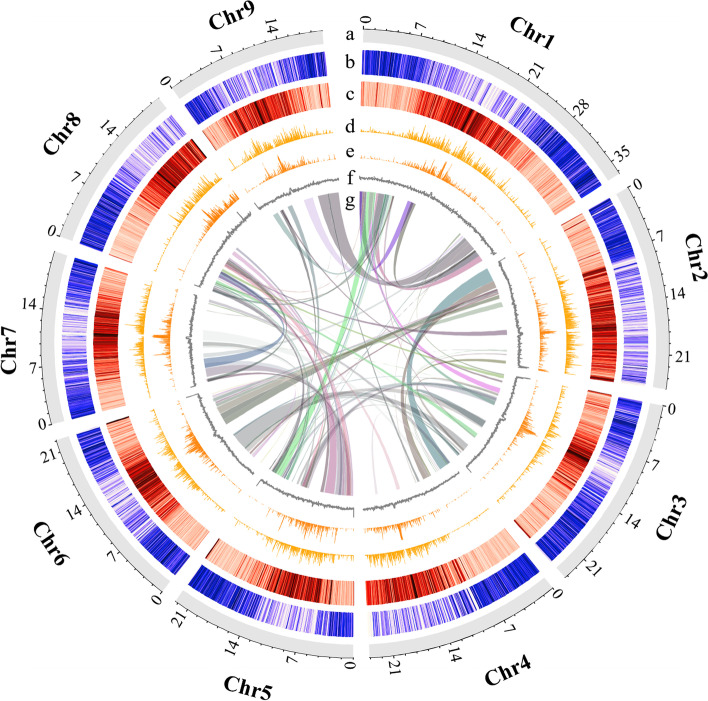
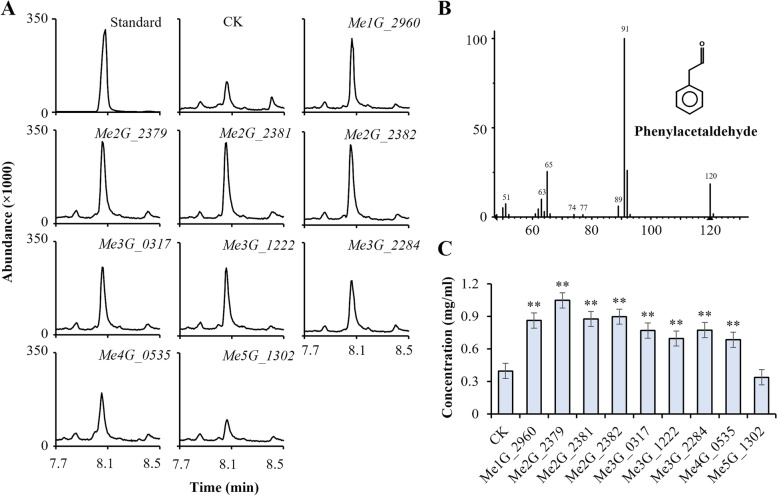
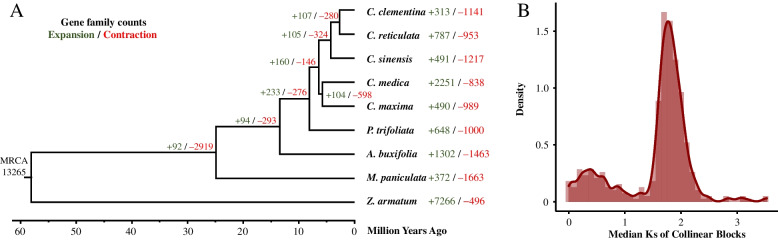
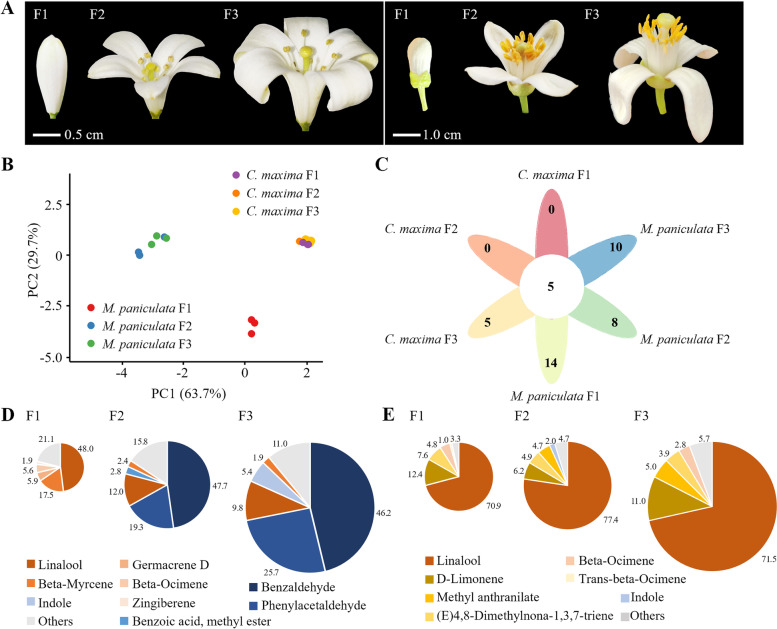
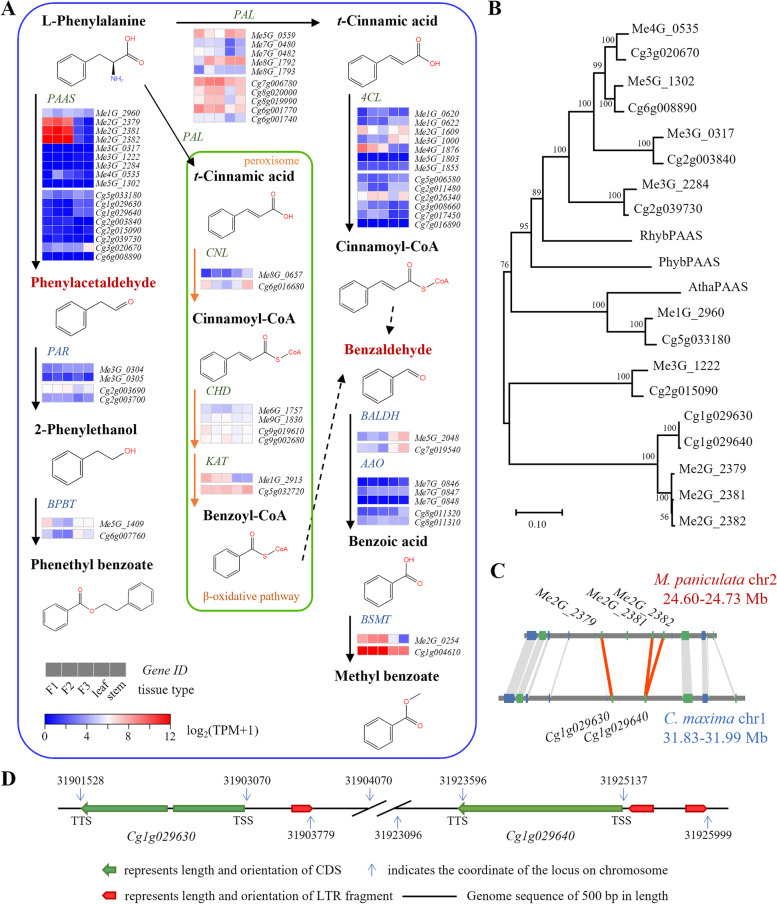
The genome assembly with a contig N50 of 18.25 Mb consists of 9 pseudomolecules and has a total length of 216.86 Mb. Phylogenetic analysis revealed that M. paniculata diverged from the common ancestor approximately 25 million years ago and has not undergone any species-specific whole genome duplication events. Genome structural annotation and comparative genomics analysis revealed that there are obvious differences in transposon contents among the genomes of M. paniculata and Citrus species, especially in the upstream regions of genes. Research on the flower volatiles of M. paniculata and C. maxima at three flowering stages revealed significant differences in volatile composition with the flowers of C. maxima lacking benzaldehyde and phenylacetaldehyde. Notably, there are transposons inserted in the upstream region of the phenylacetaldehyde synthase (PAAS) genes Cg1g029630 and Cg1g029640 in C. maxima, but not in the upstream region of three PAAS genes Me2G_2379, Me2G_2381, and Me2G_2382 in M. paniculata. Our results indicated that compared to the low expression levels of PAAS genes in C. maxima, the higher expression levels of the three PAAS genes in M. paniculata are the main factor affecting the phenylacetaldehyde biosynthesis and causing the content difference of phenylacetaldehyde. The phenylacetaldehyde synthetic activities of the enzymes encoded by M. paniculata PAAS genes were validated by in vitro analyses.
Our study provides useful genomic resources of M. paniculata for further research on Rutaceae plants, identifies new PAAS genes, and provides insights into how transposons contribute to variations in flower volatiles among Murraya and Citrus plants.
九里香(Murraya paniculata(L.)Jack),在芸香科中俗称橙茉莉,是热带和亚热带地区的一种重要观赏植物,以其浓郁的香气而闻名。虽然许多芸香科物种(主要是柑橘属)的基因组组装已经有报道,但九里香的全基因组信息尚未报道,这是深入研究九里香遗传和利用遗传工程技术进行操作的前提。在这里,我们报告了九里香的高质量染色体水平基因组组装,旨在深入了解花挥发性生物合成的分子机制。
基因组组装的 contig N50 为 18.25 Mb,由 9 个假染色体组成,总长度为 216.86 Mb。系统发育分析表明,九里香与共同祖先大约在 2500 万年前分化,并且没有经历过任何物种特异性的全基因组复制事件。基因组结构注释和比较基因组学分析表明,九里香和柑橘属物种的基因组中转座子含量存在明显差异,特别是在基因的上游区域。对九里香和甜橙(Citrus maxima)三个花期的花挥发性成分研究表明,挥发性成分组成存在显著差异,甜橙的花中缺乏苯甲醛和苯乙醛。值得注意的是,在甜橙 Cg1g029630 和 Cg1g029640 苯乙醛合酶(PAAS)基因的上游区域有转座子插入,但在九里香的三个 PAAS 基因 Me2G_2379、Me2G_2381 和 Me2G_2382 的上游区域没有插入。我们的结果表明,与甜橙中 PAAS 基因的低表达水平相比,九里香中三个 PAAS 基因的高表达水平是影响苯乙醛生物合成并导致苯乙醛含量差异的主要因素。体外分析验证了由九里香 PAAS 基因编码的酶的苯乙醛合成活性。
本研究为进一步研究芸香科植物提供了有用的九里香基因组资源,鉴定了新的 PAAS 基因,并深入了解了转座子如何导致九里香和柑橘属植物花挥发性成分的变化。