Technological Primates Research Group, Max Planck Institute for Evolutionary Anthropology, Leipzig, Germany.
Center for the Advanced Study of Human Paleobiology, Department of Anthropology, The George Washington University.
J R Soc Interface. 2023 Jun;20(203):20230118. doi: 10.1098/rsif.2023.0118. Epub 2023 Jun 21.
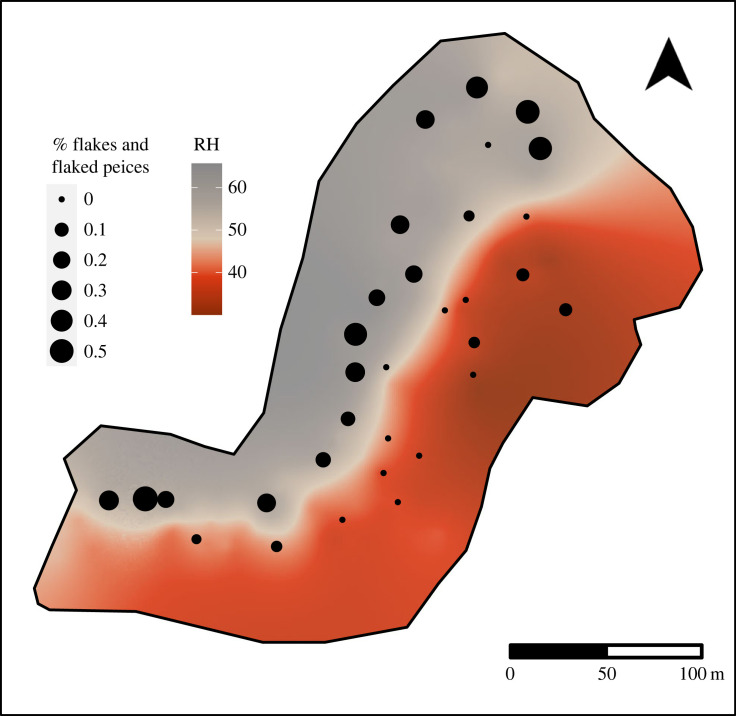
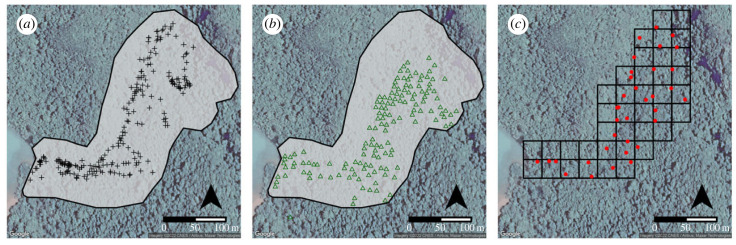
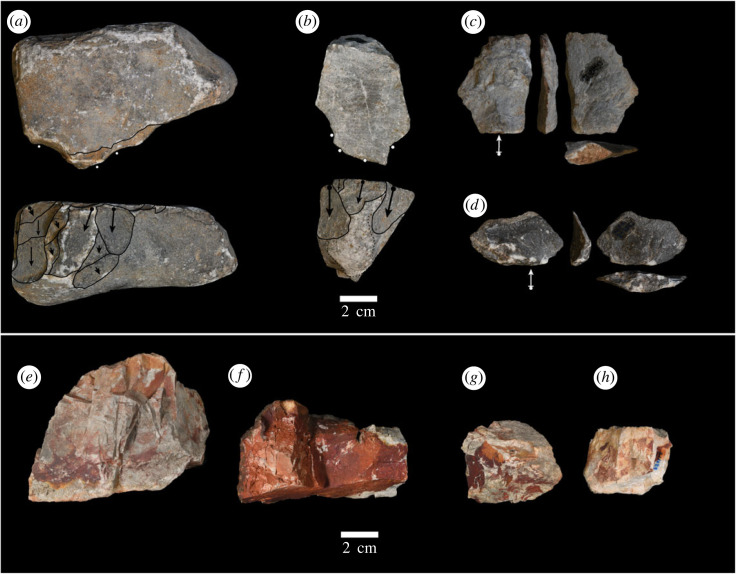
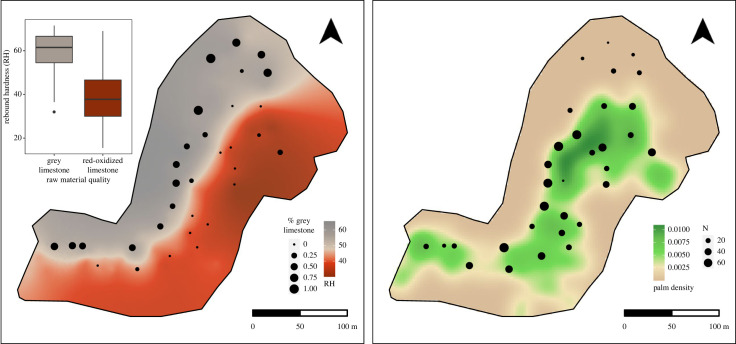
Archaeological evidence informs our understanding of the evolution of hominin behaviour. Such evidence is traditionally used to reconstruct hominin activities and intentions. In the Plio-Pleistocene, the presence or absence of specific tools and variation in artefact density is often used to infer foraging strategies, cognitive traits and functional activities. However, the Plio-Pleistocene archaeological record is known to be time-averaged and forms through the aggregation of repeated behavioural events over time. Thus, archaeological patterns do not reflect discrete episodes of activity, but rather the interaction of behaviour with environmental factors over time. However, little is known about how such interactions produce archaeological variation diversity. Primate archaeology can help address this research gap by providing the opportunity to observe how behaviour produces material patterns in a natural setting. This study, thus, examines how varying the material properties of stone and resource availability influence the artefactual signature of nut-cracking in a population of long-tailed macaques from Lobi Bay, Yao Noi island, Thailand. Results show that these interactions can produce a structured and diverse material signature in terms of artefact density and frequency of specific artefact types. These findings demonstrate how material patterns can emerge from long-term interactions between behaviour and environmental factors.
考古证据有助于我们了解人类行为的演变。此类证据通常用于重建人类活动和意图。在更新世,特定工具的存在与否以及人工制品密度的变化通常用于推断觅食策略、认知特征和功能活动。然而,众所周知,更新世的考古记录是时间平均的,它是通过随时间推移重复行为事件的聚集而形成的。因此,考古模式并不反映活动的离散事件,而是反映了随时间推移行为与环境因素的相互作用。然而,人们对这些相互作用如何产生考古变化多样性知之甚少。灵长类动物考古学可以通过提供在自然环境中观察行为如何产生物质模式的机会来帮助解决这一研究空白。因此,本研究考察了改变石头的物质特性和资源可用性如何影响泰国瑶诺岛洛比湾长尾猕猴群体中坚果破碎的人工制品特征。结果表明,这些相互作用可以在人工制品密度和特定人工制品类型的频率方面产生结构化和多样化的物质特征。这些发现表明,物质模式如何从行为和环境因素之间的长期相互作用中产生。