Vanderbilt Translational and Clinical Cardiovascular Research Center Vanderbilt University School of Medicine Nashville TN USA.
Department of Medicine and Radiology University of Michigan Ann Arbor MI USA.
J Am Heart Assoc. 2023 Jul 4;12(13):e029542. doi: 10.1161/JAHA.123.029542. Epub 2023 Jun 22.
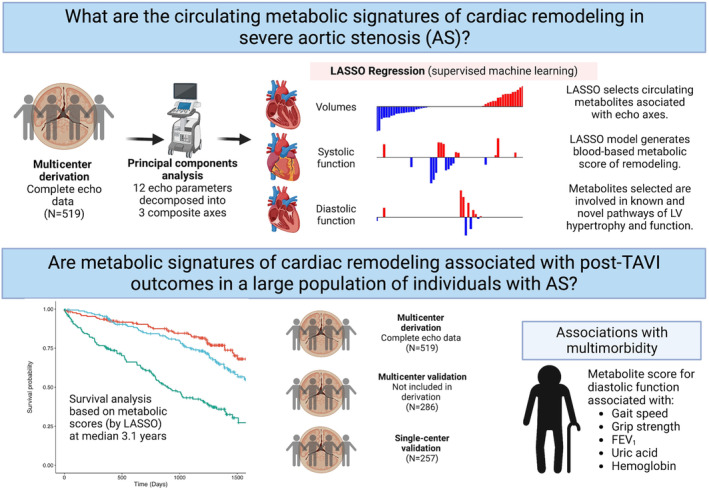
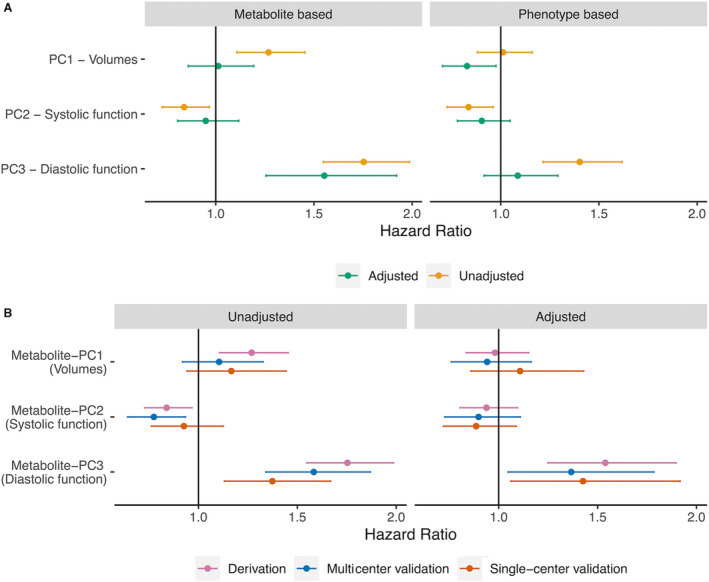
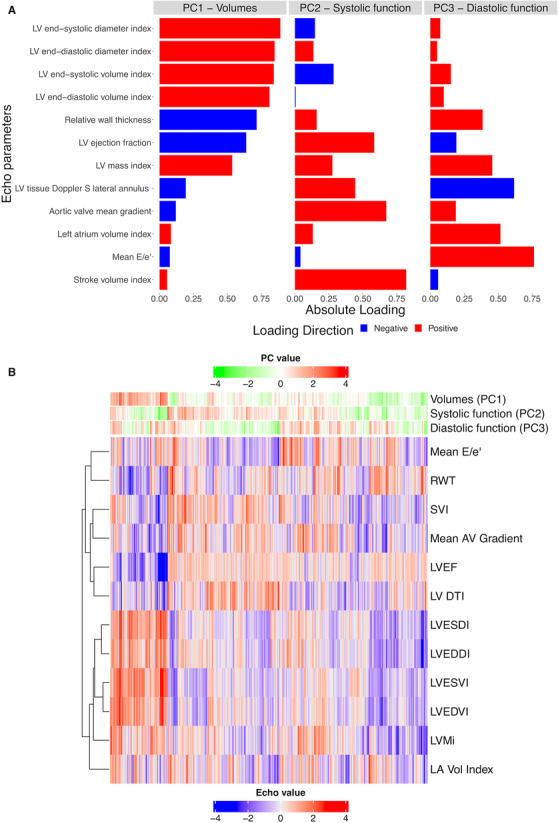
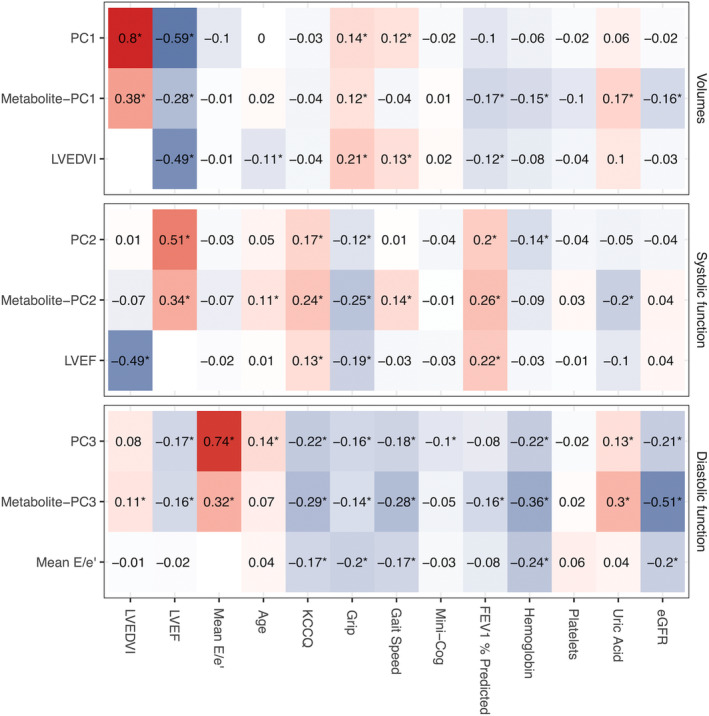
Background Studies in mice and small patient subsets implicate metabolic dysfunction in cardiac remodeling in aortic stenosis, but no large comprehensive studies of human metabolism in aortic stenosis with long-term follow-up and characterization currently exist. Methods and Results Within a multicenter prospective cohort study, we used principal components analysis to summarize 12 echocardiographic measures of left ventricular structure and function pre-transcatheter aortic valve implantation in 519 subjects (derivation). We used least absolute shrinkage and selection operator regression across 221 metabolites to define metabolic signatures for each structural pattern and measured their relation to death and multimorbidity in the original cohort and up to 2 validation cohorts (N=543 for overall validation). In the derivation cohort (519 individuals; median age, 84 years, 45% women, 95% White individuals), we identified 3 axes of left ventricular remodeling, broadly specifying systolic function, diastolic function, and chamber volumes. Metabolite signatures of each axis specified both known and novel pathways in hypertrophy and cardiac dysfunction. Over a median of 3.1 years (205 deaths), a metabolite score for diastolic function was independently associated with post-transcatheter aortic valve implantation death (adjusted hazard ratio per 1 SD increase in score, 1.54 [95% CI, 1.25-1.90]; <0.001), with similar effects in each validation cohort. This metabolite score of diastolic function was simultaneously associated with measures of multimorbidity, suggesting a metabolic link between cardiac and noncardiac state in aortic stenosis. Conclusions Metabolite profiles of cardiac structure identify individuals at high risk for death following transcatheter aortic valve implantation and concurrent multimorbidity. These results call for efforts to address potentially reversible metabolic biology associated with risk to optimize post-transcatheter aortic valve implantation recovery, rehabilitation, and survival.
在小鼠和小患者亚组的研究中,代谢功能障碍与主动脉瓣狭窄的心脏重构有关,但目前尚无关于长期随访和特征描述的主动脉瓣狭窄患者代谢的大型综合研究。
在一项多中心前瞻性队列研究中,我们使用主成分分析综合了 519 例患者(推导组)经导管主动脉瓣植入术前的 12 项左心室结构和功能的超声心动图指标。我们使用最小绝对收缩和选择算子回归对 221 种代谢物进行了分析,为每种结构模式定义了代谢特征,并在原始队列和最多 2 个验证队列(整体验证为 543 例)中测量了它们与死亡和多种合并症的关系。在推导组(519 例患者;中位年龄 84 岁,45%为女性,95%为白人)中,我们确定了左心室重构的 3 个轴,广泛描述了收缩功能、舒张功能和心室容积。每个轴的代谢特征都指定了肥厚和心脏功能障碍的已知和新途径。在中位数为 3.1 年(205 例死亡)的随访中,舒张功能的代谢评分与经导管主动脉瓣植入术后的死亡独立相关(每增加 1 个标准偏差的评分,校正后的危险比为 1.54[95%置信区间,1.25-1.90];<0.001),每个验证队列均有类似的效果。舒张功能的这种代谢评分与多种合并症的指标同时相关,提示主动脉瓣狭窄中心脏和非心脏状态之间存在代谢联系。
心脏结构的代谢特征可识别出经导管主动脉瓣植入术后死亡风险较高和同时患有多种合并症的患者。这些结果呼吁努力解决与风险相关的潜在可逆转代谢生物学,以优化经导管主动脉瓣植入术后的恢复、康复和生存。