Zeng Zijian, Cheng Mengxin, Li Meng, Wang Tao, Wen Fuqiang, Sanderson Michael J, Sneyd James, Shen Yongchun, Chen Jun
Department of Pulmonary and Critical Care Medicine, West China Hospital, Sichuan University and Division of Pulmonary Diseases, State Key Laboratory of Biotherapy, Chengdu, Sichuan, China.
Department of Microbiology and Physiological Systems, University of Massachusetts Medical School, Worcester, MA, United States.
Front Cell Dev Biol. 2023 Jun 5;11:1202573. doi: 10.3389/fcell.2023.1202573. eCollection 2023.
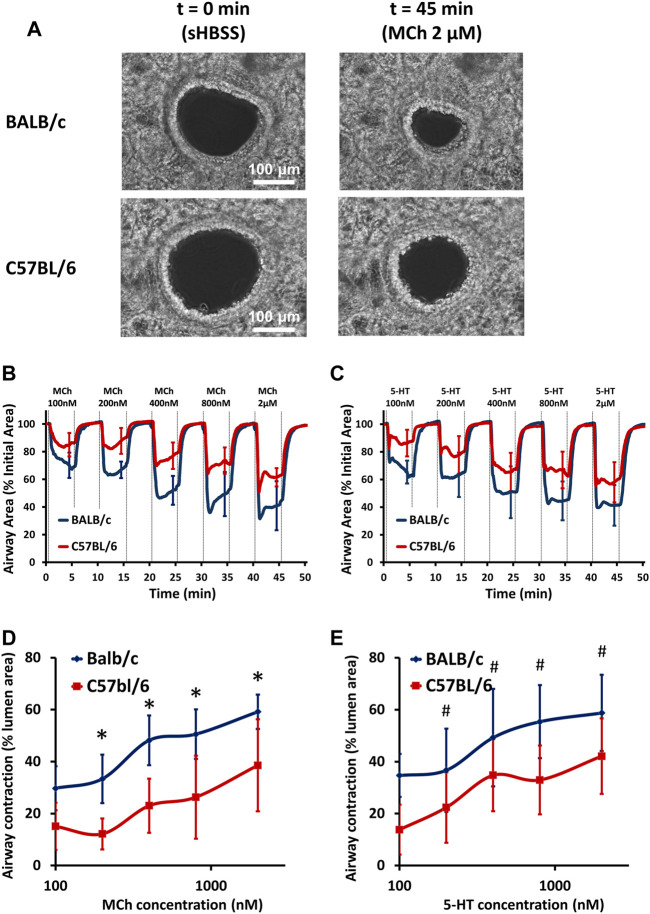
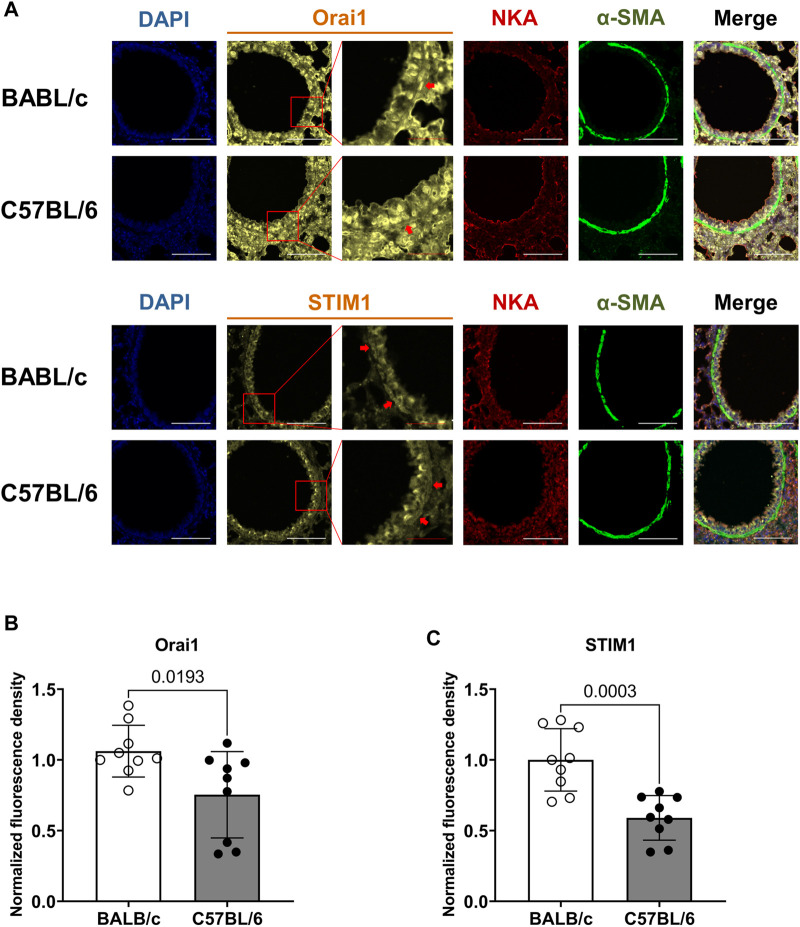
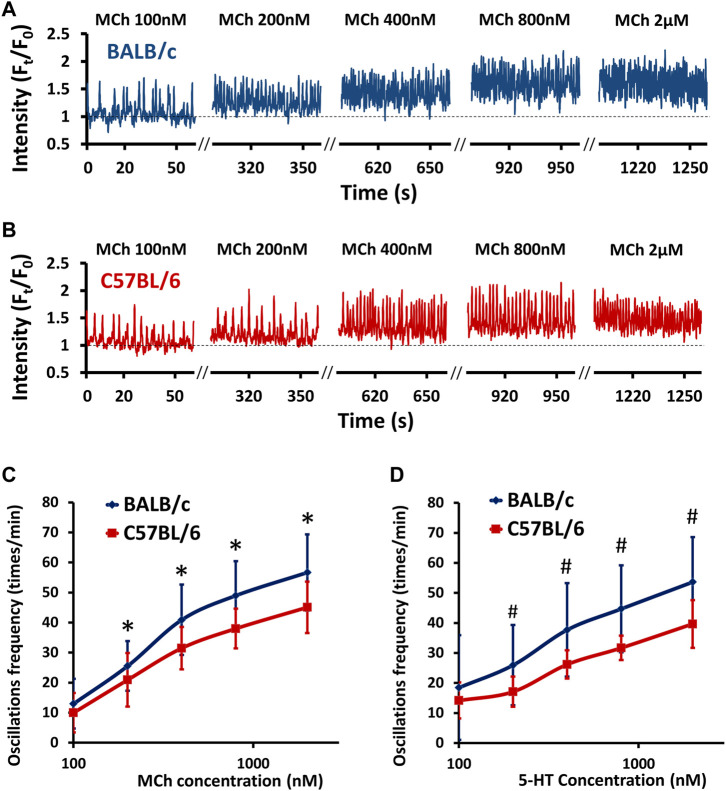
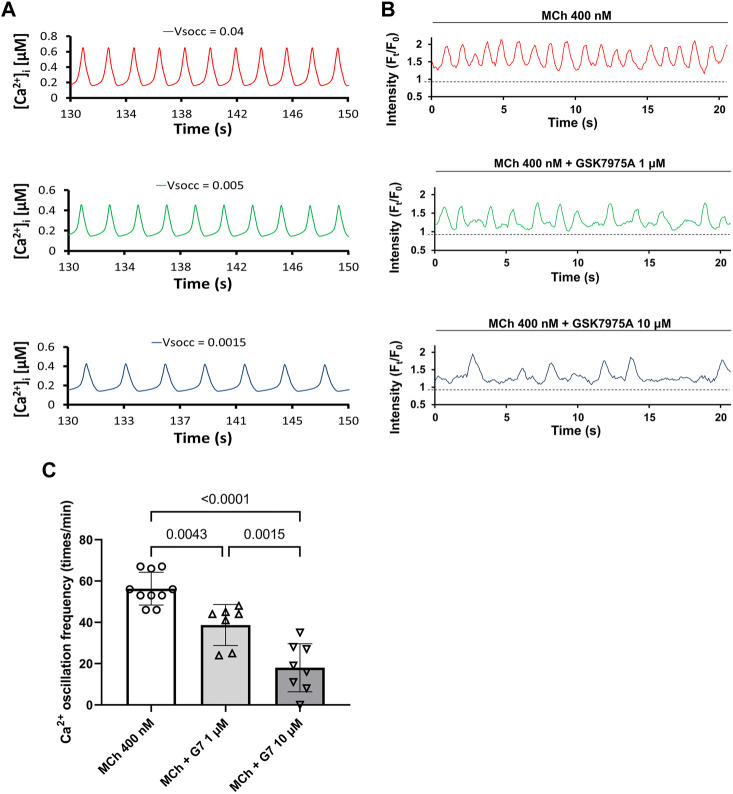
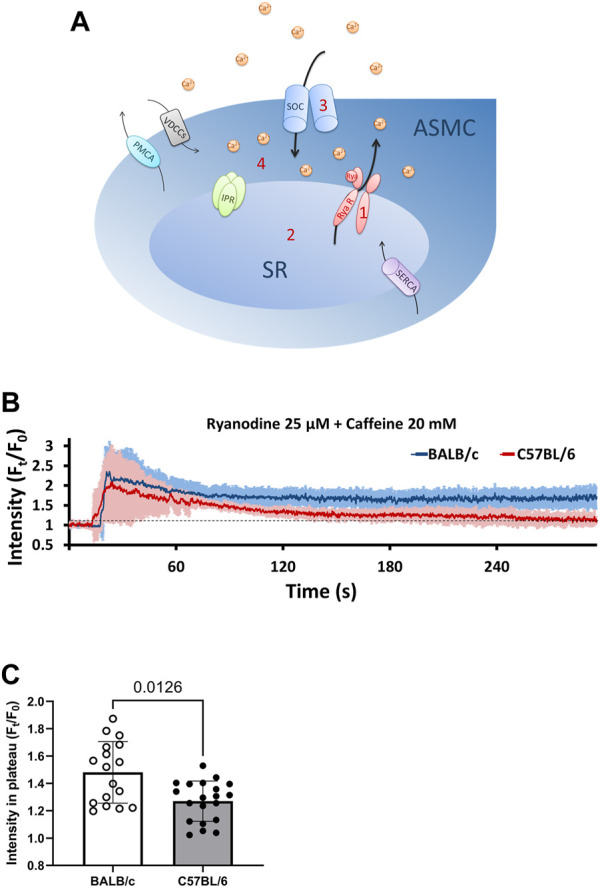
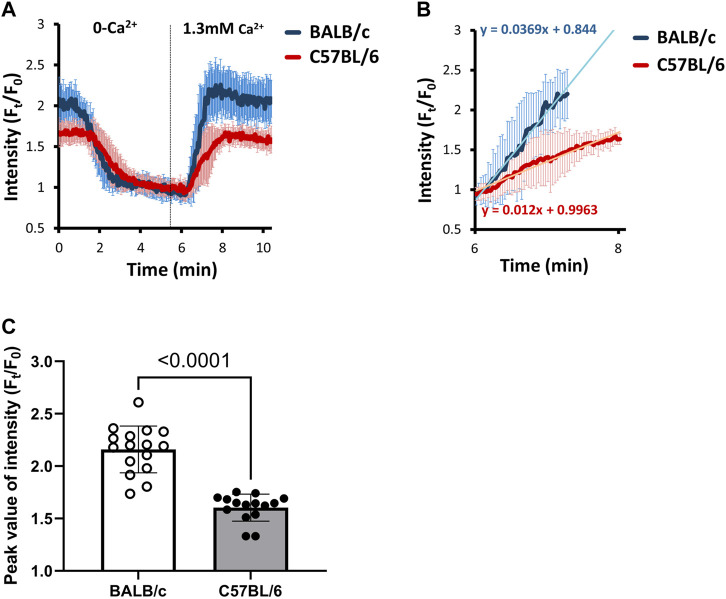
BALB/c and C57BL/6 mouse strains are widely used as animal model in studies of respiratory diseases, such as asthma. Asthma is characterized by airway hyperresponsiveness, which is eventually resulted from the excessive airway smooth muscle (ASM) contraction mediated by Ca oscillations in ASM cells. It is reported that BALB/c mice have inherently higher airway responsiveness, but show no different contractive response of tracheal ring as compared to C57BL/6 mice. However, whether the different airway responsiveness is due to the different extents of small airway contraction, and what's underlying mechanism remains unknown. Here, we assess agonist-induced small airway contraction and Ca oscillations in ASM cells between BALB/c and C57BL/6 mice by using precision-cut lung slices (PCLS). We found that BALB/c mice showed an intrinsically stronger extent of small airway narrowing and faster Ca oscillations in ASM cells in response to agonists. These differences were associated with a higher magnitude of Ca influx via store-operated Ca entry (SOCE), as a result of increased expression of SOCE components (STIM1, Orai1) in the ASM cells of small airway of BALB/c mice. An established mathematical model and experimental results suggested that the increased SOC current could result in increased agonist-induced Ca oscillations. Therefore, the inherently higher SOC underlies the increased Ca oscillation frequency in ASM cells and stronger small airway contraction in BALB/c mice, thus higher airway responsiveness in BALB/c than C57BL/6 mouse strain.
BALB/c和C57BL/6小鼠品系在呼吸系统疾病(如哮喘)研究中被广泛用作动物模型。哮喘的特征是气道高反应性,这最终是由气道平滑肌(ASM)细胞中钙振荡介导的过度ASM收缩引起的。据报道,BALB/c小鼠固有地具有更高的气道反应性,但与C57BL/6小鼠相比,气管环的收缩反应并无差异。然而,不同的气道反应性是否是由于小气道收缩程度不同,以及其潜在机制尚不清楚。在这里,我们通过使用精密肺切片(PCLS)评估BALB/c和C57BL/6小鼠之间激动剂诱导的小气道收缩和ASM细胞中的钙振荡。我们发现,BALB/c小鼠对激动剂的反应表现出小气道狭窄程度更强且ASM细胞中钙振荡更快。这些差异与通过储存操纵性钙内流(SOCE)的钙内流幅度更高有关,这是由于BALB/c小鼠小气道ASM细胞中SOCE成分(STIM1、Orai1)表达增加所致。一个已建立的数学模型和实验结果表明,增加的SOC电流可导致激动剂诱导的钙振荡增加。因此,固有较高的SOC是BALB/c小鼠ASM细胞中钙振荡频率增加和小气道收缩更强的基础,从而导致BALB/c小鼠比C57BL/6小鼠品系具有更高的气道反应性。