Department of Earth Sciences, Sapienza University of Rome, P.le Aldo Moro 5, 00185, Rome, Italy.
Department of Basic and Applied Sciences for Engineering (SBAI), Sapienza University of Rome, Via Antonio Scarpa 14, 00161, Rome, Italy.
Sci Rep. 2023 Jun 22;13(1):10142. doi: 10.1038/s41598-023-37179-w.
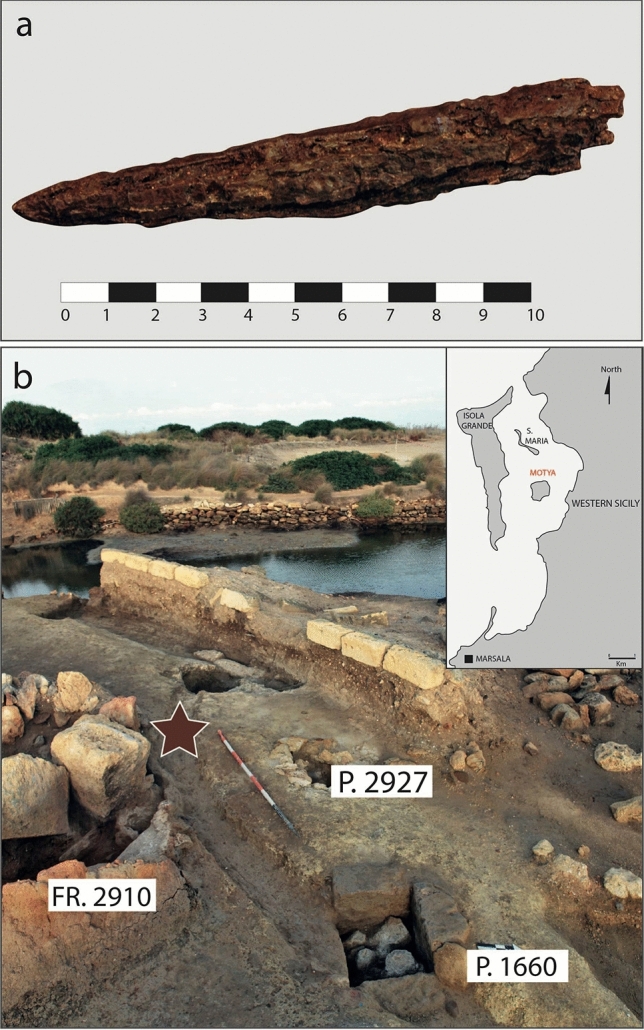
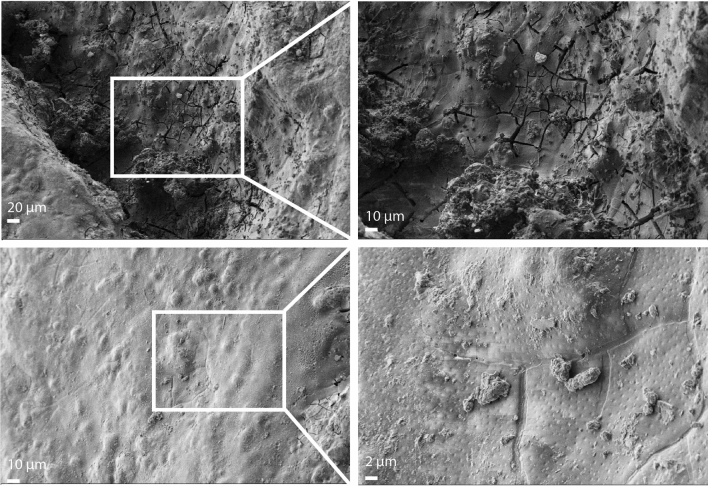
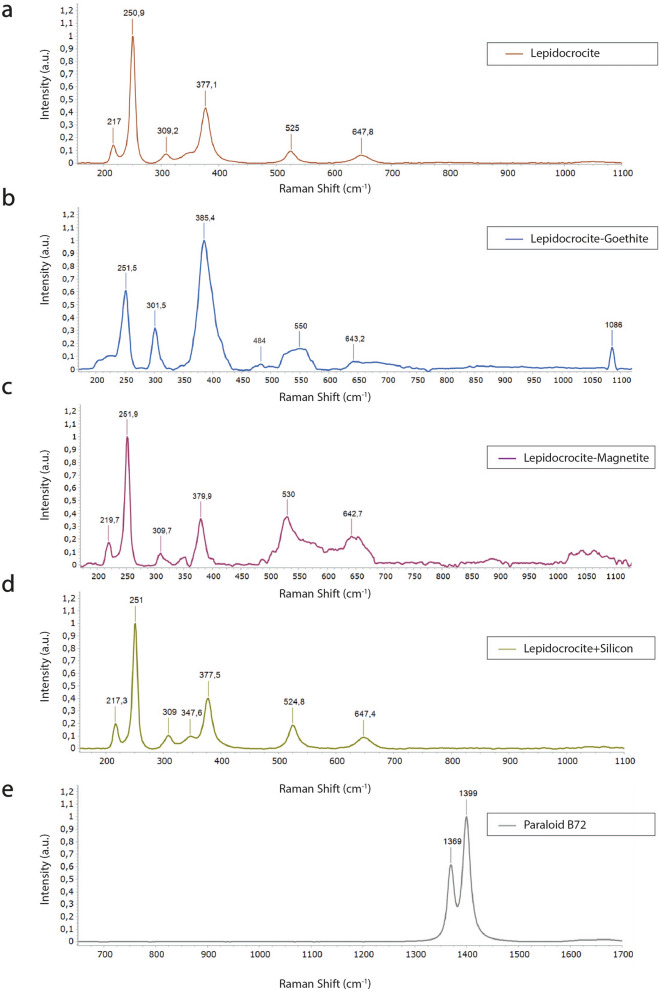
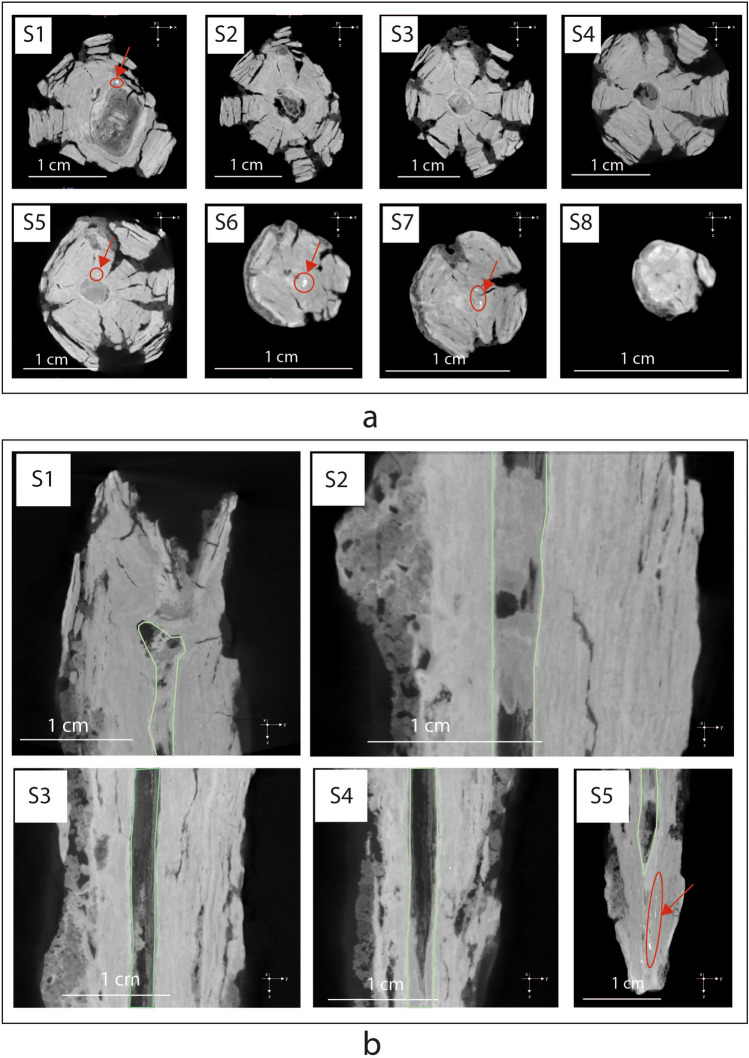
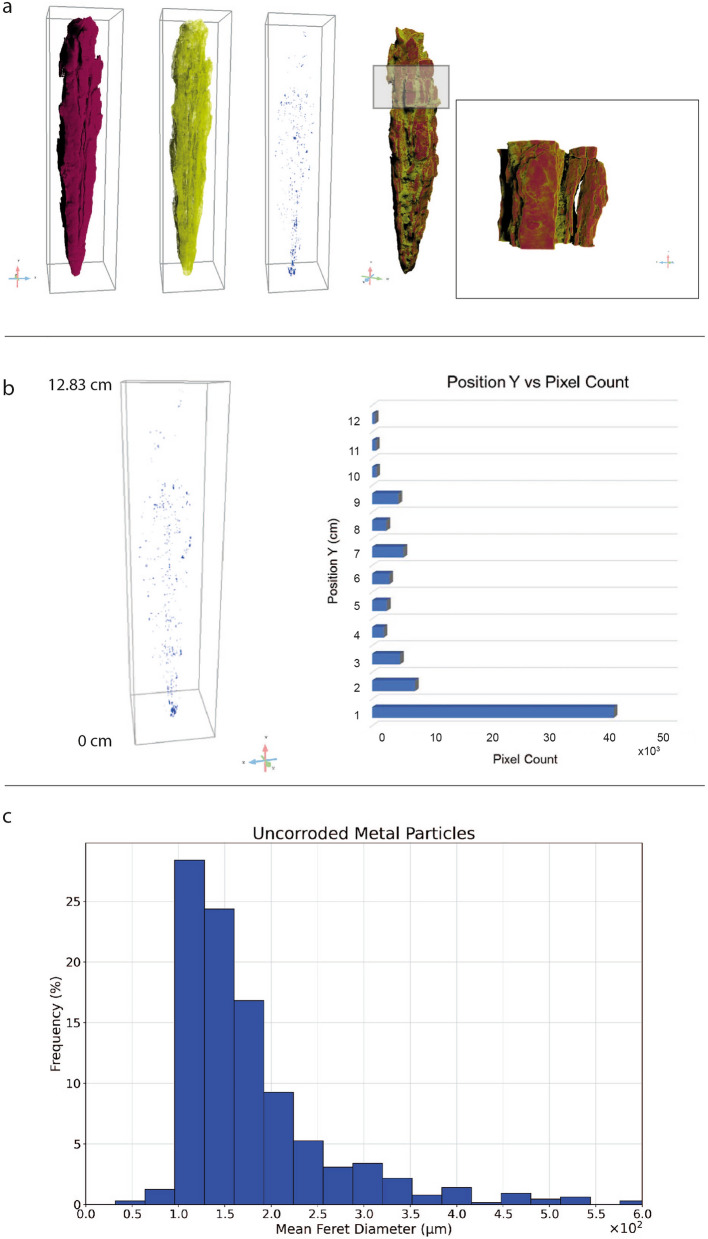
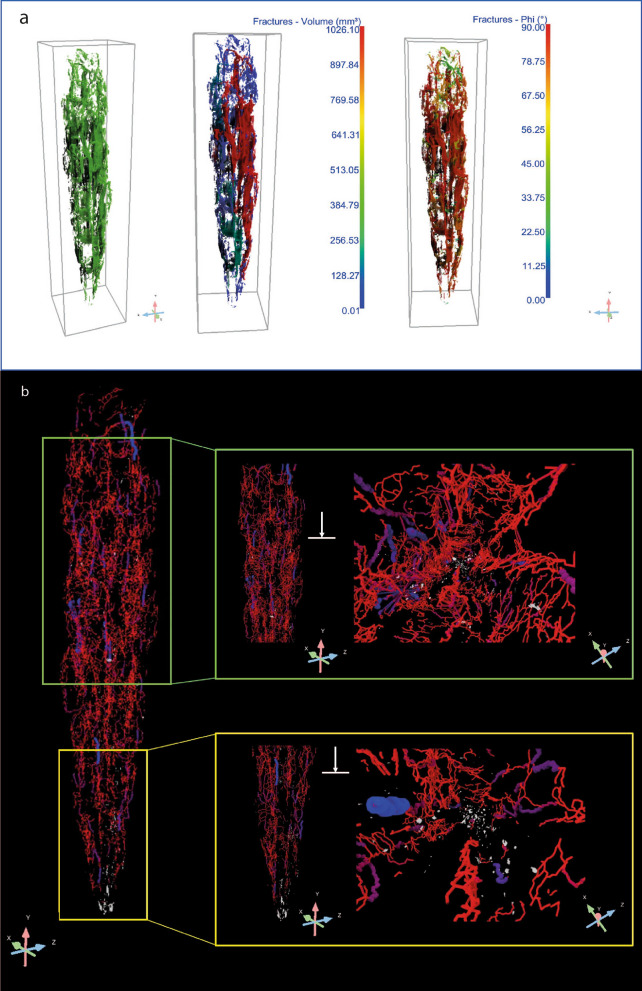
3D imaging is a powerful tool of high resolution and non-destructive imaging technology for the study of ancient weapons and military technology, which reveals the original microstructures and corrosion patterns that threaten these artefacts. Here we report quantitative analysis of the 3D distribution and the orientation of fractures, and uncorroded metal particles within a wrought iron javelin unearthed at the Phoenician-Punic site of Motya, Italy. The study aimed to gain a better understanding of the relationship between corrosion and local stresses within the artifact and to evaluate its manufacturing technology, as well as the effects of post-treatment with Paraloid B72 on concretion and mineralized layers. The cracks were quantified in terms of content, size, and orientation. The condition of artefact storage was evaluated by a multi-analytical approach, including X-ray microscopy, field emission electron microscopy and micro-Raman spectroscopy. The results indicated that a specific technique was used to create a sturdy, lightweight javelin with a central shaft for piercing or thrusting. The fractures appear elongated in the direction of the longitudinal axis of the blade, showing the forging direction of the original metallic block. The study concluded that the artifact had not yet been stabilized due to the presence of lepidocrocite.
3D 成像技术是一种高分辨率、非破坏性的成像技术,可用于研究古代武器和军事技术,揭示威胁这些文物的原始微观结构和腐蚀模式。在这里,我们报告了对意大利腓尼基-布匿遗址莫蒂亚出土的锻铁标枪内部裂缝和未腐蚀金属颗粒的 3D 分布和方向的定量分析。该研究旨在更好地了解腐蚀与文物内部局部应力之间的关系,并评估其制造技术,以及 Paraloid B72 在后处理过程中对凝结物和矿化层的影响。根据含量、大小和方向对裂缝进行了量化。采用包括 X 射线显微镜、场发射电子显微镜和微拉曼光谱在内的多分析方法评估了文物的保存状况。结果表明,采用了一种特殊的技术来制造一种坚固、轻便的标枪,其中心轴用于刺穿或刺击。裂缝在叶片的纵轴方向上呈拉长状,显示出原始金属块的锻造方向。研究得出结论,由于存在纤铁矿,该文物尚未稳定。