Jin Jingnan, Shi Yahui, Zhang Baozhong, Wan Dongjin, Zhang Qingye, Li Ying
School of Environmental Engineering, Henan University of Technology No. 100 Lianhua Street, High-Tech Industrial Development District Zhengzhou Henan 450001 China
College of Informatics, Huazhong Agricultural University Wuhan 430070 China.
RSC Adv. 2023 Jun 21;13(27):18878-18887. doi: 10.1039/d3ra01453c. eCollection 2023 Jun 15.
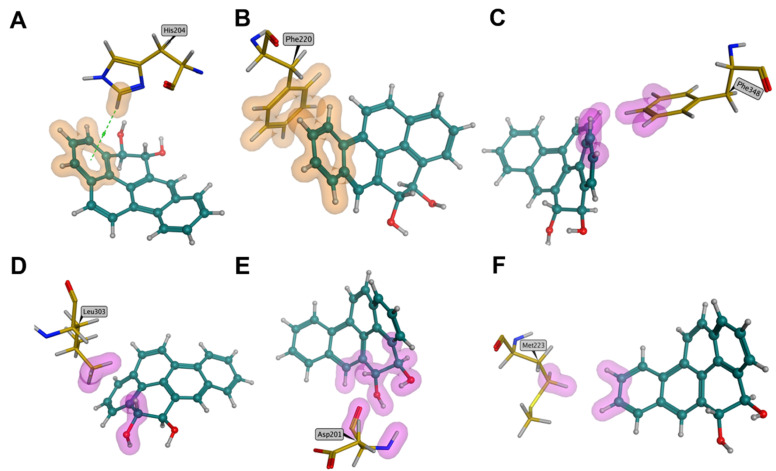
Owing to its adverse effects on the environment and human health, benzo[]pyrene (BaP) has attracted considerable attention and has been used as a model compound in ecotoxicology. In this study, sp. JPA3 as a BaP-degrading strain was isolated from the production water of an oil well. The strain could remove 80% of BaP at an initial concentration of 100 mg L after 35 d culture. The BaP-4,5-dihydrodiol, BaP-4,5-epoxide, 5-hydroxychrysene, and 2-hydroxy-1-naphthoic acid metabolites were identified in the biodegradation process. Simultaneously, the gene sequence coding for dioxygenase in the strain was amplified and a dioxygenase model was built by homology modeling. Combined with the identification of the metabolites, the interaction mechanism of BaP with dioxygenase was investigated using molecular docking. It was assumed that BaP was initially oxidized at the C-C positions in the active cavity of dioxygenase. Moreover, a hypothesis for the progressive degradation mechanism of BaP by this strain was proposed the identification of the downstream metabolites. In conclusion, our study provided an efficient BaP degrader and a comprehensive reference for the study of the degradation mechanism in terms of the degrading metabolites and theoretical research at the molecular level.
由于苯并[a]芘(BaP)对环境和人类健康有不利影响,它已引起了广泛关注,并被用作生态毒理学中的模型化合物。在本研究中,从油井采出水中分离出一株BaP降解菌株sp. JPA3。该菌株在初始浓度为100 mg/L的情况下,经过35天培养可去除80%的BaP。在生物降解过程中鉴定出了BaP - 4,5 - 二氢二醇、BaP - 4,5 - 环氧化物、5 - 羟基屈和2 - 羟基 - 1 - 萘甲酸代谢产物。同时,扩增了该菌株中编码双加氧酶的基因序列,并通过同源建模构建了双加氧酶模型。结合代谢产物的鉴定,利用分子对接研究了BaP与双加氧酶的相互作用机制。推测BaP最初在双加氧酶活性腔内的C - C位置被氧化。此外,根据下游代谢产物的鉴定结果,提出了该菌株对BaP进行逐步降解机制的假设。总之,我们的研究提供了一种高效的BaP降解菌,并在降解代谢产物和分子水平的理论研究方面为降解机制的研究提供了全面的参考。