Cellular Degradation Biology Center, College of Medicine, Seoul National University, Seoul, 03080, Republic of Korea.
Department of Biomedical Sciences, College of Medicine, Seoul National University, Seoul, 03080, Republic of Korea.
Mol Neurodegener. 2023 Jun 24;18(1):41. doi: 10.1186/s13024-023-00630-7.
There are currently no disease-modifying therapeutics for Parkinson's disease (PD). Although extensive efforts were undertaken to develop therapeutic approaches to delay the symptoms of PD, untreated α-synuclein (α-syn) aggregates cause cellular toxicity and stimulate further disease progression. PROTAC (Proteolysis-Targeting Chimera) has drawn attention as a therapeutic modality to target α-syn. However, no PROTACs have yet shown to selectively degrade α-syn aggregates mainly owing to the limited capacity of the proteasome to degrade aggregates, necessitating the development of novel approaches to fundamentally eliminate α-syn aggregates.
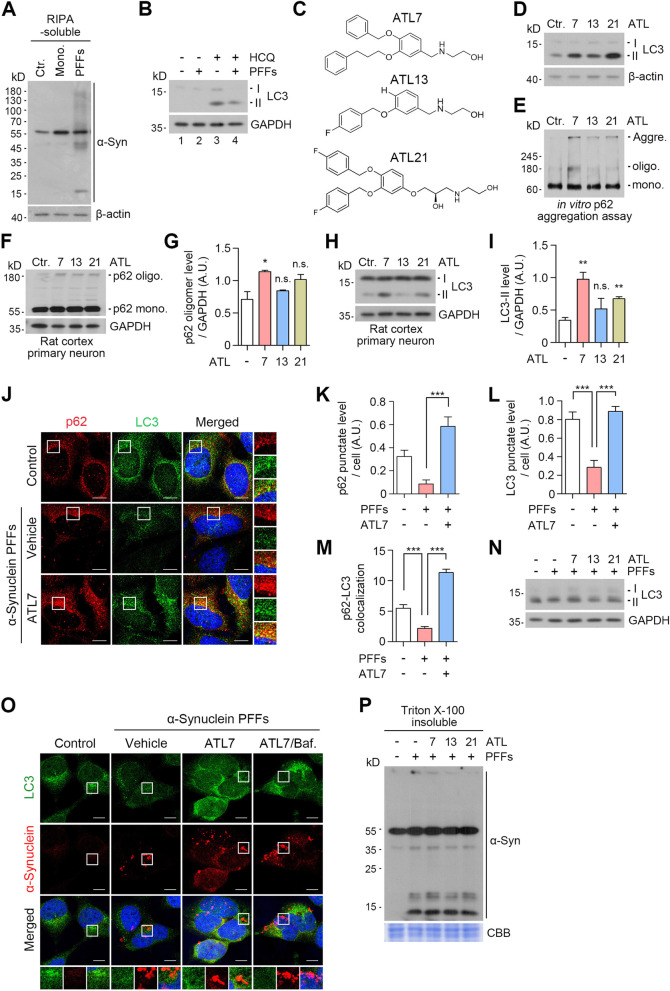
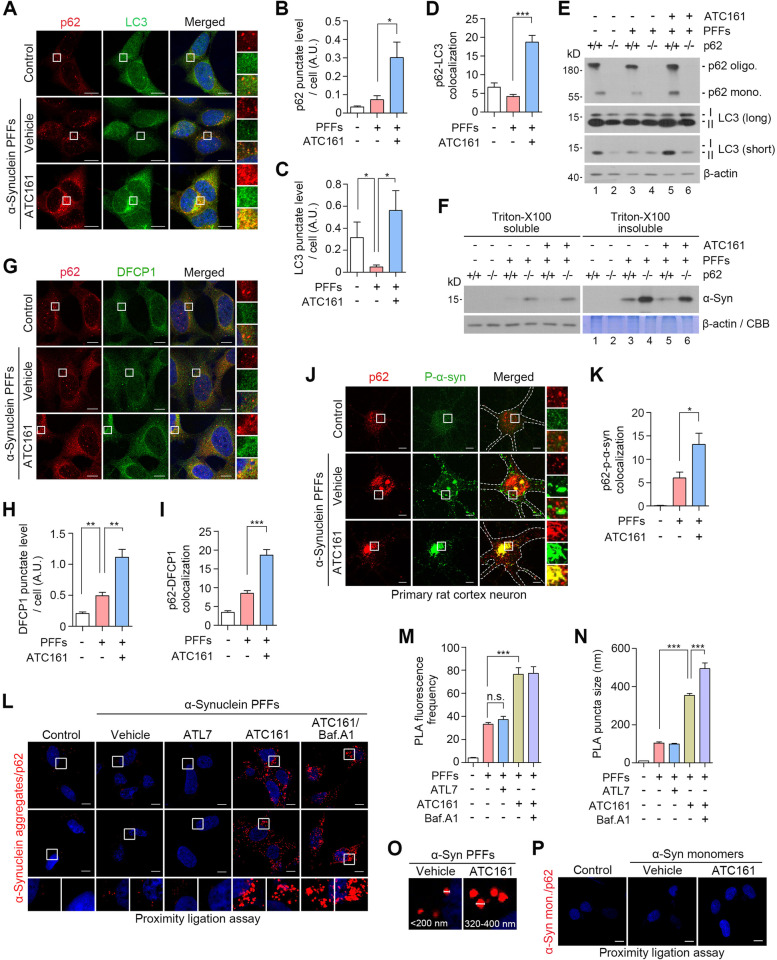
We employed AUTOTAC (Autophagy-Targeting Chimera), a macroautophagy-based targeted protein degradation (TPD) platform developed in our earlier studies. A series of AUTOTAC chemicals was synthesized as chimeras that bind both α-syn aggregates and p62/SQSTM1/Sequestosome-1, an autophagic receptor. The efficacy of Autotacs was evaluated to target α-syn aggregates to phagophores and subsequently lysosomes for hydrolysis via p62-dependent macroautophagy. The target engagement was monitored by oligomerization and localization of p62 and autophagic markers. The therapeutic efficacy to rescue PD symptoms was characterized in cultured cells and mice. The PK/PD (pharmacokinetics/pharmacodynamics) profiles were investigated to develop an oral drug for PD.
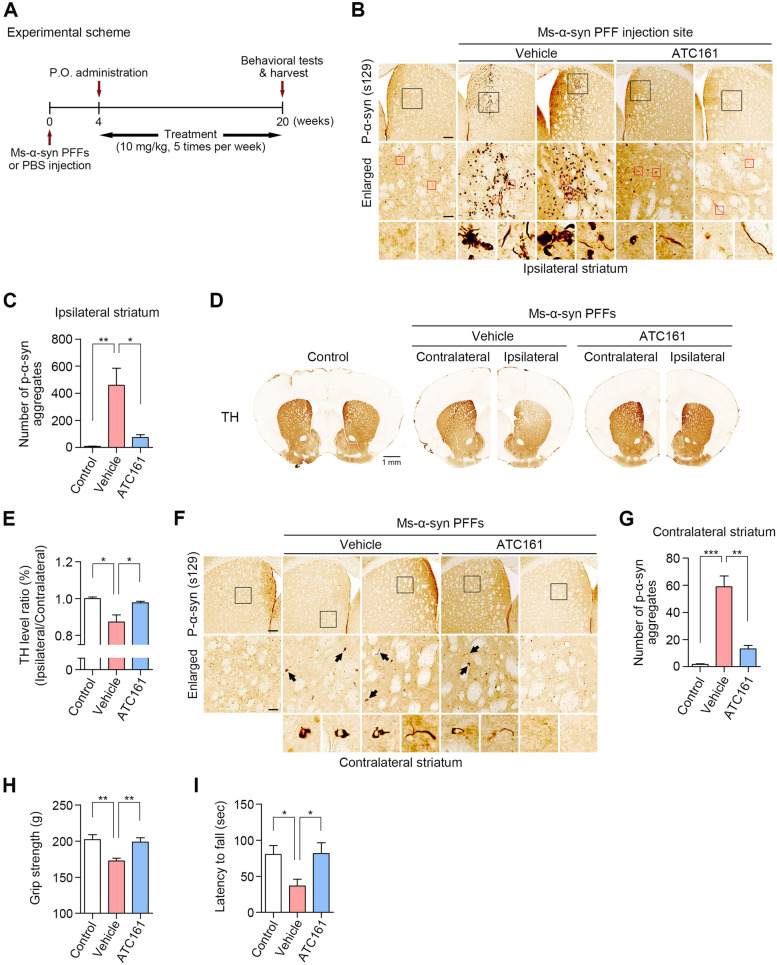
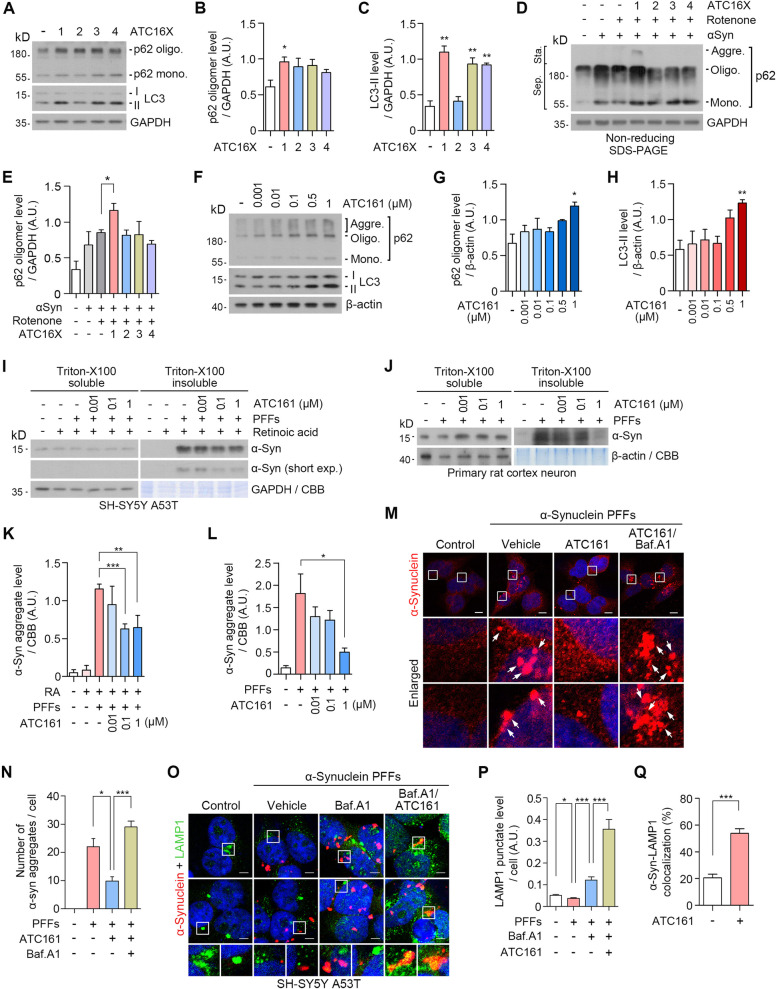
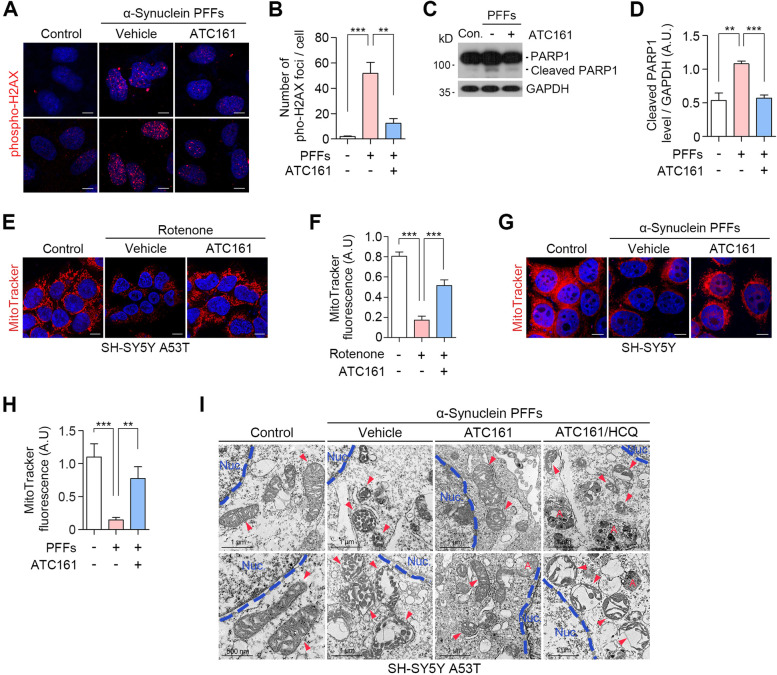
ATC161 induced selective degradation of α-syn aggregates at DC of ~ 100 nM. No apparent degradation was observed with monomeric α-syn. ATC161 mediated the targeting of α-syn aggregates to p62 by binding the ZZ domain and accelerating p62 self-polymerization. These p62-cargo complexes were delivered to autophagic membranes for lysosomal degradation. In PD cellular models, ATC161 exhibited therapeutic efficacy to reduce cell-to-cell transmission of α-syn and to rescue cells from the damages in DNA and mitochondria. In PD mice established by injecting α-syn preformed fibrils (PFFs) into brain striata via stereotaxic surgery, oral administration of ATC161 at 10 mg/kg induced the degradation of α-syn aggregates and reduced their propagation. ATC161 also mitigated the associated glial inflammatory response and improved muscle strength and locomotive activity.
AUTOTAC provides a platform to develop drugs for PD. ATC161, an oral drug with excellent PK/PD profiles, induces selective degradation of α-syn aggregates in vitro and in vivo. We suggest that ATC161 is a disease-modifying drug that degrades the pathogenic cause of PD.
目前尚无治疗帕金森病(PD)的疾病修饰疗法。尽管人们为开发治疗方法以延缓 PD 症状付出了广泛的努力,但未经治疗的α-突触核蛋白(α-syn)聚集体会导致细胞毒性,并刺激疾病进一步进展。PROTAC(蛋白水解靶向嵌合体)作为一种治疗方法引起了人们的关注,可靶向 α-syn。然而,由于蛋白酶体降解聚集体的能力有限,尚无 PROTAC 显示出选择性降解α-syn 聚集体的能力,因此需要开发新的方法从根本上消除α-syn 聚集体。
我们采用了 AUTOTAC(自噬靶向嵌合体),这是我们早期研究中开发的一种基于巨自噬的靶向蛋白降解(TPD)平台。合成了一系列 AUTOTAC 化学物质作为嵌合体,与α-syn 聚集体和 p62/SQSTM1/Sequestosome-1(自噬受体)结合。通过 p62 依赖性巨自噬将 Autotacs 靶向吞噬体和随后的溶酶体以水解来评估靶向 α-syn 聚集体的效果。通过 p62 和自噬标记物的寡聚化和定位来监测靶标结合。在培养的细胞和小鼠中研究了治疗 PD 症状的疗效。研究了 PK/PD(药代动力学/药效学)谱,以开发用于 PD 的口服药物。
ATC161 在 DC 处诱导 α-syn 聚集体的选择性降解,浓度约为 100 nM。未观察到单体 α-syn 的明显降解。ATC161 通过结合 ZZ 结构域并加速 p62 自聚合来介导将 α-syn 聚集体靶向 p62。这些 p62 货物复合物被递送至自噬膜进行溶酶体降解。在 PD 细胞模型中,ATC161 表现出降低 α-syn 细胞间传播的治疗效果,并能从 DNA 和线粒体损伤中挽救细胞。在通过立体定向手术将 α-syn 预形成纤维(PFF)注射到脑纹状体中建立的 PD 小鼠中,口服给予 ATC161(10 mg/kg)可诱导 α-syn 聚集体的降解并减少其传播。ATC161 还减轻了相关的神经胶质炎症反应,并改善了肌肉力量和运动活动。
AUTOTAC 为 PD 药物的开发提供了一个平台。ATC161 是一种具有良好 PK/PD 特征的口服药物,可在体外和体内诱导 α-syn 聚集体的选择性降解。我们认为,ATC161 是一种可改善疾病的药物,可降解 PD 的致病原因。