School of Medicine, University of Limerick, Limerick, Ireland.
Public Health Master Programme, University of Limerick, Limerick, Ireland.
Reprod Health. 2023 Jun 24;20(1):95. doi: 10.1186/s12978-023-01629-5.
Adolescent pregnancy is a global public health and social problem that affects both developed and developing countries. Reducing adolescent pregnancy is central to achieving sustainable development goals. In 2021 Nigeria's Adolescent pregnancy was 106 per 1000 and showed an increasing rate. This study, therefore, aims to explore the literature to map the risk factors and interventions against adolescent pregnancy in Nigeria.
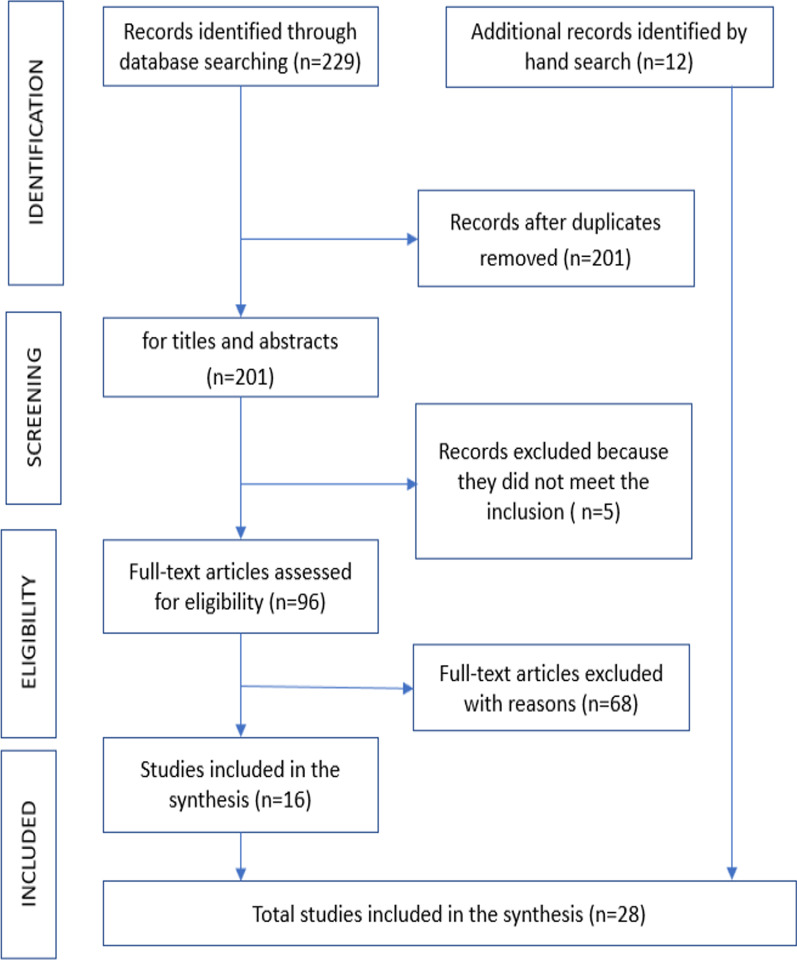
A scoping review of studies published between January 2007 and December 2022 using PubMed, Web of Science and Africa Journals Online were searched using the keywords' adolescent pregnancy' AND 'Nigeria'. Studies were screened using the eligibility criteria.
A total of 241 articles, of which 229 were identified through the databases and 12 were identified through hand search. After the full-text review, 28 studies met the inclusion criteria and were included in the final review. In Nigeria, the prevalence of adolescent pregnancy is between 7.5 and 49.5%. Associated factors for adolescent pregnancy in Nigeria are multifactorial, including individual, community, societal, school, family, and peer factors. Policies on adolescent sexual and reproductive health exist in Nigeria. Still, the policies need more sponsorship, implementation, and monitoring, while only some interventions on adolescent pregnancy majorly based on contraceptives and education of health providers are available in Nigeria.
Associated factors for adolescent Pregnancy in Nigeria are multidimensional, with educational attainment and wealth index being the highest associated factor. Intervention strategies aimed at the educational level have been identified as a critical factor in curbing adolescent pregnancy. Thus, policies on sexual, reproductive, and mental health development specifically targeting adolescents to reduce the cycle of societal dependence by empowering this group economically and educationally are justifiably warranted.
青少年怀孕是一个全球性的公共卫生和社会问题,影响着发达国家和发展中国家。减少青少年怀孕是实现可持续发展目标的核心。2021 年,尼日利亚的青少年怀孕率为每 1000 名中有 106 例,呈上升趋势。因此,本研究旨在探讨文献,以绘制尼日利亚青少年怀孕的风险因素和干预措施图。
使用 PubMed、Web of Science 和 Africa Journals Online 对 2007 年 1 月至 2022 年 12 月期间发表的研究进行了范围界定综述,使用关键词“青少年怀孕”和“尼日利亚”进行搜索。使用入选标准筛选研究。
共检索到 241 篇文章,其中 229 篇通过数据库确定,12 篇通过手工检索确定。经过全文审查,有 28 项研究符合纳入标准,纳入最终综述。在尼日利亚,青少年怀孕的流行率在 7.5%至 49.5%之间。与尼日利亚青少年怀孕相关的因素是多方面的,包括个人、社区、社会、学校、家庭和同伴因素。尼日利亚存在青少年性健康和生殖健康政策。然而,这些政策需要更多的赞助、实施和监测,而尼日利亚仅提供了一些以避孕和卫生提供者教育为基础的青少年怀孕干预措施。
尼日利亚青少年怀孕的相关因素是多维度的,受教育程度和财富指数是最高的相关因素。针对教育水平的干预策略已被确定为遏制青少年怀孕的关键因素。因此,有理由制定专门针对青少年的性、生殖和心理健康发展政策,通过经济和教育为这一群体赋权,减少社会依赖的循环。