Center for International Reproductive Health Training (CIRHT), University of Michigan, Ann Arbor, MI, USA.
Department of Nursing and Midwifery, Lira University, Lira, Uganda.
Womens Health (Lond). 2024 Jan-Dec;20:17455057241285193. doi: 10.1177/17455057241285193.
Uganda is burdened by high unintended and teen pregnancies, high sexually transmitted infections, and harm caused by unsafe abortion.
Explore factors influencing sexual and reproductive health and rights (SRHR) in Uganda by synthesizing evidence from qualitative studies using a scoping review.
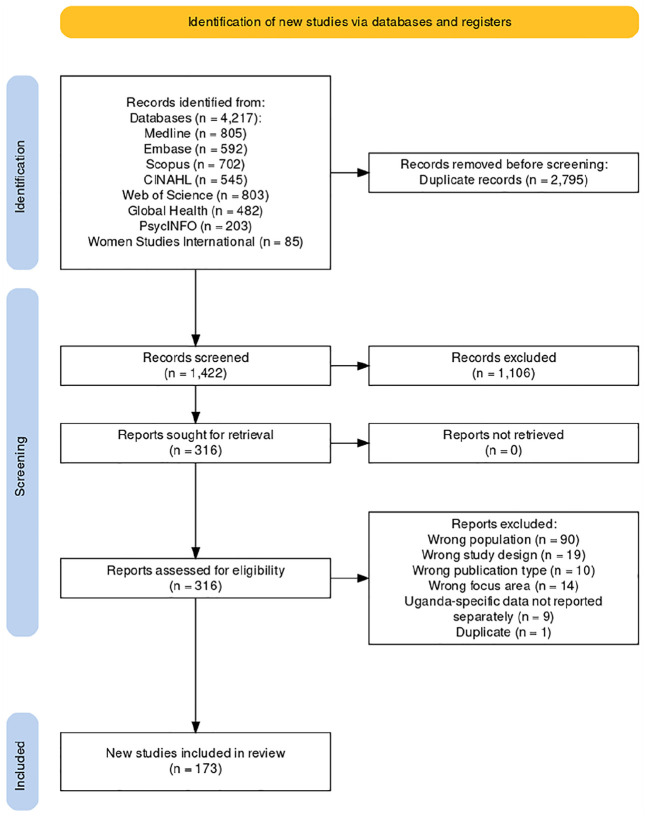
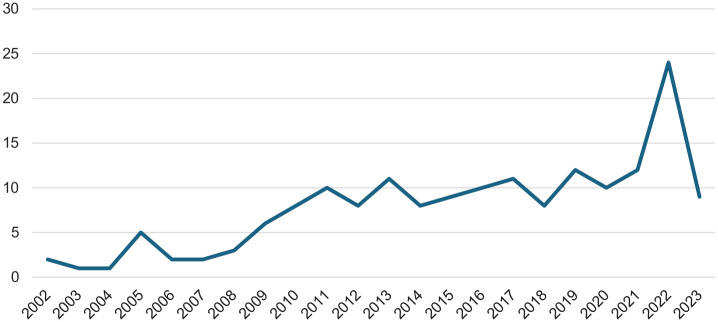
Original qualitative peer-reviewed research studies published between 2002 and 2023 in any language exploring factors influencing SRHR in Uganda.
Eight databases searched using qualitative/mixed methods search filters and no language limits.
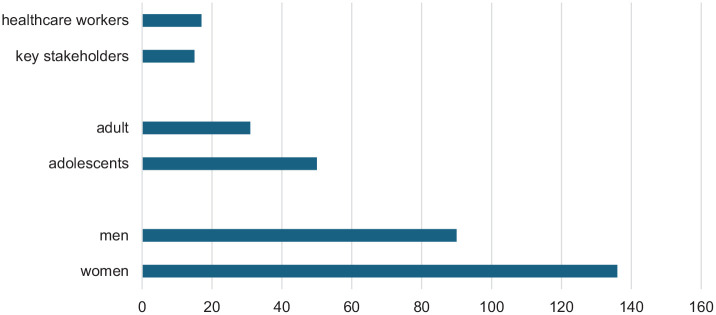
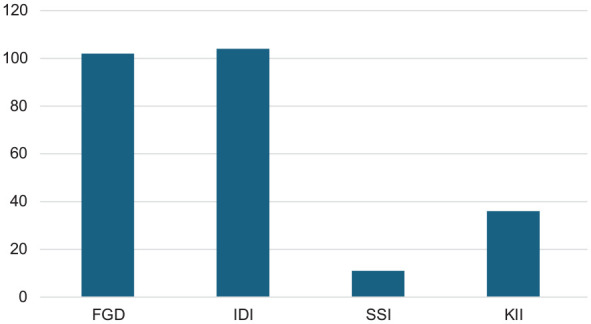
Information extracted included author, article title, publication year, study aims, participant description, data collection type, sample size, main findings, factors at the individual, interpersonal, community, and policy levels, implications for SRHR in Uganda, and study limitations. Quality of the selected articles was assessed using the Critical Appraisal Skills Programme tool.
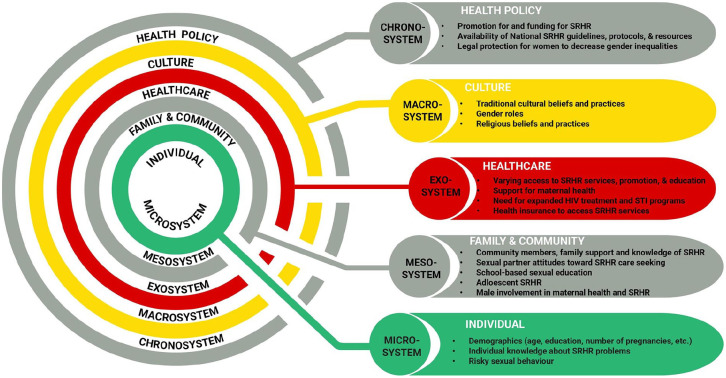
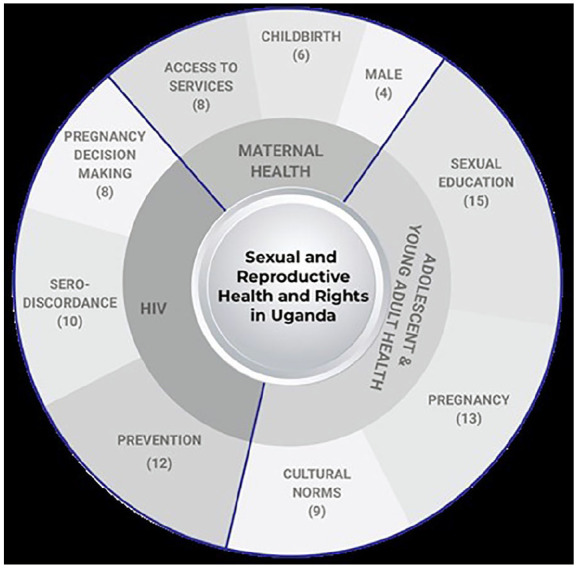
One hundred seventy-three studies met inclusion criteria. At the individual level, knowledge and attitudes toward SRHR, risky sexual behavior, and access to maternal SRHR services were identified as critical factors influencing health outcomes. Interpersonal factors included communication with sexual partners and relationships with family, school, and community members. Healthcare organization factors included adolescent access to education, SRHR services, and HIV prevention. Cultural and social factors included gendered norms and male involvement in SRHR. Policy-level factors included the importance of aligning policy and practice.
Multiple factors at individual, interpersonal, community, healthcare, cultural, and policy levels were found to influence SRHR in Uganda. The findings suggest that interventions targeting multiple levels of the socio-ecological system may be necessary to improve SRHR outcomes. This review highlights the need for a holistic approach that considers the broader socio-ecological context. Reducing identified gaps in the literature, particularly between policy and practice related to SRHR, is urgently needed in Uganda. We hope this review will inform the development of policies and interventions to improve SRHR outcomes.
乌干达面临着意外怀孕和青少年怀孕率高、性传播感染率高以及不安全堕胎造成的伤害等问题。
通过综合使用范围综述方法从定性研究中获取证据,探讨影响乌干达性健康和生殖健康及权利(SRHR)的因素。
发表于 2002 年至 2023 年间的任何语言的原始定性同行评审研究,探索影响乌干达 SRHR 的因素。
使用定性/混合方法搜索过滤器搜索了八个数据库,且没有语言限制。
提取的信息包括作者、文章标题、出版年份、研究目的、参与者描述、数据收集类型、样本量、主要发现、个人、人际、社区和政策层面的因素、对乌干达 SRHR 的影响以及研究局限性。使用批判性评估技巧计划工具评估选定文章的质量。
有 173 项研究符合纳入标准。在个人层面上,对 SRHR 的知识和态度、危险性行为以及获得孕产妇 SRHR 服务被确定为影响健康结果的关键因素。人际因素包括与性伴侣的沟通和与家庭、学校和社区成员的关系。医疗保健组织因素包括青少年接受教育、SRHR 服务和 HIV 预防。文化和社会因素包括性别规范和男性对 SRHR 的参与。政策层面的因素包括政策与实践相一致的重要性。
在个人、人际、社区、医疗保健、文化和政策层面上发现了多个因素会影响乌干达的 SRHR。研究结果表明,可能需要针对社会生态系统的多个层面进行干预,以改善 SRHR 结果。本综述强调了需要采取整体方法,考虑更广泛的社会生态背景。乌干达迫切需要缩小文献中确定的差距,特别是在与 SRHR 相关的政策和实践之间的差距。我们希望本综述将为制定改善 SRHR 结果的政策和干预措施提供信息。