Division of Endocrinology, Department of Medicine, Leiden University Medical Center, Leiden, the Netherlands; Einthoven Laboratory for Experimental Vascular Medicine, Leiden University Medical Center, Leiden, the Netherlands.
Centre for Health Protection, National Institute for Public Health and the Environment, Bilthoven, the Netherlands.
EBioMedicine. 2023 Jul;93:104680. doi: 10.1016/j.ebiom.2023.104680. Epub 2023 Jun 23.
Circadian disturbance (CD) is the consequence of a mismatch between endogenous circadian rhythms, behaviour, and/or environmental cycles, and frequently occurs during shift work. Shift work has been associated with elevated risk for atherosclerotic cardiovascular disease (asCVD) in humans, but evidence for the effectiveness of prevention strategies is lacking.
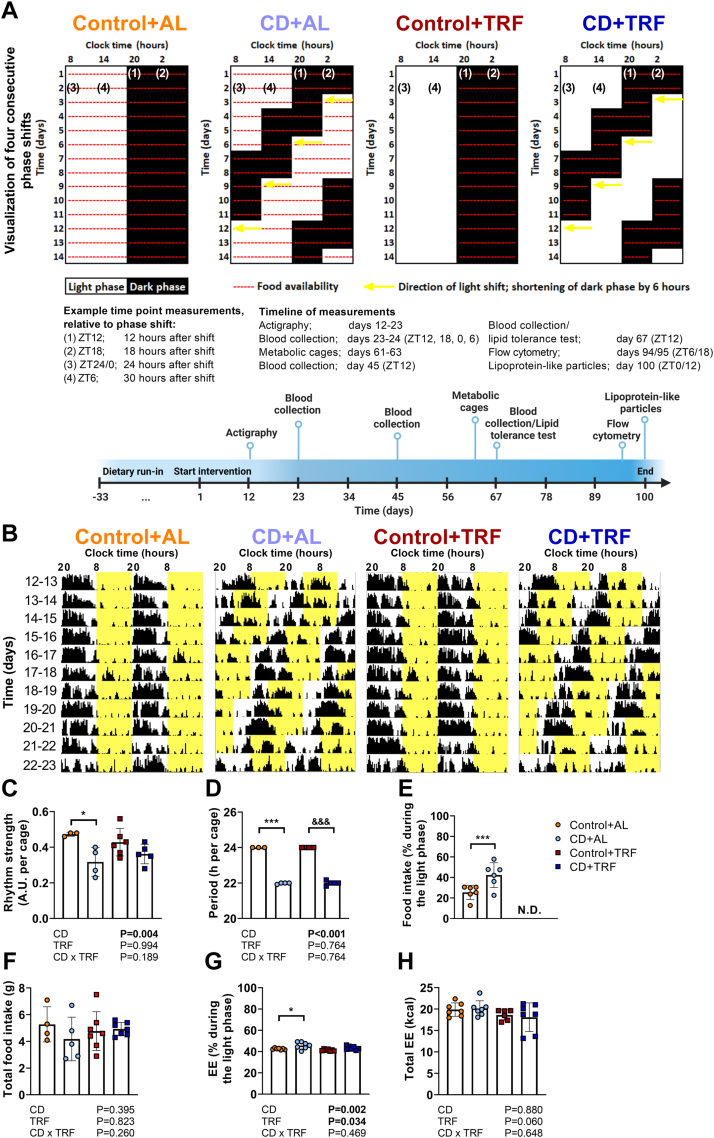
Here, we applied time-restricted feeding (TRF) as a strategy to counteract atherosclerosis development during CD in female APOE∗3-Leiden.CETP mice, a well-established model for humanized lipoprotein metabolism. Control groups were subjected to a fixed 12:12 h light-dark cycle, while CD groups were subjected to 6-h phase advancement every 3 days. Groups had either ad libitum (AL) access to food or were subjected to TRF with restricted food access to the dark phase.
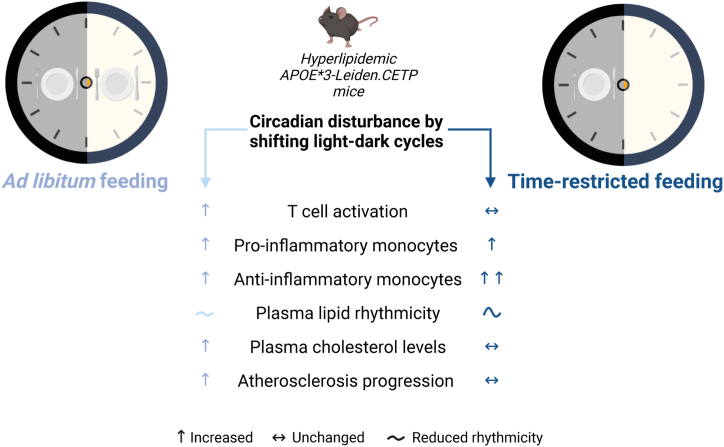
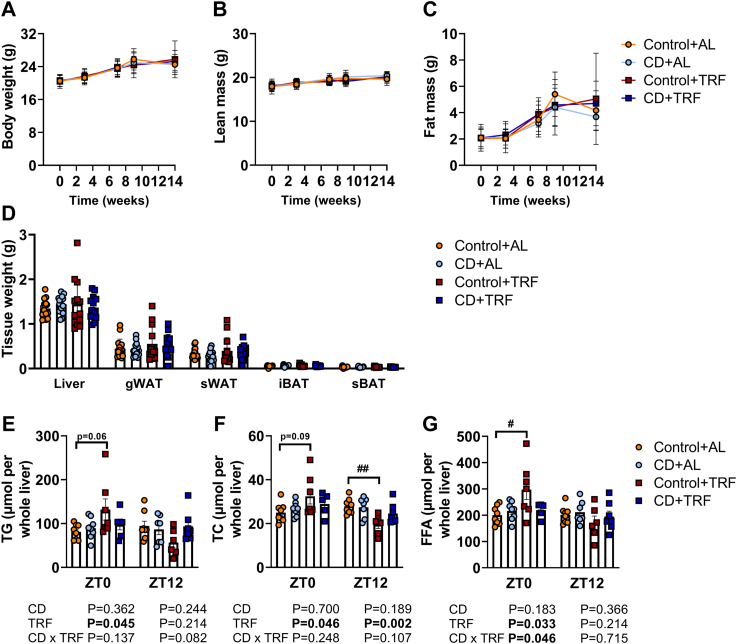
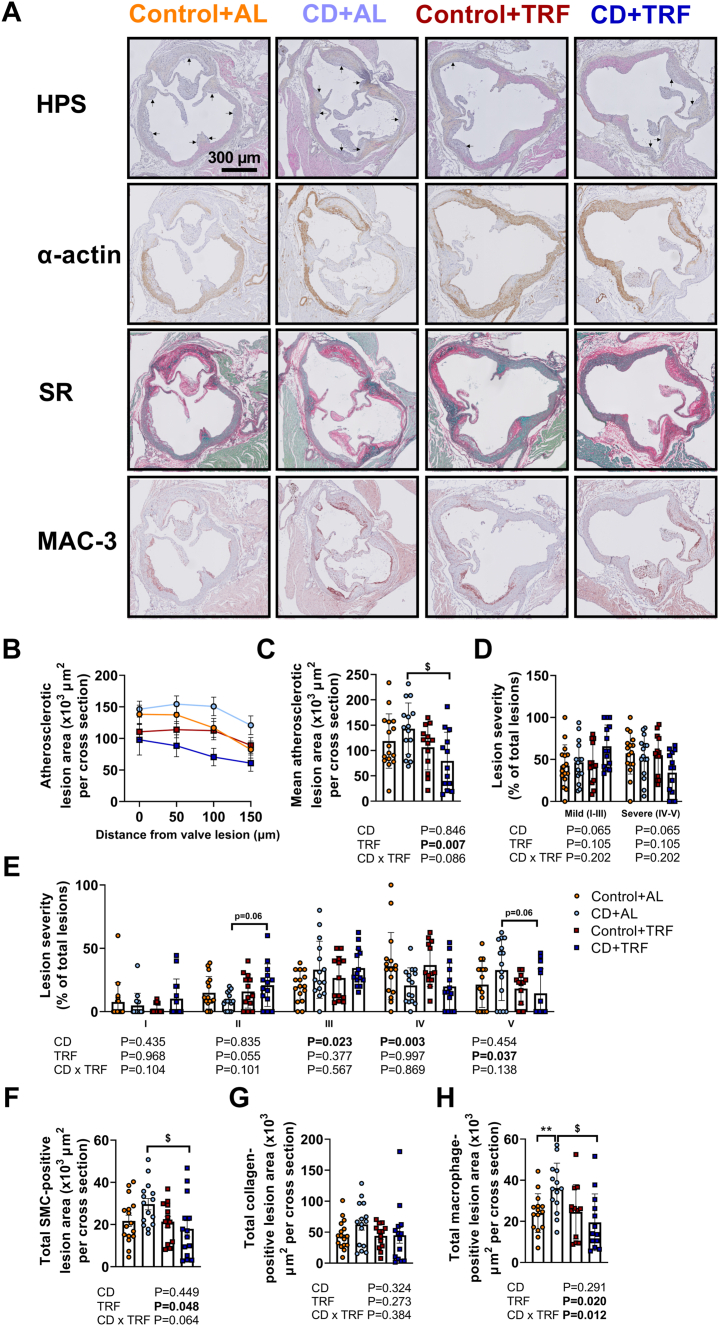
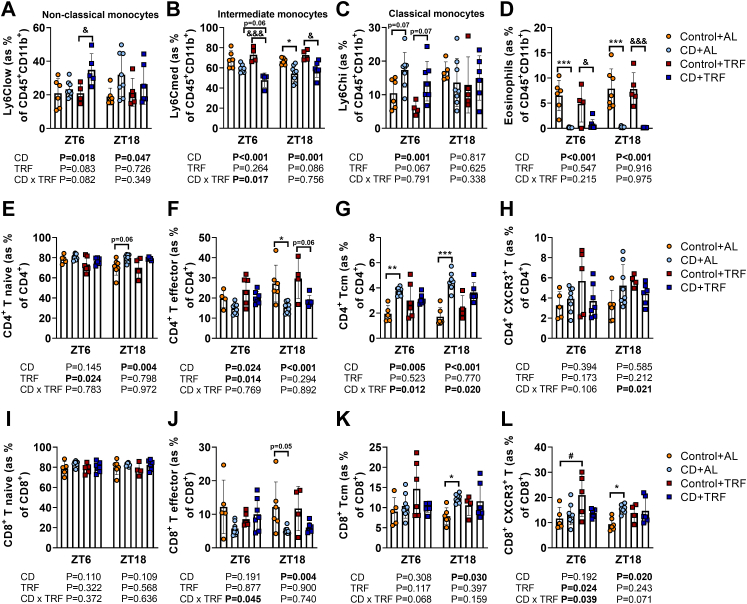
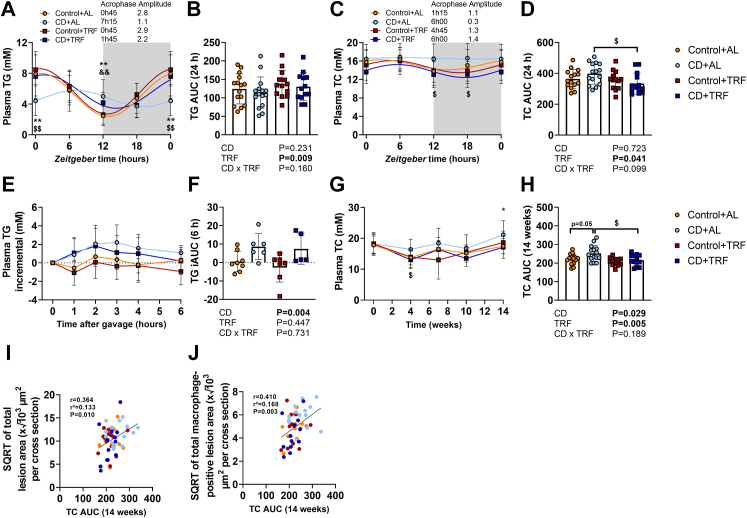
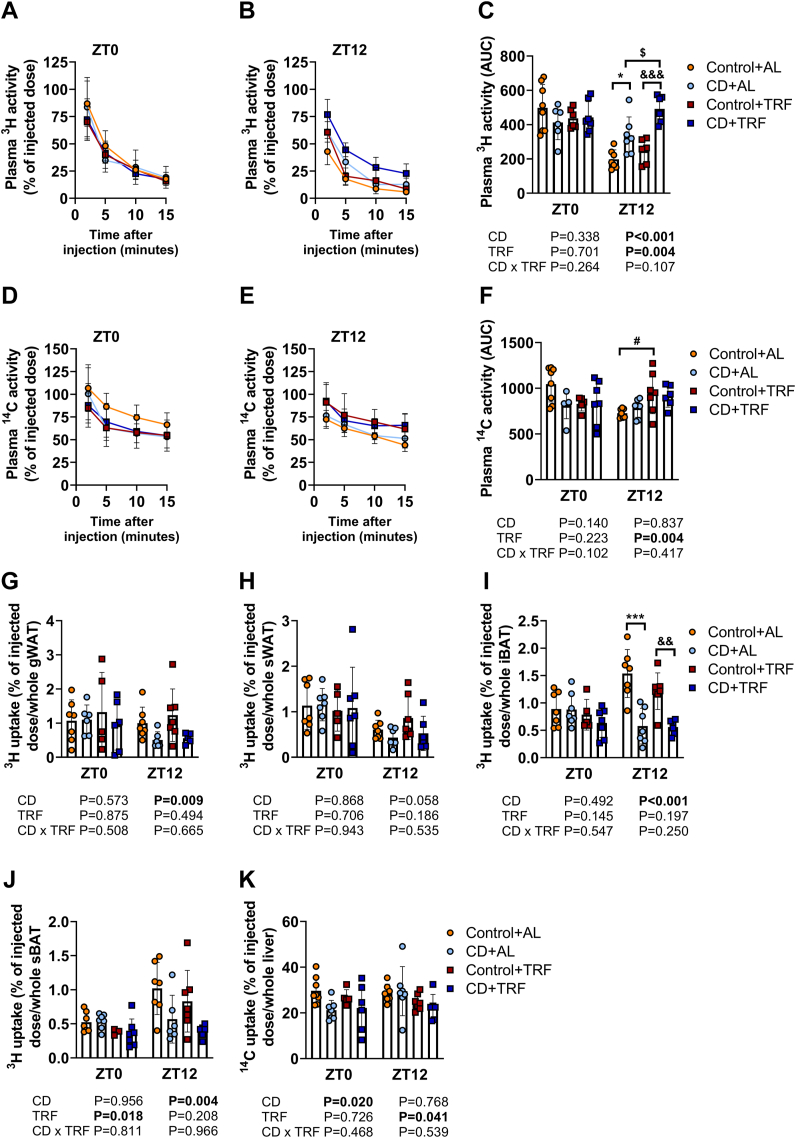
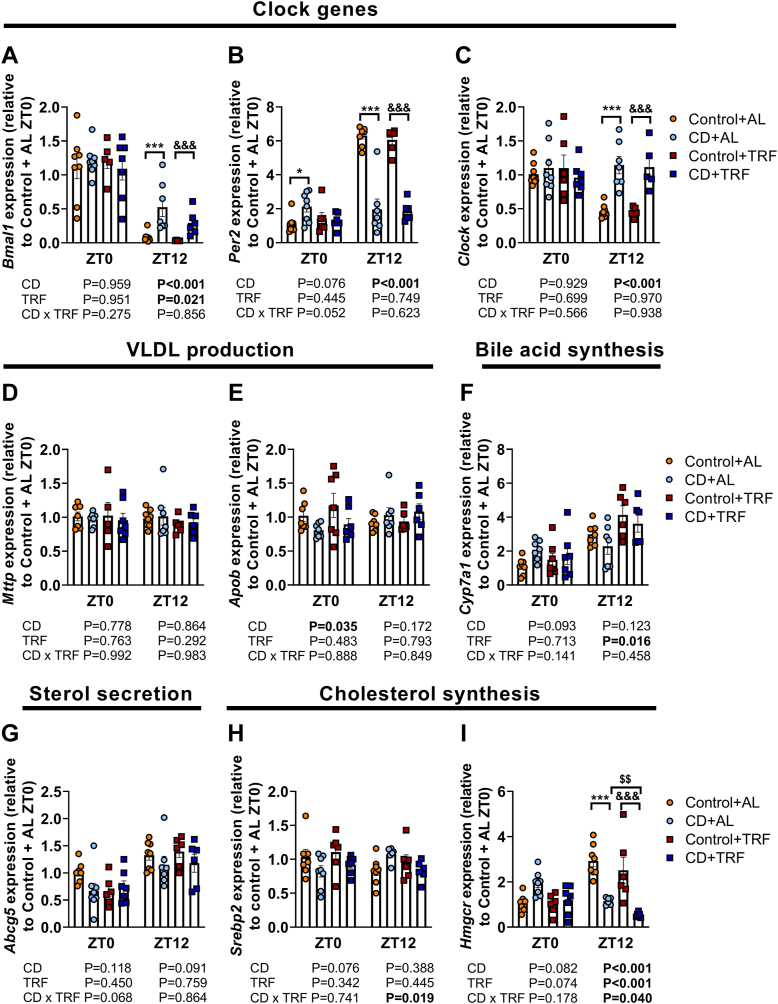
TRF did not prevent the increase in the relative abundance of circulating inflammatory monocytes and elevation of (postprandial) plasma triglycerides during CD. Nonetheless, TRF reduced atherosclerotic lesion size and prevented an elevation in macrophage content of atherosclerotic lesions during CD, while it increased the relative abundance of anti-inflammatory monocytes, prevented activation of T cells, and lowered plasma total cholesterol levels and markers of hepatic cholesterol synthesis. These effects were independent of total food intake.
We propose that time restricted eating could be a promising strategy for the primary prevention of asCVD risk in shift workers, which warrants future study in humans.
This work was funded by the Novo Nordisk Foundation, the Netherlands Ministry of Social Affairs and Employment, Amsterdam Cardiovascular Sciences, and the Dutch Heart Foundation.
昼夜节律紊乱(CD)是内源性昼夜节律、行为和/或环境周期之间不匹配的结果,在轮班工作中经常发生。轮班工作与人类动脉粥样硬化性心血管疾病(asCVD)的风险增加有关,但缺乏预防策略有效性的证据。
在这里,我们应用限时进食(TRF)作为一种策略,以抵消女性 APOE∗3-Leiden.CETP 小鼠(一种用于模拟人类脂蛋白代谢的成熟模型)在 CD 期间动脉粥样硬化发展。对照组接受固定的 12:12 小时明暗循环,而 CD 组每 3 天进行 6 小时的相位提前。各组均自由(AL)进食或在暗期限制进食。
TRF 不能预防循环炎症单核细胞的相对丰度增加和 CD 期间(餐后)血浆甘油三酯水平升高。尽管如此,TRF 减少了动脉粥样硬化病变的大小,并防止了 CD 期间动脉粥样硬化病变中巨噬细胞含量的升高,同时增加了抗炎单核细胞的相对丰度,防止了 T 细胞的激活,并降低了血浆总胆固醇水平和肝脏胆固醇合成的标志物。这些作用与总食物摄入量无关。
我们提出,限时进食可能是预防轮班工作者 asCVD 风险的一种有前途的策略,值得未来在人类中进行研究。
这项工作得到了诺和诺德基金会、荷兰社会事务和就业部、阿姆斯特丹心血管科学和荷兰心脏基金会的资助。