Ghantasala Saicharan, Bhat Amruth, Agarwal Unnati, Biswas Deeptarup, Bhattarai Prawesh, Epari Sridhar, Moiyadi Aliasgar, Srivastava Sanjeeva
Centre for Research in Nano Technology and Sciences, Indian Institute of Technology Bombay, Mumbai, India.
Centre for BioSystems Science and Engineering, Indian Institute of Science, Bengaluru, India.
Neurooncol Adv. 2023 Jun 16;5(1):vdad065. doi: 10.1093/noajnl/vdad065. eCollection 2023 Jan-Dec.
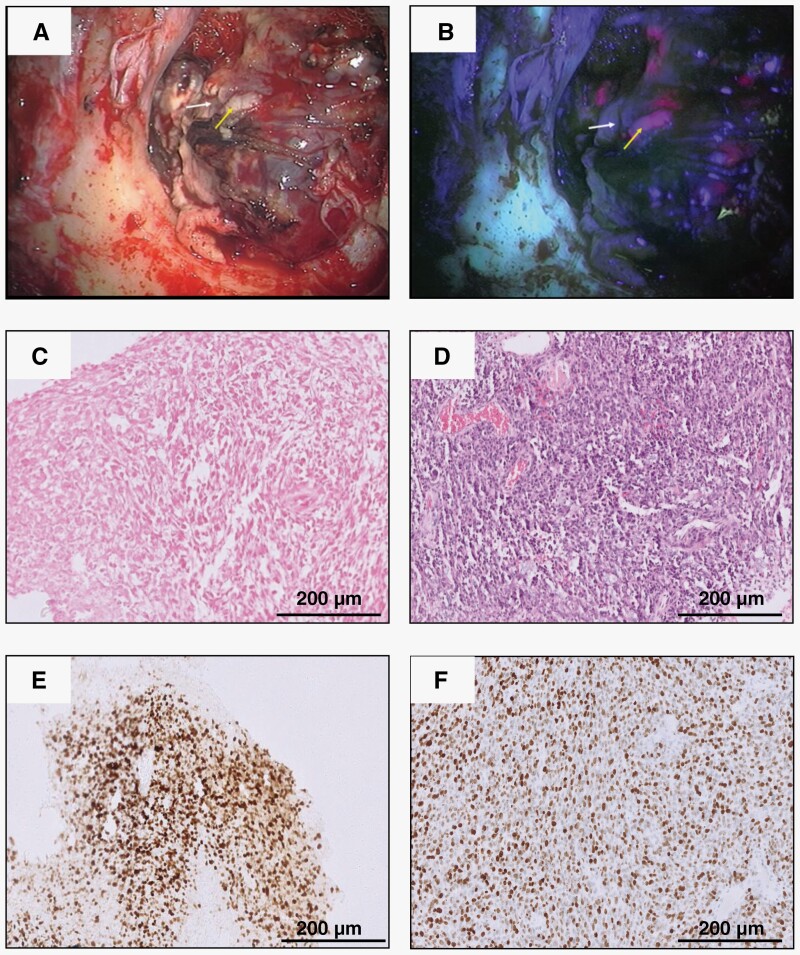
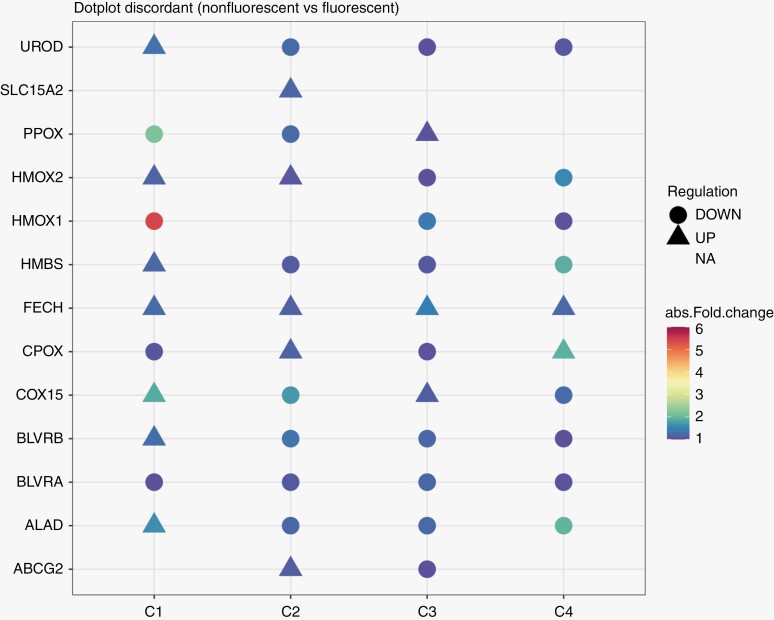
Fluorescence-guided surgery (FGS) using 5-aminolevulinic acid (5-ALA) as adjunct for high-grade gliomas (HGGs) has been on the rise in recent years. Despite being largely effective, we observed multiple histologically similar sub-regions of the same tumor from a few individuals with varying protoporphyrin IX (PpIX) levels. The current study aims at understanding the proteomic changes driving differential metabolism of 5-ALA in HGGs.
Biopsies were histologically and biochemically assayed. Following this, a deep proteomics investigation was carried out using high resolution liquid chromatography-mass spectrometry (HR LC-MS) to identify protein expression in differentially fluorescing regions of HGGs.
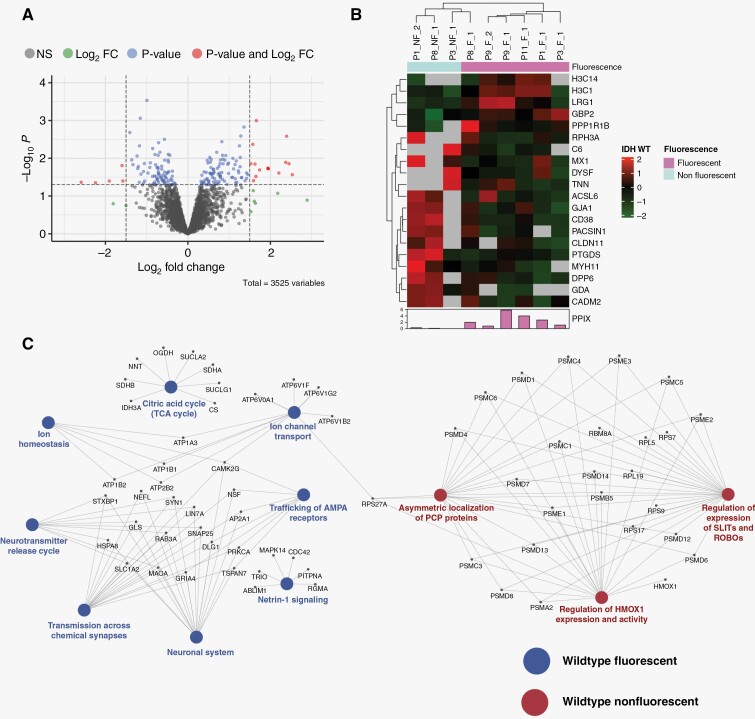
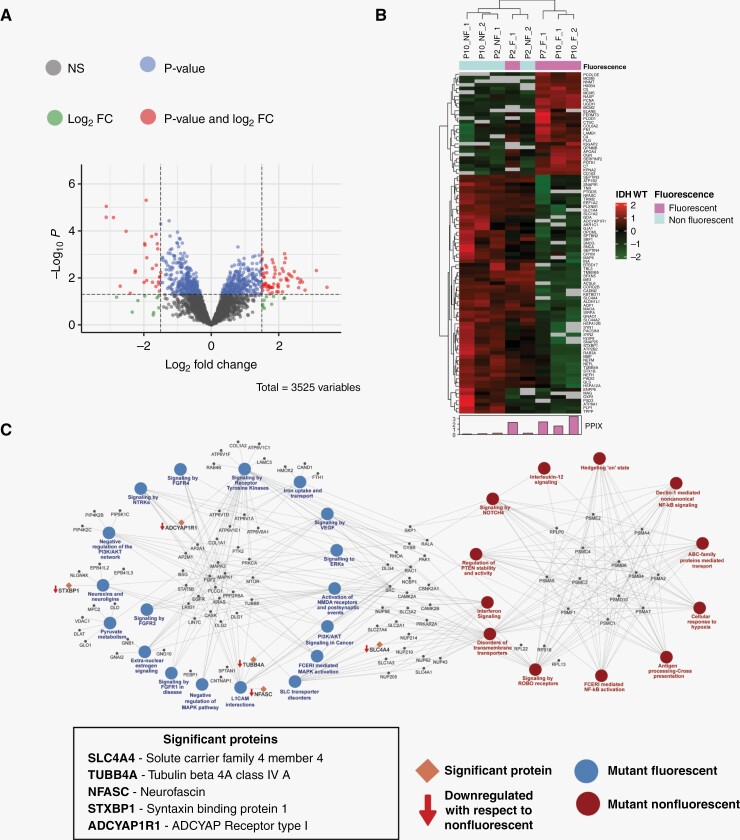
Our analysis identified 5437 proteins with high confidence. Differential analysis in the subgroup with HGGs carrying IDH mutation (IDH mt.) revealed 93 differentially regulated proteins (raw p-value ≤ 0.05 and absolute FC ≥ 1.5). Similar analysis in the IDH wild type (IDH wt.) subgroup revealed 20 differentially regulated proteins. Gene set enrichment analysis (GSEA) identified key pathways like ion channel transport, trafficking of AMPA receptors, and regulation of heme-oxygenase-1 in the IDH wt. subgroup. Pathways such as scavenging of heme, signaling by NOTCH4, negative regulation of PI3-AKT pathway, and iron uptake and transport were observed to be differentially regulated in the IDH mt. subgroup.
Tumor regions from the same patient exhibiting differential fluorescence following 5-ALA administration were observed to have different proteome profiles. Future studies aimed at a better molecular understanding of 5-ALA metabolism in HGGs hold the potential to increase the efficacy of FGS and the use of 5-ALA as a theragnostic tool.
近年来,使用5-氨基乙酰丙酸(5-ALA)作为高级别胶质瘤(HGG)辅助手段的荧光引导手术(FGS)呈上升趋势。尽管其在很大程度上有效,但我们从一些原卟啉IX(PpIX)水平不同的个体中观察到同一肿瘤存在多个组织学上相似的亚区域。当前研究旨在了解驱动HGG中5-ALA差异代谢的蛋白质组学变化。
对活检组织进行组织学和生化分析。在此之后,使用高分辨率液相色谱-质谱(HR LC-MS)进行深度蛋白质组学研究,以鉴定HGG不同荧光区域中的蛋白质表达。
我们的分析高可信度地鉴定出5437种蛋白质。对携带异柠檬酸脱氢酶(IDH)突变(IDH mt.)的HGG亚组进行差异分析,发现93种差异调节蛋白(原始p值≤0.05且绝对FC≥1.5)。在IDH野生型(IDH wt.)亚组中进行的类似分析发现了20种差异调节蛋白。基因集富集分析(GSEA)在IDH wt.亚组中确定了离子通道转运、AMPA受体运输和血红素加氧酶-1调节等关键途径。在IDH mt.亚组中观察到血红素清除、NOTCH4信号传导、PI3-AKT途径的负调节以及铁摄取和运输等途径存在差异调节。
在给予5-ALA后,同一患者的肿瘤区域呈现出不同的荧光,且具有不同的蛋白质组谱。未来旨在更好地从分子层面理解HGG中5-ALA代谢的研究,有可能提高FGS的疗效以及5-ALA作为治疗诊断工具的应用。