Espinosa-Flores Rodrigo Andrés, Trejo-Valdez Martín Daniel, Manríquez-Ramírez María Elena, Tzompantzi-Morales Francisco Javier
Instituto Politécnico Nacional-ESIQIE, Laboratorio de Investigación en Nanomateriales y Energías Limpias, Edificio Z-5, P.B., Zacatenco, Gustavo A. Madero, Ciudad de México, 07738, Mexico.
Departamento de Química, Área de Catálisis, Universidad Autónoma Metropolitana - Iztapalapa, Av. San Rafael Atlixco No. 189, C.P. 09340, Ciudad de México, Mexico.
Heliyon. 2023 Jun 10;9(6):e17138. doi: 10.1016/j.heliyon.2023.e17138. eCollection 2023 Jun.
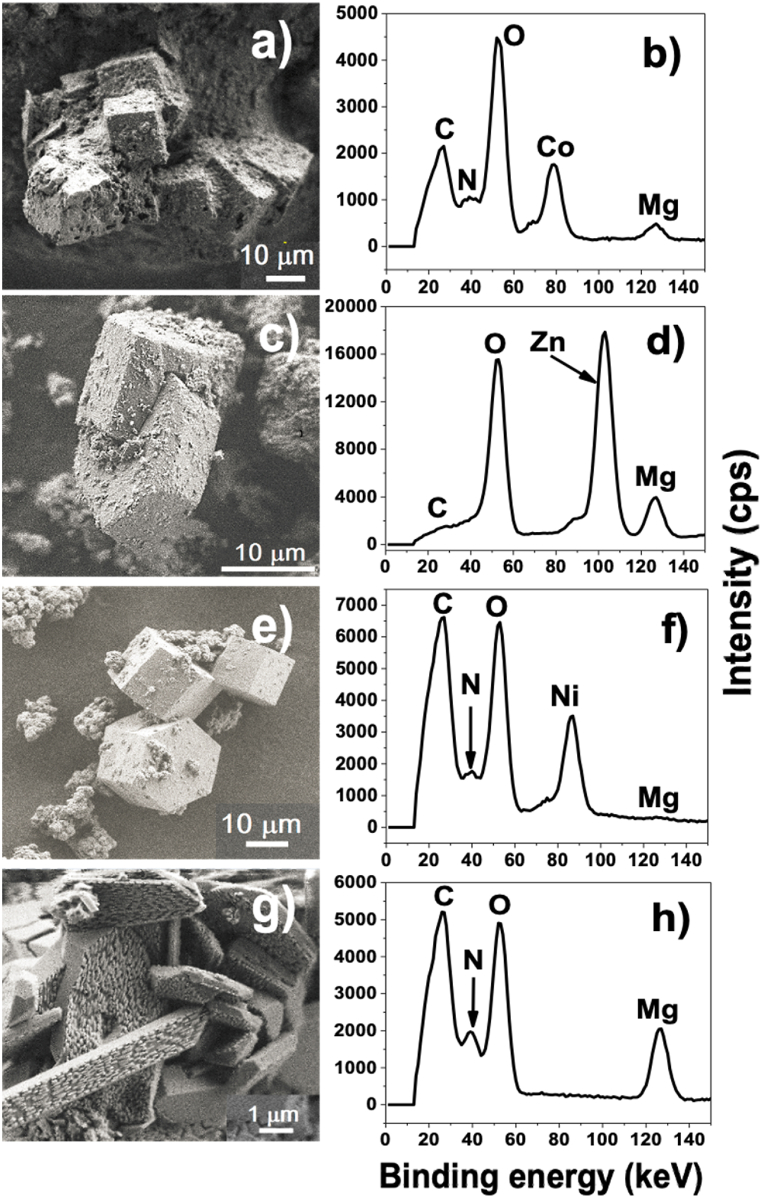
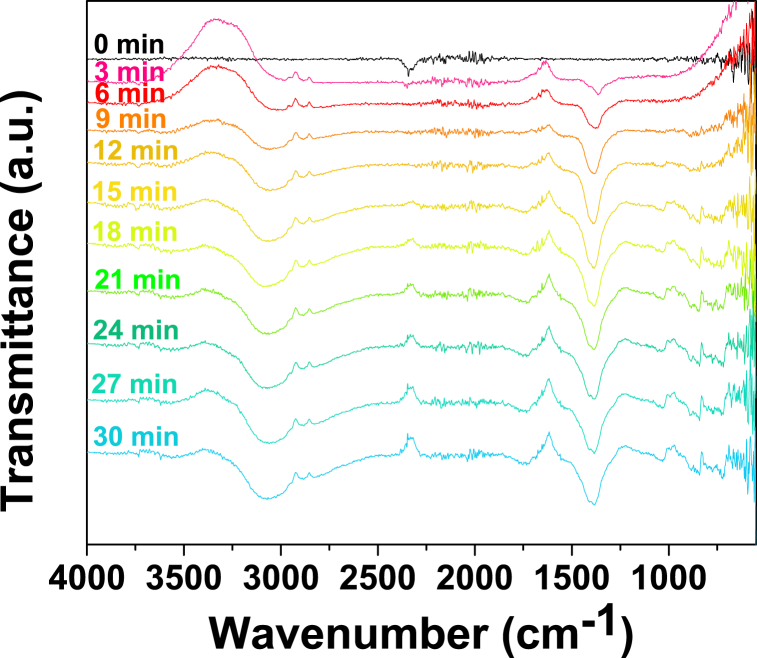
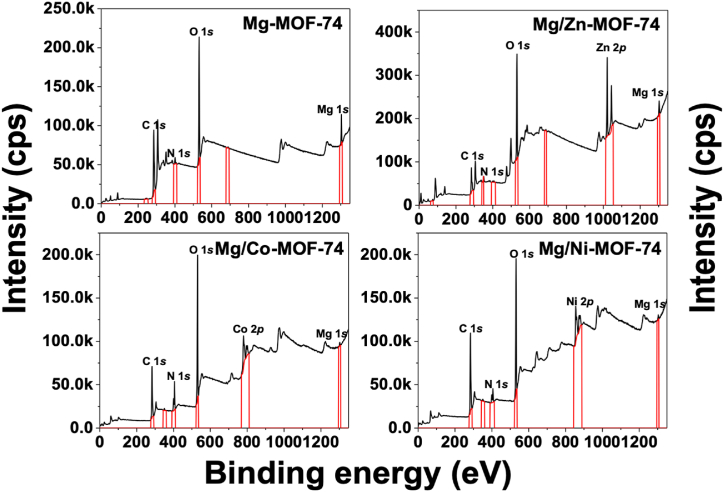
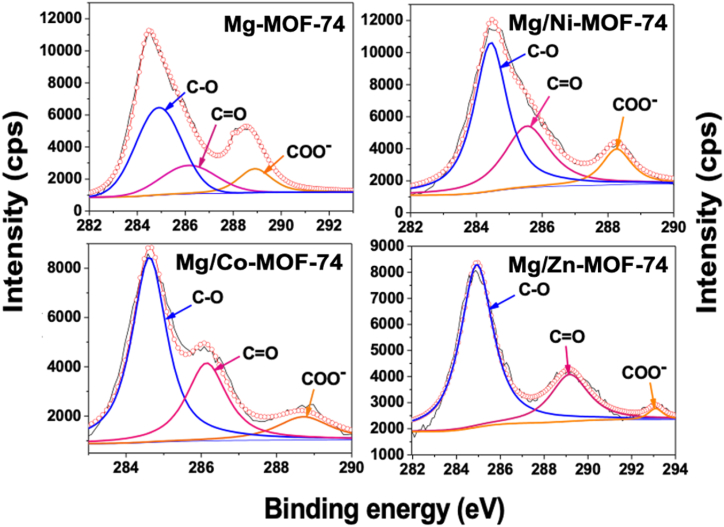
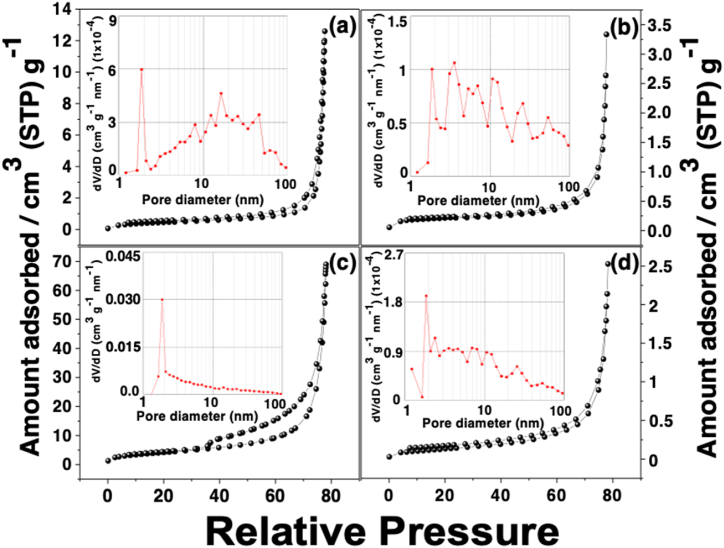
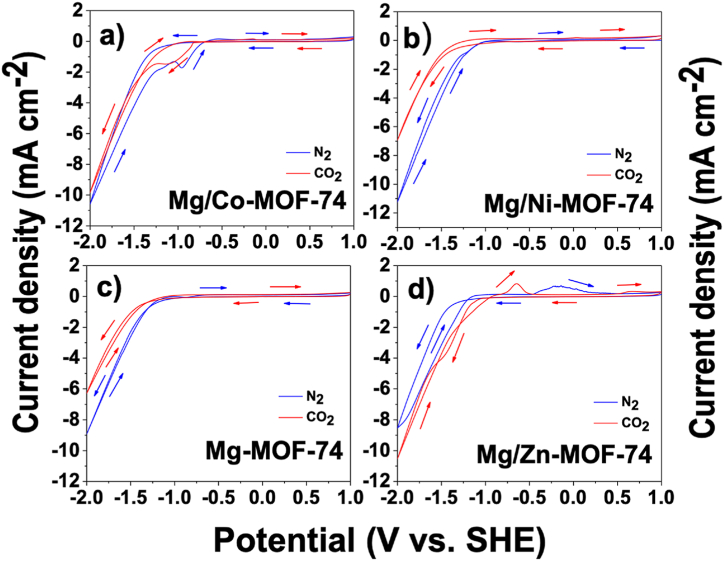
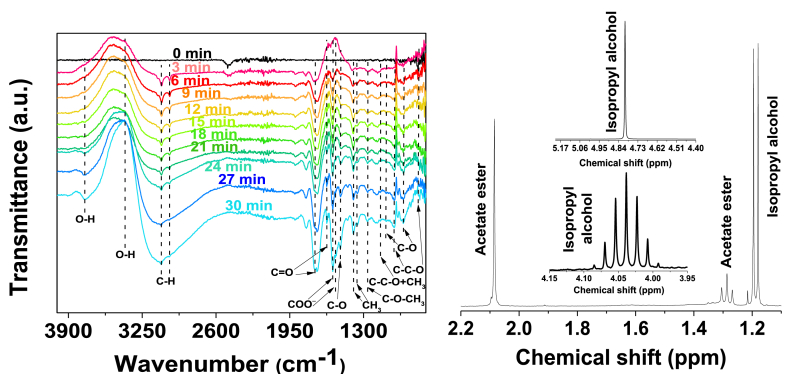
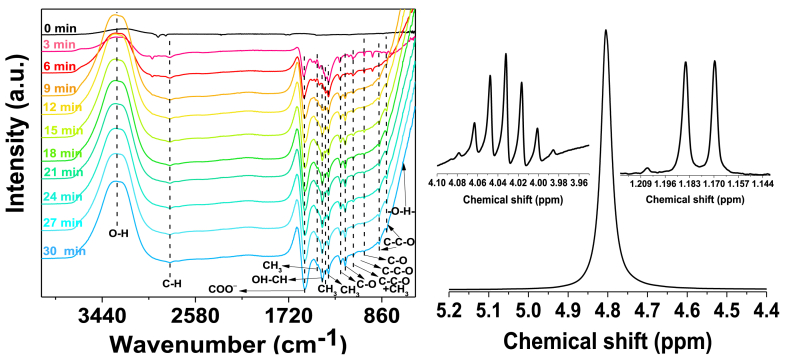
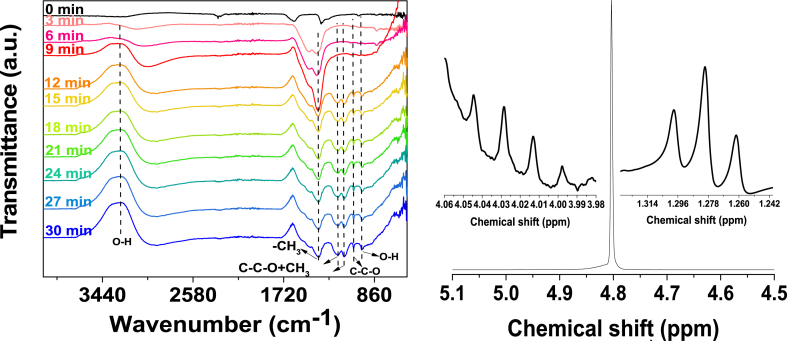
Metal-organic frameworks (MOFs) have been an excellent platform for carbon dioxide reduction reactions (CORR). In this work, the feasibility of electrochemical reduction of CO to obtain C-deep value-added products was investigated by the preparation of Mg-containing MOF-74 samples combined with transition metal cations (Ni, Co and Zn). The prepared MOFs were used as electrocatalysts in CORR. Chronoamperometric analysis coupled to ATR-FTIR spectroscopy was employed to characterize the CO reduction products and subsequently via H NMR. Although an isostructural crystalline structure was observed in all synthesized MOFs, the pore diameter distribution was significantly affected due to the Mg coordination along with each transition metal nuclei with the organic ligand to form the MOF-74. Our results showed that Mg-containing MOF-74 electrocatalysts combined with Ni, Co and Zn ions successfully reduced CO to C-deep products, while the monometallic Mg-MOF-74 showed only CO mineralization. An ester acetate, isopropyl alcohol, and formic acid were produced by Mg/Ni-MOF-74; isopropyl alcohol was provided by Mg/Co-MOF-74, and ethanol was generated by Mg/Zn-MOF-74. We observed that the change of the transition cation was a key factor in the selectivity of the obtained products, while the degree of Mg ions effectively incorporated into the MOF structure tuned the porosity and the electrocatalytic activity. Among them, Mg/Zn-MFOF-74 showed the highest Mg content loaded after synthesis and thus the most favorable electrocatalytic behavior towards CO reduction.
金属有机框架材料(MOFs)已成为二氧化碳还原反应(CORR)的优良平台。在本工作中,通过制备含镁的MOF-74样品并结合过渡金属阳离子(镍、钴和锌),研究了将CO电化学还原以获得深度碳增值产物的可行性。所制备的MOFs用作CORR中的电催化剂。采用计时电流分析法结合衰减全反射傅里叶变换红外光谱(ATR-FTIR)对CO还原产物进行表征,随后通过核磁共振氢谱(H NMR)进行分析。尽管在所有合成的MOFs中均观察到同构晶体结构,但由于镁与每个过渡金属核与有机配体配位形成MOF-74,孔径分布受到显著影响。我们的结果表明,含镁的MOF-74电催化剂与镍、钴和锌离子结合成功地将CO还原为深度碳产物,而单金属的镁-MOF-74仅表现出CO矿化。Mg/Ni-MOF-74产生了乙酸乙酯、异丙醇和甲酸;Mg/Co-MOF-74提供了异丙醇,Mg/Zn-MOF-74生成了乙醇。我们观察到过渡阳离子的变化是所得产物选择性的关键因素,而镁离子有效掺入MOF结构的程度调节了孔隙率和电催化活性。其中,Mg/Zn-MFOF-74在合成后显示出最高的镁负载量,因此对CO还原表现出最有利的电催化行为。